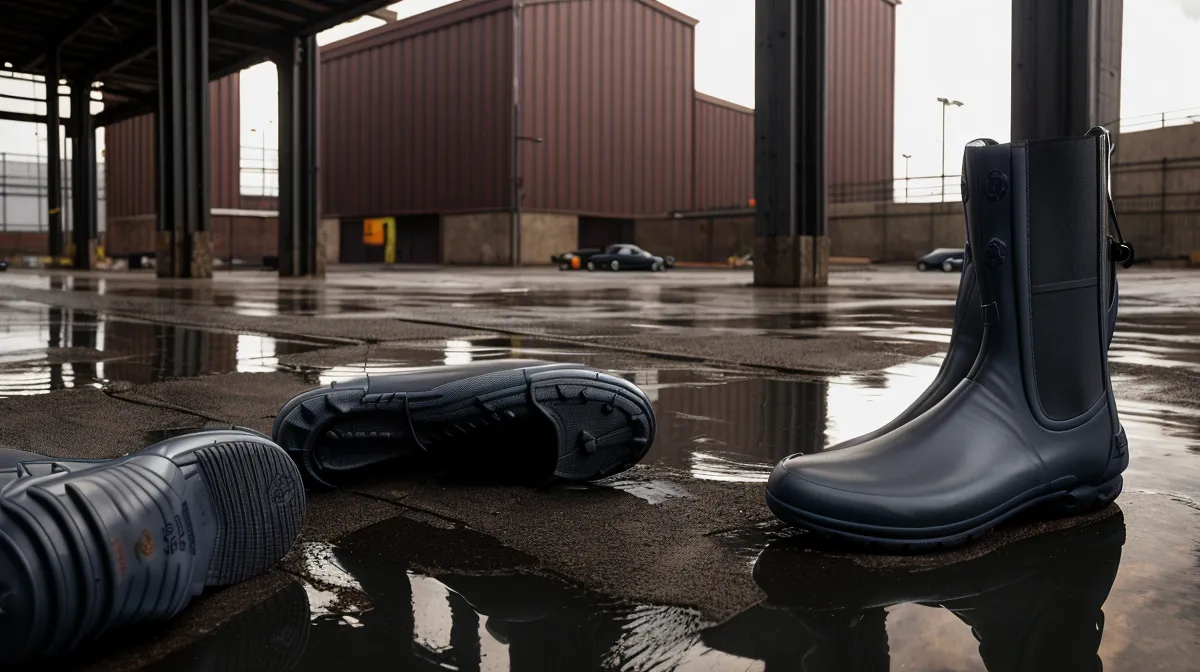
Which one actually keeps your feet working through a wet maintenance shift — a rubber Chelsea boot with a name that goes back to 1856, or a laced leather work boot built for a concrete floor? Bring that question into the break room at a Pittsburgh distribution center and you'll get two different answers depending on who got soaked walking in that morning.
Short version: the Hunter Chelsea will keep your socks bone dry standing in water, and a real leather shift boot will keep your knees and lower back intact after eight hours on concrete. Which one wins depends on what your shift actually demands of your feet, not which brand has the older founding date stamped on the sole.
Two Boots, One Wet Pittsburgh Shift
On one side you've got the Hunter Chelsea boots — pull-on rubber, zero laces, waterproof from the day they're made. On the other you've got a laced leather boot with a waterproof membrane or a heavily treated upper, the kind covered in Picking the Best Waterproof Rocky Boots for Wet Distribution Yards. Rubber sidesteps the membrane question entirely — nothing to delaminate, and nothing to breathe either. Neither one carries a safety-toe rating on the standard build, so if your site requires steel or composite toe, this whole comparison is beside the point.
Price sits in the middle of the pack for work footwear — more than the throwaway rubber boots at a big-box store, less than a premium leather boot, somewhere around the cost of a couple of decent takeout dinners for the difference. That's not the part that decides whether a boot belongs on a shift floor.
Where the Rubber Boot Actually Wins
Standing water is where the Hunter earns its keep. Walk through a flooded gravel lot into a warehouse and the inside of the boot stays dry the whole way in, no seam failure, no slow soak-through the way a treated leather boot eventually lets in. The toe box runs generous enough that guys with a wider foot aren't fighting the boot straight out of the box, which is more than you can say for some of the fashion-leaning Chelsea styles on the market.
A few weeks of hard use and the rubber develops a light white haze — "blooming," the term for natural rubber pushing wax to the surface. It looks like the boot's been dusted with flour, wipes off in a second, and comes right back, which just means the rubber compound is the genuine natural kind rather than a cheaper synthetic blend.
Noise, Fit, and the First Wrong Assumption
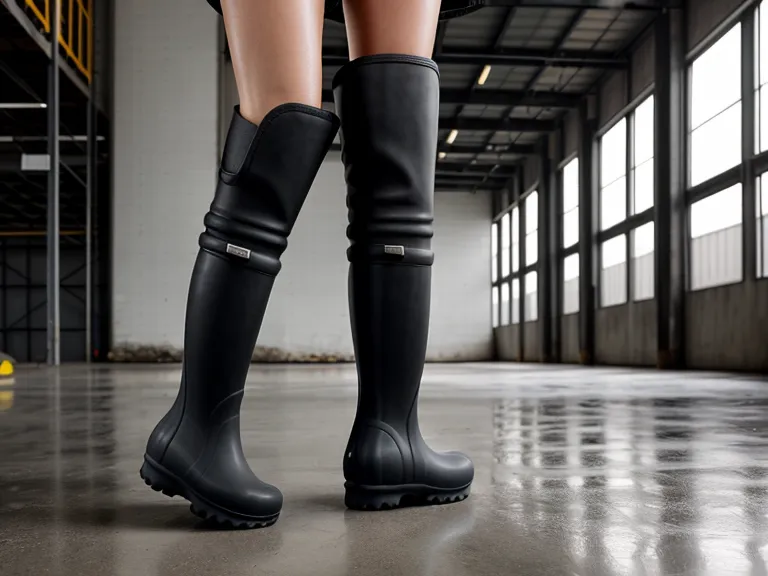
Wet rubber against polished concrete makes a chirping squeak loud enough that a coworker looks up from his clipboard every time you walk past. It's not a small detail once you're doing it for eight hours straight — anyone used to the quiet thud of a wedge sole, the kind covered in Georgia Boot Wedge Sole Boots are good for standing all day, notices the difference by the second lap of the warehouse.
My first wrong assumption was sizing up half a size for extra room around the calf, figuring a looser fit would be more forgiving on a long shift. Instead the heel had just enough play to rub, and by the end of that shift the back of my ankle had a blister the size of a thumbnail. Rubber doesn't stretch and soften the way leather does over weeks of wear — it just resists until your skin gives up, which means there's no real break-in period to speak of, just a fit that's either right or wrong from day one.
Can a Chelsea Boot Handle Eight Hours on Concrete?
Ankle support is the bigger issue over a full shift. The slim Chelsea profile that makes the boot easy to pull on also means there's a lot less structure around the ankle than a heavy-duty lace-up like Georgia Boot gives you. A rubber footbed doesn't hold its arch shape anywhere near as long as a proper work boot's midsole does across a full season of shifts.
A proper shift boot solves the rest of that with a shank under the arch and enough structure through the heel counter that your foot isn't doing all the stabilizing work by itself, and that shows up as less strain working up through the knees and lower back by the end of a long day. My Rocky Boots have that kind of structure, and it shows in small ways — I checked the welt stitching on that pair one February, second winter in, and it hadn't shifted or split anywhere, which tells you more about a boot's real construction than anything printed on the box.
Hosing Off Salt vs. Conditioning Leather
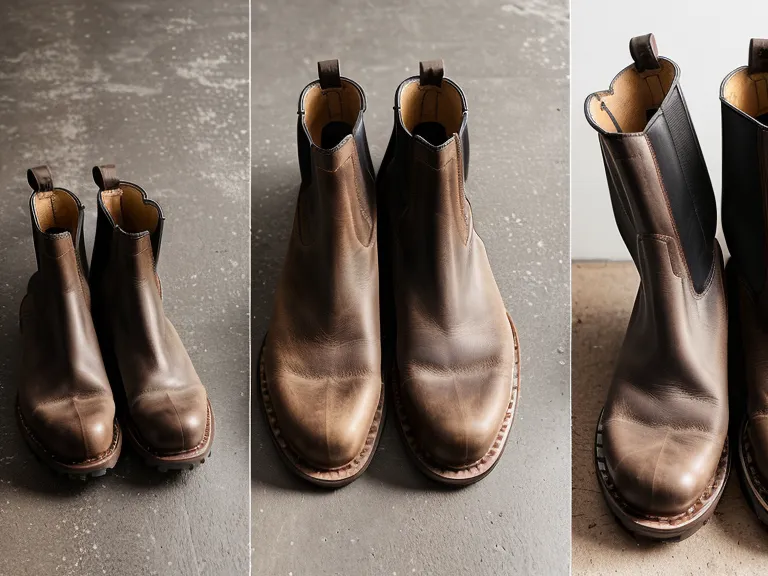
Cleanup is the one category where the Hunter genuinely beats a laced boot. Come in from a slushy lot and you can hose the rubber down right at a break-room sink, no eyelets to rust and no leather that needs conditioning after every salt exposure the way a treated upper does. Rubber also won't crack or split the way an upper leather can once road salt works into it over a few winters, though it trades that durability for zero breathability, so your foot pays for it in sweat instead of cracked leather.
A rubber boot can't be resoled once the sole wears through, where a boot built on a real Goodyear welt can go back to a cobbler for a new sole years after a rubber boot would've been retired. Thursday Boot gets you that welted construction with a heritage look for about the cost of a half tank of gas more than the Hunter, and if you want ranch and farm capability instead of office-friendly styling, Durango Boots covers that end of the lineup better than a fashion-first Chelsea boot ever will.
Pick the Boot That Matches Your Shift
So here's the actual trade-off. Choose the Hunter Chelsea when you need dry feet for a short, wet task — checking a flooded loading dock, a quick errand in the rain, walking my mother's old Lab along the Station Square riverfront on a wet weekend — and you're not on concrete for a full shift. Choose a real leather work boot when you're clocking eight hours on hard floors, because the shank, the arch support, and the ankle structure are doing work a rubber boot was never built to do. A guy on my crew runs weekend 5Ks with his wife along the Three Rivers Heritage Trail, and he wouldn't put either boot on for that — that's a running shoe's job, not a boot's job. Buy both if your work and your weekends actually call for it, because they're not competing for the same task.
For the actual shift, I'm still lacing up Rocky Boots every morning, and the Hunters stay by the door for anything that's wet but short. If you're on your feet all day and something's already hurting, don't let a boot review talk you out of seeing someone who actually fits feet for a living.