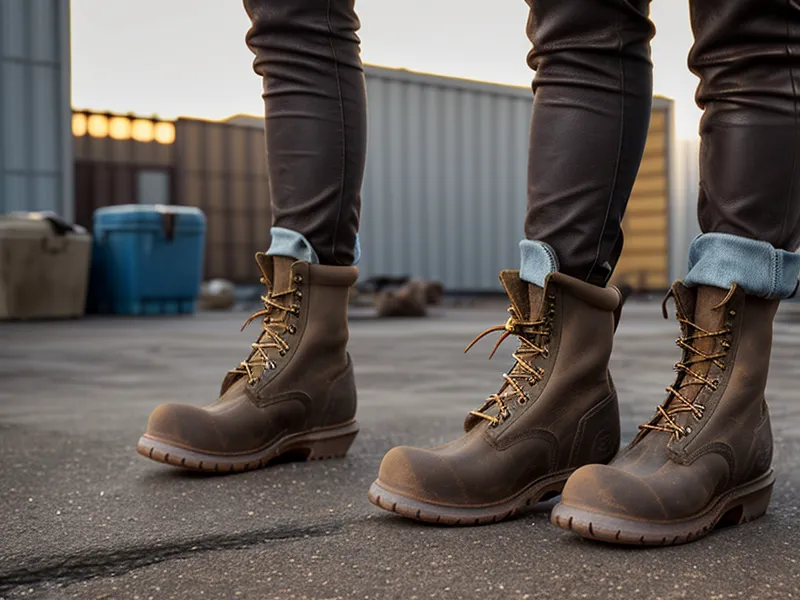
A pair of Dr. Martens squeals against polished concrete a half-second before it loses grip on an oil film. That's an odd thing for a boot marketed as a work boot for anyone spending a full shift on their feet to do. Guys stepping into a distribution center supervisor role, or onto a warehouse floor for the first time, reach for the classic 1460 because it looks like a boot that means business, and looking the part gets confused with actually delivering the slip resistance that warehouse safety depends on.
Here's the rule I go by now: if a boot's marketing leads with heritage or style before it mentions a real slip-resistance rating, treat it as a fashion boot until it proves otherwise on your own floor. The AirWair sole was designed decades ago by a doctor chasing foot recovery, not grip on an oil film, and that history shows up the second the floor gets slick. Look into the background Dr. Martens is built on and you'll find plenty about counterculture and durability, and almost nothing about how the tread handles a warehouse floor.
Slip Resistant on the Box Doesn't Mean What You Think
Grip depends on what's actually sitting on the floor, not what's printed on the box. On dry, clean concrete, the AirWair rubber holds up fine, credit where it's due. A distribution center floor carries a fine layer of cardboard dust, pallet-wrap scraps, and whatever a leaking forklift dripped near the bay doors, and none of that plays nice with a rubber compound on the harder side. Cross a patch of thin oil film in that hard compound and there's a half-second of float before the tread bites again, and at my age, that half-second of float is exactly where a back gives out on the way down.
One shift, a conveyor jammed on a metal mezzanine, and I had to pivot fast across a grate slicked with condensation. In a pair of Georgia Boots, roughly what a couple of decent takeout dinners for the family would run you, that pivot wouldn't have crossed my mind twice, since the compound on that sole stays soft and the lug pattern is cut deep enough to actually clear a film of moisture instead of riding on top of it. In the Docs, that same pivot turned into a slide that stopped my heart for a second. Drag a boot's sole across bare concrete afterward and the scrape it makes tells you, through your hand, exactly how much lug is left before it's just smooth rubber, and the AirWair pattern doesn't leave much margin once it starts wearing down.
There's an ASTM standard that genuinely slip-resistant work boots are built to meet, and it exists because looking tough and gripping wet steel are two separate engineering problems. Plenty of Dr. Martens lines never get tested against it, since the mainline boot was never built to solve that problem in the first place.
The Upper's Real Story After a Few Seasons on Concrete
The sole gets all the attention, but the upper tells the real story of how a boot survives shift-floor life. Full-grain leather, the kind on a classic Dr. Martens, holds up fine against everyday scuffs, but distribution center work throws in things leather doesn't love: cardboard dust that grinds into the grain like fine sandpaper, hydraulic drips that dry the oils out of the hide, and constant flex at the vamp from climbing in and out of a forklift or up a set of steel stairs.
Give it a season of that and the first hairline crack shows up right where the toe box folds, at the crease that takes the hardest bend every single step. Cheaper corrected-grain leather cracks even faster, since the finish is really just a coating over a sanded hide, and once that coating splits, water and grit get straight into the fiber underneath and the whole panel turns stiff and brittle from there. A thicker, drum-dyed full-grain upper with stitching set back from the flex points will outlast one where the thread runs right along the crease, because that's exactly where it saws through first. None of that shows up on a shelf. It only shows up once the leather's actually been asked to bend a few thousand times in a room that isn't kind to it.
Quick Fixes Don't Actually Fix a Bad Boot
A buddy of mine who coaches his son's little league team out in Peters Township wears his Docs on weekends and has mentioned sliding on a patch of dew near the dugout more than once. If a boot struggles on a dugout, a distribution center floor covered in oil film and cardboard dust is a different level of problem.
Stuffing a pair of drugstore gel insoles into a boot whose arch has already gone flat doesn't fix any of that either. It just moves the ache to a different part of the foot by the end of a long day, something I've tried more than once before giving up on it. Switch instead to a boot with a real shank and a proper welt built for the job, and by hour seven standing on that same concrete, your heels go quiet instead of throbbing, and that's the test that actually matters, not how a boot looks next to a pair of jeans.
Picking Work Boots That Won't Put You on Your Back
For actual grip on a bad floor, Rocky Boots have done right by me, thanks to a dedicated outsole pattern that clears liquid instead of riding over it. Whether their break-in stretch is worth the wait is its own conversation I've gotten into elsewhere, so I won't repeat it here.
The Georgia Boot lineup is built for the kind of grime that would wreck a fashion boot inside of a week. Heavier on the foot, sure, but the tread doesn't slide out from under you the way a mainline Doc does on the same floor.
If you want that same heritage look with more stability than a mainline Doc offers, Thursday Boots lean on a proper welt rather than a cemented sole, closer to how Rocky and Georgia are built underneath, though whether a welt or a cemented sole matters more to you is really a separate question. So is whether your feet need a wide toe box, how long a boot's arch support actually holds up month over month, or whether a wedge sole beats a lug sole for standing in one spot instead of walking a floor all shift. Each of those deserves its own read, not a paragraph tacked onto the end of this one.
None of this is medical advice, for what it's worth. I'm not a podiatrist and I'm not a cobbler, just someone who's spent a long stretch of shifts standing on concrete for a paycheck. If your feet are hurting or something feels off in your gait, that's a conversation for a real foot doctor, not a maintenance supervisor with strong opinions about rubber compounds.
Weekends, the Docs still get worn, just for walking my mother's old Lab through the Strip District, where sidewalk grip barely enters into it. That's where a mainline Dr. Martens boot belongs, and I moved mine there on purpose instead of pretending they'd hold up on a shift floor. Before you drop real money on boots for a distribution center job, look past the heritage branding and ask what the sole actually does on a wet floor and what an ASTM rating says about it, not how the boot looks next to a pair of jeans. Something like Rocky Boots earns its spot on a warehouse floor instead of just looking the part, and that gap between the two is the reason this whole comparison matters.