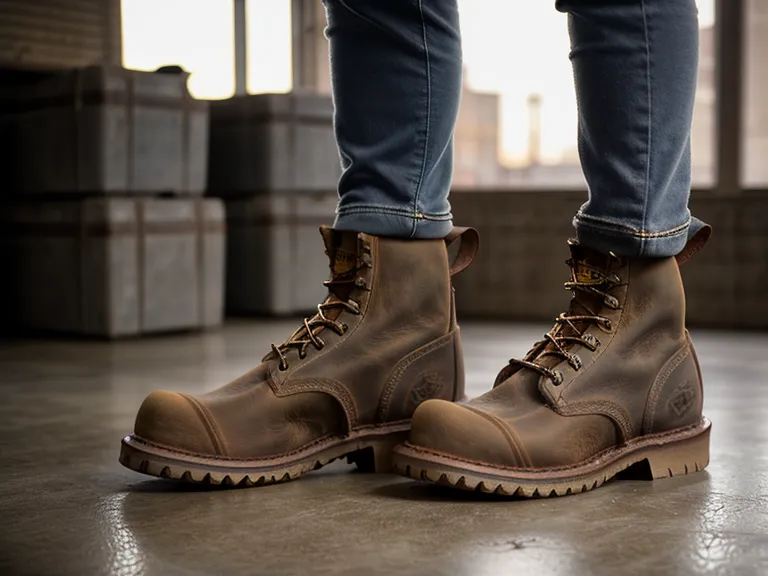
Two winters of daily wear and the welt on these boots hasn't loosened a single stitch. That's the kind of durability test that actually means something on a distribution center floor. Work boots either survive a real Pittsburgh winter or they don't, and no shelf tag tells you which is which before you've put a few hundred miles on them. I've run enough pairs through the maintenance routine at my job to know within the first few wet weeks which ones are headed for the trash. Rack Room Shoes carries a genuine mix of both — legitimate work brands sitting on the same shelves as stuff barely better than what's stacked next to the motor oil at the big box store — and figuring out which aisle you're actually shopping from is half the battle.
Size 11 wide has been my size since I first started buying whatever the warehouse store had stocked next to the motor oil, and I've lost count of how many pairs have gone through the rotation since then. A boot's a boot, I figured — wrong, obviously. Somewhere after burning through several bargain pairs inside a single year, I tried rotating between two cheap pairs, resting each one a day between shifts, on the theory that the rest would make each pair last twice as long. It didn't. Both pairs went soft in the arch at almost the same point, just a few days apart, so I'd effectively bought two disposable boots instead of one and gotten nothing extra out of it.
The Ninety-Day Bargain Trap
The price tag on those big box boots usually lands close to what you'd spend on takeout for the family, and that's exactly the trap. You think you're saving money, but you're really just signing up for a ninety-day replacement cycle. By the first deep freeze, the midsole on a bargain pair goes soft and spongy underfoot, with about as much support as a wet paper bag, and whatever passed for arch support flattens out faster than it should. Ten miles a day on sealed concrete asks more of a boot than a store-aisle price tag usually delivers — most of those grocery-store specials have a steel toe stamped somewhere on the box and an ASTM rating printed on the tag, but the rest of the boot is held together with glue and optimism. I've caught the upper peeling clean off the sole before the first snow even sticks. If you're dealing with real foot pain on top of a boot like that, the best work boots for plantar fasciitis when you walk all day is worth a separate look, since a collapsed midsole only makes that kind of pain worse — though none of that makes me a podiatrist. If your feet are genuinely wrecked, go see one. I just know a sole that's already quit.

Rack Room Changed What I Was Willing to Pay
Rack Room Shoes was where I went to see whether the heavy-duty brands actually held up to a different standard, not for a factory tour or a marketing pitch — just to find out if a Georgia Boot or a pair of Rocky Boots could survive a wet warehouse winter. The jump in price is roughly a half tank of gas in my truck, enough to notice, not enough to hurt. Construction is the real difference between the two tiers, and I've gone deep on what a Goodyear welt means for long-term wear in my six months on the warehouse floor with Rocky Boots writeup, so I'll leave the details there. What I'll say here is simple: a welted sole has held up through the wet months in a way a glued one never has for me.
What a Double Shift on Concrete Actually Tests
Eighteen-hour double shifts during the peak winter inventory surge are where a boot proves itself or doesn't — concrete doesn't give an inch no matter how many hours you've clocked. The Georgia Boot pairs I tried came with a 6-inch shaft and full-grain leather that took a few days to actually break in, and that early stiffness is a good sign, not a bad one. A bargain pair feels broken-in on day one because the materials were already soft before you laced up, which is exactly why they bottom out a couple months later. By the time the January freeze hit, the Georgia Boots had molded to my feet and were doing actual support work instead of just flexing loose around my toes.
Build Quality: Rack Room Versus the Big Box Aisle
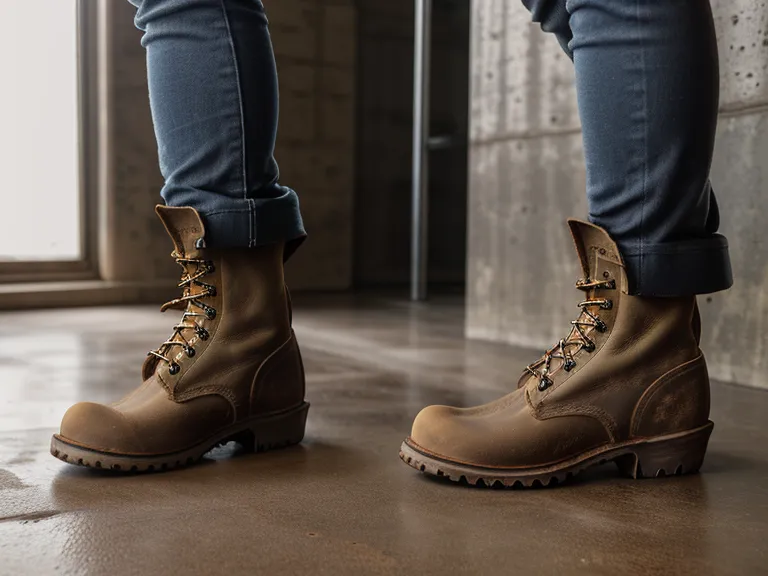
Materials make the difference once you get past the marketing copy. Big box stores lean on 'action leather' or split leather, a thin hide layer coated in polyurethane that looks shiny for about a week before it cracks at the flex point. The brands Rack Room actually carries, like Durango Boots or Rocky, use thicker hides that take a scuff without exposing what's underneath. Durango leans Western enough for light maintenance work, though it doesn't have the tank-like feel of the Georgia line. A wide toe box matters more than guys built like me tend to admit — a boot that pinches across the forefoot by hour four isn't making it through a full shift no matter how tough the leather is. On the weekend-rotation side, I tried Thursday Boot for a while — Goodyear welt, sharp enough for dinner out, but a little too polished for the distribution center floor, and the shaft doesn't sit at the 6-inch height I want for kicking pallets around. I got into more of that in my Thursday Boot Company review for maintenance writeup, if you want the longer version.
Mud Season Finds Every Weak Glue Joint
Late April around here turns into one long mud season, and that's where cheap boots really fall apart. Once water works into the midsole on a bargain pair, the glue doesn't hold for long, and I've watched guys walk straight out of their soles in the parking lot. A lug sole grips through that kind of mud a lot better than the flatter wedge soles some of the dressier lines use, though that's really its own conversation for another day. I keep a pair of Hunter Boots in my locker for the swampiest days — Hunter's been making rubber boots since 1856, and while they're not steel-toed workhorses, the rubber keeps my feet dry when nothing else does. For the actual work day, though, I stick with waterproofed leather.

Is the Extra Cost Actually Worth It?
My testing ground is a two-car garage on a quiet side street in Penn Hills, where the boots currently in rotation sit on a run of metal shelving along one wall, lined up in the order I plan to wear them next. Pull one down in January and the leather's gone stiff as a shingle from sitting out all night with no heat in the garage — it doesn't loosen up until you've walked in it for ten minutes. Five weeks into running the Georgia Boots and the Rocky pair side by side that second winter, I checked the welt on both on a quiet February afternoon, standing at the utility sink under the cabinet where I keep a stiff brush hung within reach — stitching on both pairs still tight, nothing fraying, nothing lifting at the toe. That's the kind of detail a shelf tag never tells you.
Not everybody treats their feet like a piece of equipment worth maintaining. Lou Ferrante, a semi-retired plumber I know from around the neighborhood who still picks up light commercial jobs, has had rough feet for years and just works through all of it — wrong boots, no rotation, no rest days, nothing. Watching him limp through a Saturday job is a decent reminder of what happens when boots get treated as an afterthought instead of the one piece of gear standing between you and a rough decade on your feet.
Agata Chmura, who runs receiving on my floor, asked me last month what to get for a heel that's been bothering her most of the shift — she's the type who rolls her eyes at anything that sounds like it came straight off a catalog page, so I gave her the same answer I'd give anyone. Try the pair on at the end of a shift when your feet are already swollen, not first thing in the morning, and don't assume the priciest boot on the wall is automatically the right shape for your foot.
When you're weighing the grocery store aisle against a dedicated retailer, the real question is what your knees and back are worth over a full year, not what the receipt says today. Structural integrity isn't only about a boot staying in one piece — it's about your foot staying in the right position so you're not favoring one leg by the end of a nine-hour shift. Knowing when to replace your work boots after months of heavy daily wear matters just as much as what you buy in the first place, since even a great pair won't last forever. The lesson that's stuck with me across two winters of running this comparison: judge a boot by what its welt looks like after it's been wet and cold and stepped on for months, not by how good it feels standing in the store aisle for thirty seconds.
For the distribution center floor, Rocky Boots are the pair I keep coming back to — heritage, welt construction, and they don't treat a size 11 wide like an afterthought. Big box boots are fine for a single Saturday yard project, but if you're clocking in every day, they're money down the drain. Spend a little more up front, about what you'd drop on a couple of fast-food runs, and get something that'll actually see next season. Check with a professional boot fitter if your feet are as picky as mine, but otherwise, buy the real tool for the job.
Ready to stop replacing your boots every few months? The Rocky Boots lineup and the Georgia Boot heavy-duty options at Rack Room are the two I'd point a coworker toward first — between them, you've got a real shot at making it through a full Pittsburgh winter, whether that's a double shift on the warehouse floor or just walking my mother's old Lab along the Station Square riverfront on a Sunday.