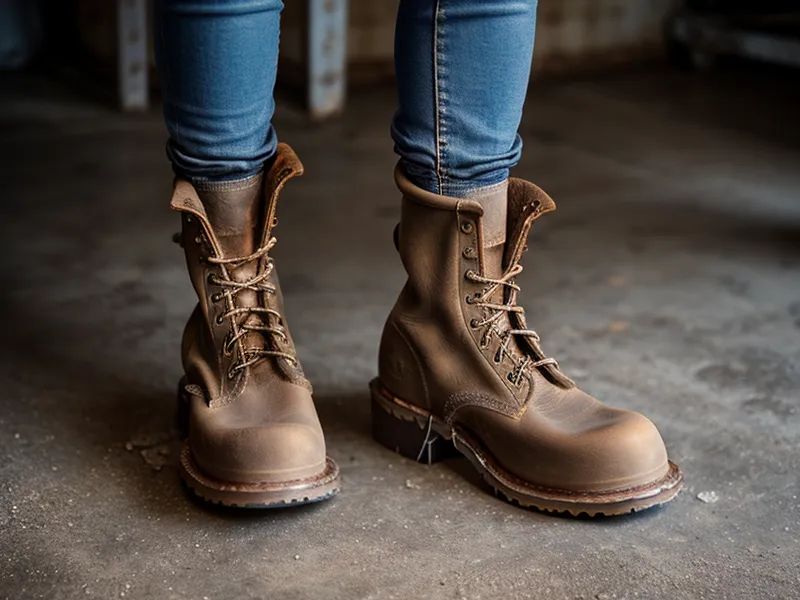
Four weeks into a new pair of boots, I stood in a puddle in the loading bay on a gray morning in November and didn't feel the cold work its way through the sole the way it always used to. That's the only test that matters to me anymore: not the tag sewn into the tongue, not what the counter guy tells you, just whether the boot still does its one job. Dragging a size 11 wide frame across polished concrete as a maintenance supervisor at a parts distribution center outside Pittsburgh will teach you that work boot maintenance isn't really about maintenance at all. It's about catching the exact point where a boot quietly stops protecting you, which is a different question than when it starts looking rough. Gear durability in industrial footwear gets treated like a number on a spec sheet. It isn't one. It moves with the floor under you, the length of the shift, and how honest you're willing to be about a pair you already paid good money for.
The pair that finally quit on me this fall were a set of Georgia Boots, and they'd earned their keep before that — full-grain uppers, oil resistance, the kind of boot built for a shift floor instead of a sidewalk. I'd been in them since the leaves started coming down, and somewhere before the worst of the salt season hit, the give in the sole stopped feeling like cushion and started feeling like a plank.
Work Boot Maintenance Nobody Puts on a Checklist
Nobody replaces a boot because a calendar says to. A boot goes when the sole starts pulling away from the upper instead of flexing with it, when the midsole has gone from spongy to a flat plank underfoot, or when the leather at the toe box splits right along the crease where your foot bends a few thousand times a shift. Those three things — delamination, a dead midsole, and a split toe box — are the actual signs. Everything else, the scuffed leather, the faded dye, the salt stains, is cosmetic. I've retired boots that looked rough but still had life left in the midsole, and I've kept wearing boots that looked fine on the outside while the cushioning underneath had already turned into a pancake.
What Actually Kills a Work Boot First?
The part most guys never look at is the welt — the strip of stitching that runs around the base of the boot where the upper meets the sole. On a boot built with a real Goodyear welt, that strip is its own piece of material, stitched first to the upper and insole, then stitched again to the outsole, which is exactly what lets a cobbler pull an old sole off and put a new one on without touching the rest of the boot. Road salt doesn't respect any of that engineering. It works into the stitching all winter, and once the thread starts fraying along that welt line, water gets a straight path into the boot no matter how solid the leather still looks above it. When the welt goes, you're not looking at a repair anymore. You're looking at a new pair.
Tread is the other place people wait too long. Once the lugs round off into something closer to a bald tire, the boot's grip is gone even if the leather above it looks brand new. I got into the weeds on whether Dr. Martens are slip resistant enough for a warehouse floor in an older post, and I won't repeat it all here — short version, tread and leather wear on different clocks, and a smart guy watches both instead of just the one he notices first.
The Boots That Held Up Longer Than I Expected
When the Georgia pair finally gave out, I went back to a set of Rocky Boots I'd rotated in before, mostly because I already knew what I was getting into. The break-in stretch on that pair ran longer than I wanted, and I laid out exactly how that stretch went in my six-month warehouse floor review, so I'll leave the details there. What matters here is what happened after the break-in was done: the welt held through a full season of road salt without the stitching going soft, which is more than I can say for a few other pairs I've owned.
Lou Won't Seriously Consider a Second Brand
Lou Ferrante, a semi-retired plumber who still picks up light commercial maintenance work, has strong feelings about exactly one brand and won't hear an argument about a second option. Brand loyalty is easier than testing five pairs a year, I get that, but it also means his advice only holds for jobs that look like his. He wouldn't touch a rubber boot like the ones from Hunter Boots even standing in two inches of standing water, and he's not wrong that they're not built for a shift floor. Those are built for weather, not ten hours on concrete, and that's a different problem than the one most of us are solving.
A Receiving Lead With No Real Option to Sit Down
Agata Chmura runs receiving, and she's on her feet nine hours minimum with no real option to sit down between trucks. She's asked my opinion on boots ever since I caught her limping during a floor walk a while back. What I tell her every time is the same thing I'd tell anyone standing that long: arch support runs on its own timeline, separate from the outsole and the leather, and it fails quietly enough that most people blame their back before they blame the boot. For her specifically, the leather held up fine longer than the cushioning did, and the cushioning gave out faster than it does in a pair of Georgia Boots for me, probably because nine hours of standing still loads a boot differently than ten miles of walking does.
Weekend Boots Are Solving a Different Problem
On weekends I walk my mother's old Lab through South Park, usually in a pair of Thursday Boots that look sharp and cause a lot less grief than a dress shoe for the same job. They're built with full-grain leather uppers that age well, but the midsole underneath isn't made for ten hours of concrete, and it shouldn't have to be. A boot built to look good at the hardware store on a Saturday is solving a completely different problem than one that has to carry a grown man across a distribution center floor for a double shift. Toe box width matters here too, and a wider one changes the fit calculation for a lot of guys, which is worth checking before buying anything off a size chart. I ran a pair of Durango Boots for a stretch, comfortable enough right out of the box, but the shaft didn't give me the lateral support I wanted climbing a ladder or working behind a sorter, and the sole sat flatter and wider than the shape I usually reach for. Wedge soles and lug soles grip a slick floor differently, which is its own conversation, but it's part of why I keep circling back to boots built with a job site in mind instead of a Saturday errand in mind.
Skip the Spray Bottle From the Checkout Aisle
Somewhere in there I tried to buy my way out of the problem instead of admitting the boots were done. I grabbed a can of waterproofing spray off the rack by the register, the kind that promises a season of protection, and coated the uppers before a stretch of wet shifts. It held for exactly one soaking. By the second wet day the water was back, coming in at the same seam as before, because a spray can't rebuild a welt that's already given up or refill a midsole that's already flat. Spraying the outside of a dying boot is like waxing a car with a blown head gasket. It looks like maintenance. It isn't one.
Read the Signs Before Your Back Does
Replacing a pair of boots always feels like a bigger expense than it is until you compare it to a week of limping around a warehouse floor, or worse, an actual trip to a doctor's office because you ignored what your feet were telling you. I'm not a podiatrist, and nothing here should replace one — if your feet genuinely hurt, that's a conversation for a professional, not a guy who fixes conveyor belts for a living. From a gear standpoint, though, once the welt stitching frays, the midsole goes flat, or the toe box splits at the crease, the boot has already made the decision for you. My current pair of Georgia Boots is getting close to that point again, and I'd rather retire them on my own schedule than wait for a wet floor to force the issue. If you're shopping for the next rotation, the heavy-duty lineup from Georgia Boot and the flagship line at Rocky Boots are the two I keep coming back to, not because either is flashy, but because I've tracked exactly how they fail and when. The lesson that actually stuck through all of this: the boot tells you it's done long before your body does, if you're watching the right three things instead of just the scuffs on the leather.