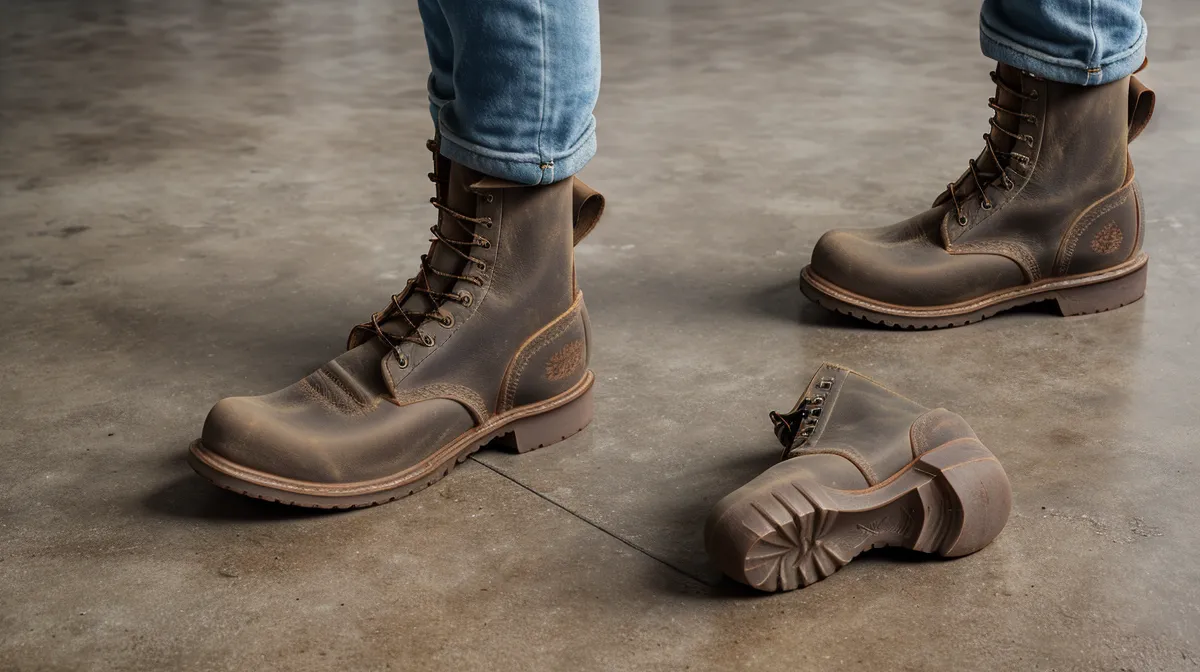
Terri's got her boot kicked up on the tailgate, thumb working into the leather right where the toe box pinches, telling me for the third time that the steel's not the problem, never was. She runs second shift on the dock, same warehouse I do my rounds in, and she's convinced most guys who switch to soft toe boots thinking they're fixing fatigue are just trading one bad fit for another. Work boots are the one piece of warehouse gear nobody wants to think hard about until their feet are screaming by hour seven, and the soft-toe-versus-safety-toe argument is exactly where that laziness shows up.
A quick note before any of that: there are affiliate links further down this page, and I've put every boot mentioned here through actual rotation on a real shift floor, not a showroom fitting. Take the brand opinions for what they are — mine, earned the hard way, not handed to me by a marketing deck.
Why Everybody Blames the Steel for a Warehouse Shift's Worth of Aching Feet
Guys on my floor treat it like physics: steel toe equals extra ounces, extra ounces equals a worse night on concrete, so soft toe must be the smarter buy for anyone logging real mileage between the dock and the mezzanine stairs. There's a grain of truth buried in there. Flagship safety boots do carry more weight up front than a soft-toe crossover pair, and if you're doing thousands of steps a shift, that weight adds up somewhere. But the math guys run in their head skips a variable that matters more — how the boot actually sits around your foot once that cap, soft or steel, is in there.
Federal rules don't leave much room for debate on this anyway. OSHA requires certified protective footwear in any zone where rolling freight, falling tools, or puncture hazards are a real possibility, full stop. That part isn't a style choice. If your route crosses active forklift lanes or you're down on the floor helping unjam a conveyor, the safety-toe requirement is the price of admission, and no amount of comfort talk gets you around it.
That doesn't cancel out the weight question entirely, either. On a route that's mostly flat concrete and painted walkways, shaving ounces off your feet genuinely helps by the end of a long night, and I've written separately about the best lightweight work boots for walking miles in a warehouse for guys in that exact situation. The mistake is assuming that same math applies once you're stepping into a hazard zone where the cap isn't optional.
What Actually Separates a Comfortable Boot From a Miserable One
Here's where Terri's usually right. The boots I've tested side by side — Rocky Boots, Georgia Boot, Thursday Boot, Durango Boots, and a pair of tall Hunter Boots I keep by the exterior dock door — split less along soft-versus-steel lines and more along who actually shaped the toe box like a human foot.
Thursday's the one I stopped reaching for on shift days, and I'll say it plainly instead of hedging. The leather looks good and the lineup has a strong return policy behind it, but the toe box is a dress-boot shape wearing a work-boot badge, and it pinched my outer toes bad enough by mid-shift that I moved it to weekend-only rotation. That's a soft toe boot — no steel anywhere near it — and it still hurt worse by quitting time than either of my steel-capped pairs. If soft-versus-steel were really the deciding factor, that shouldn't happen at all.
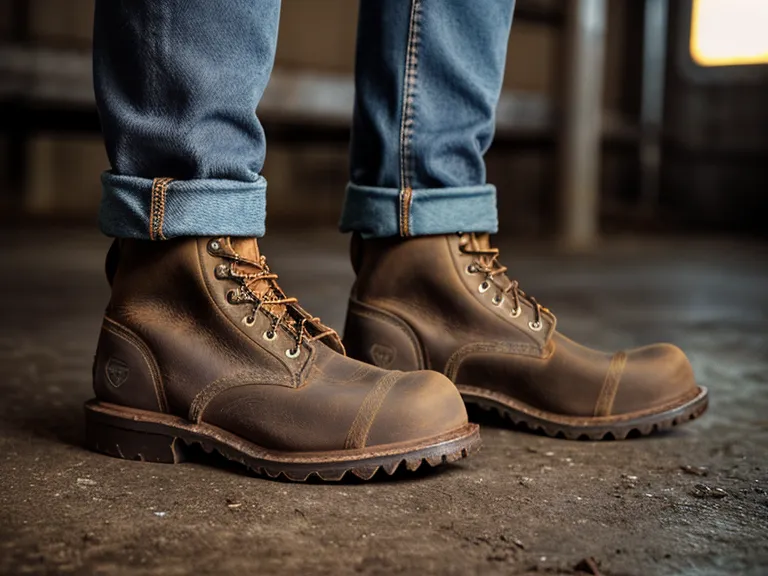
Toe Box Fit Beats Cap Material for Footwear Durability on a Warehouse Floor
Georgia Boot and Rocky earned their keep on the same logic. Georgia Boot's cap sits wide enough that it doesn't ride against my pinky toe even after a summer of chemical runoff and greasy pallet wood chewing at the leather, and Rocky Boots' flagship line does the same thing with a wide-width last that leaves room for a thick sock. Neither one feels like I'm dragging a brick around once the fit is right. Fit and build are the real variable here, not whatever material happens to be sitting inside the cap.
If your facility also requires top-of-foot protection, that's a separate piece of kit — our guide to choosing the best metatarsal guard boots for safety covers that side of it, and I won't re-tread it here. What I will say is that cap material matters less than how the boot is built around it: a Goodyear welt can be resoled instead of replaced, which is a bigger long-term durability question than steel versus soft ever was. Traction's its own argument too, worth a look in our best slip resistant work boots for oily warehouse floors piece if your floor's the problem instead of your toes.
A reader out in western Ohio who wrenches on trucks pit-side, name of Gus Hornak, wrote in with almost the same argument, except his hazard was wet epoxy underfoot instead of toe weight. Different floor, same mistake — blaming the whole boot category instead of the specific build underneath him.
I tried soaking a cracking vamp in mink oil once, hoping it would stop the leather from splitting right along the toe box. It didn't. The crack kept walking up that seam anyway, slow as a leak, until the boot was done for shift use. Construction decides how a boot ages a lot more than any home remedy does, and definitely more than whether the cap inside it is steel or synthetic.
Checking the welt on a pair of Rockies in February of their second winter is a better test than any shift complaint. I ran a thumb along the stitching, braced for the give that cheaper pairs develop by then, and found it still as tight as the day I bought them. That's the kind of detail that predicts whether a boot survives your feet, not which column it falls into on a spec sheet.
Weekends tell a different story anyway. I walk my mother's old Lab along the Station Square riverfront in whatever soft pair is closest to the door, and my feet don't care one bit that there's no steel in sight, because nothing out there is rolling toward my foot at four miles an hour. That contrast is the whole argument in miniature: the boot has to match the hazard, not the other way around.
None of this is podiatry, either. I'm a maintenance guy who walks concrete for a living, not a foot doctor, and if you're dealing with real chronic pain, fallen arches, or nerve trouble, that's a conversation for a podiatrist, not a boot review. What works on my feet isn't a prescription for yours.
So Which One Should a Supervisor Actually Buy?
The rule I'd actually give a guy on his first real pair is simple: try the boot on with the sock you'll wear on shift, stand in it for ten minutes in the store, and pay attention to where it presses before you ever ask whether the toe is soft or steel. If the cap — either kind — rides against your pinky toe or crowds your big toe sideways, that's your answer regardless of what's inside it. If your route stays on painted pedestrian paths away from moving equipment, a soft toe pair will spare your legs some grief and nothing in your facility's rules will stop you. But the second your job puts you near forklift lanes, open grating, or a jammed conveyor, the safety-toe requirement stops being a comfort debate and becomes the reason you still have ten toes at the end of the year.
For my money, Rocky Boots still hits that balance best out of everything I've rotated through — wide-width options that don't fight the cap, a welt that holds up past a season or two, and enough room in the toe box that Terri would probably stop arguing with me about it. Pricing moves around by season, so check their current listings directly before you commit, and weigh it against a half tank of gas or a decent takeout order before you decide it's too much to spend on the thing standing between your feet and the floor for eight hours a night.
| Product | Rating | |
|---|---|---|
| Rocky Boots Top Pick | 9.1 | Read More → |
| Georgia Boot | 8.8 | Read More → |
| Durango Boots | 8.3 | Read More → |
| Thursday Boot | 8.0 | Read More → |
| Hunter Boots | 7.6 | Read More → |
Rocky Boots
Pros
- ● True wide sizes that prevent steel cap pinching
- ● Rugged Goodyear welt construction built for long seasons
- ● Outsole holds up against concrete abrasion and oil
Cons
- − Sizing runs slightly large out of the box
- − Entry-tier models lack the premium feel of flagships