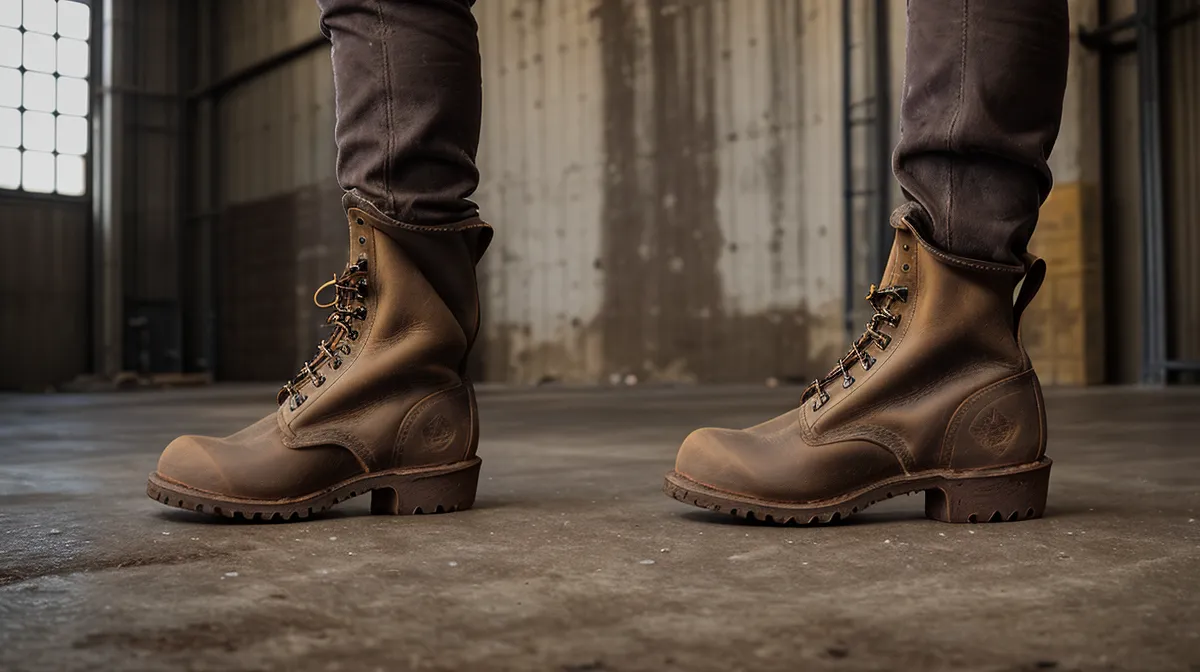
Concrete does not flex, not even a little, no matter how thick the sole standing on it claims to be. That fact undercuts a lot of warehouse work folklore about work boots — namely, that the heaviest, stiffest pair on the shelf must be the one actually protecting your legs. Lightweight boots get written off as flimsy by guys who've never walked a full shift in a pair, and that assumption costs them more than it saves. Footwear comfort on a hard floor and footwear durability turn out to be two separate questions, not one.
Quick business before the boot talk: some of the links below are affiliate links, and if you buy a pair through one of them, I earn a small commission at no extra cost to you. Every brand mentioned here has actually walked a distribution-center floor with me in it, not just sat on a showroom shelf, and that commission is what keeps new pairs rotating through my closet instead of me stretching a dying boot another season.
Heavier Doesn't Mean Safer on Concrete
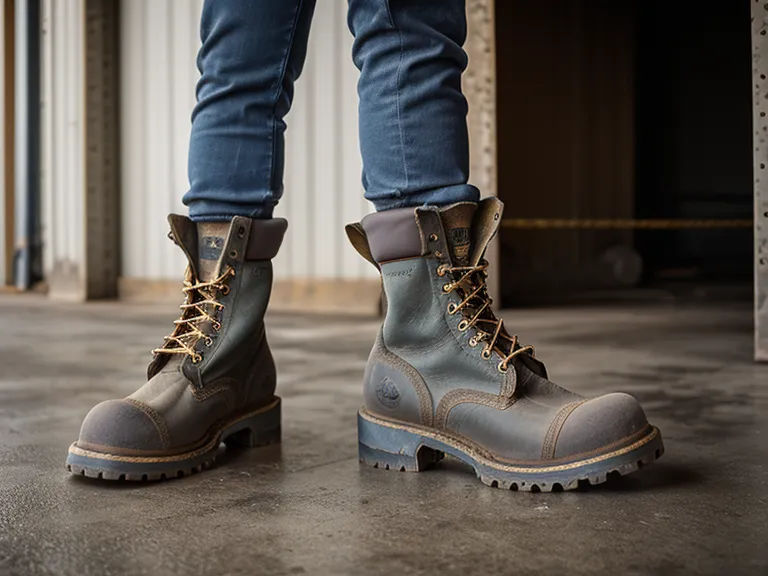
My own buying habit matched that myth for years: grab the heaviest, thickest boot the store had in a size 11 wide, condition the leather twice a season, and tough it out. Our facility runs on a few hundred thousand square feet of sealed concrete slab, and none of that square footage gives anything back the way gravel or packed dirt does. A boot that's just heavy for the sake of it turns every step into dead weight you're carrying instead of gear carrying you, and plantar fascia strain and lower-back fatigue show up fast once that math runs against you for a full shift. None of this is medical advice — I'm a maintenance guy whose knees answer to his paycheck, not a podiatrist — so a standing foot condition is a conversation for a professional, not a boot blog. For the rest of us walking hard aisles all day, I'd already started chasing lighter footwear before I fully admitted it to myself, which is half of what I got into in shift-end survival on warehouse floors.
From Logger Boots to a Lightweight Pull-On
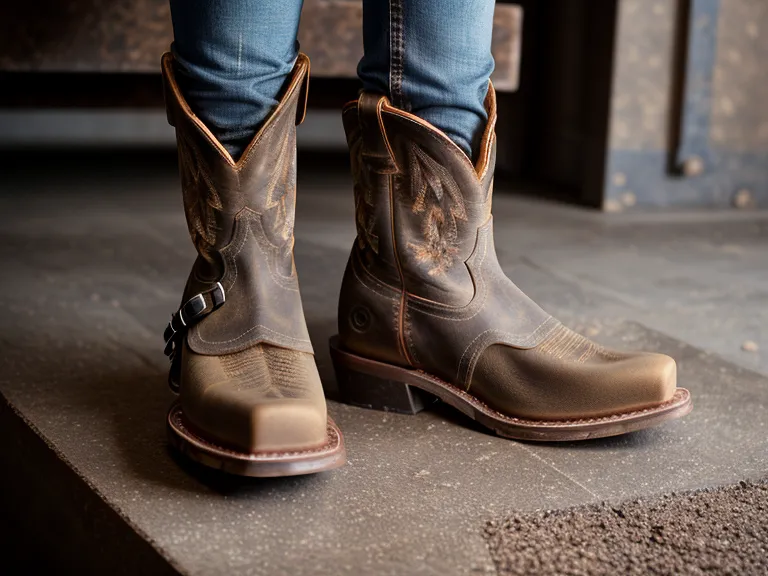
Switching tracks meant looking seriously at Durango Boots and their Rebel line, mostly because I needed an EE-wide fit that wouldn't crush my little toe or drag like a cinder block by the back half of a shift. A couple of the younger guys gave me grief the first morning I showed up in a pull-on western boot instead of my usual laced rig, but the weight difference was obvious the second I picked a pair off the shelf. Durango builds the Rebel on an eleven-inch pull-on shaft over a molded footbed with an ethylene-vinyl acetate midsole, and it handles a lot closer to a running shoe than the stiff oil-tanned boots I'd been buying for years.
Before any of that paid off, I tried the thing everyone tells you to do with a stiff new pair: wear it around the house for the better part of a week to break it in ahead of a shift. All that proved was that the boot was stiff in my kitchen too, and the first real shift in them still felt like day one. Once I actually put miles on the Rebel on the warehouse floor itself, the arch fatigue that used to set in by lunch stopped showing up, and stepping off a forklift platform quit sending a sharp jolt up my shin.
What Do You Actually Give Up for Lighter Legs?
Here's where the myth flips into one that's actually true: lighter construction does trade away some long-term structural durability for that immediate relief. Brands don't advertise that part, but a season or two on an industrial floor shows it plainly. Swap a heavy shank and a dense poured sole for blown foam and a thinner leather shaft, and you buy real comfort at clock-in, but that foam keeps compressing under repeat load in a way dense rubber mostly resists, and a thinner upper picks up scuffs and small splits faster wherever metal strapping or pallet edges rub against it. Gus, a reader out in western Ohio who wrenches on rigs pit-side and goes through boots from the outside in faster than almost anyone who writes to me, asked recently whether a lighter boot would just fall apart under that kind of abuse. The honest answer depends on what's doing the abusing — oil and brake dust eat leather regardless of how heavy the boot is, while foot-strike wear is exactly what a lightweight midsole is built to absorb. The deeper rundown on toe protection that doesn't add bulk is already covered in carbon fiber vs composite toe boots. What nobody tells you going in: a welted boot you can actually get rebuilt earns its extra weight if your floor is wet, greasy, or full of debris that works its way into a welt channel — grinding a stiff brush into that channel until the packed-in grit finally lets go is a far cheaper habit than replacing the whole boot, and it's a habit only a rebuildable sole rewards.
Weighing Rocky, Georgia, and Thursday Boot Against Each Other
Several pairs stayed in rotation long enough to see how each one actually held up once the honeymoon phase wore off. Rocky Boots sits at the other end of the weight spectrum from the Rebel — noticeably heavier, but the welt construction on their better lines means a cobbler can rebuild the sole instead of the whole boot going in the trash. Sizing runs generous in the forefoot on most Rocky lines, enough that I wrote a separate guide on finding the right Rocky boots size for maintenance work specifically. Georgia Boot leans even further into armor: thick leather, a dense protective outsole, a footbed that soaks up vibration like nothing else I've tried. Wearing Georgia Boot on a long walking shift protects you completely, but your hip flexors know by the back half of a double that you picked armor over agility. Terri, who runs second shift on the dock and logs more mileage in a night than anyone else in the building, ruled out anything with a stiff rocker sole almost on sight — her floor time alone is proof that boot weight matters most to whoever covers the most ground. Thursday Boot earns a permanent spot in my weekend rotation for its heritage-style welted look, but the narrower toe box and firmer leather midsole aren't built for a full day on warehouse concrete. Hunter Boots, meanwhile, are unbeatable for standing in ankle-deep yard runoff, but rubber wellies lack the arch structure you need once you're back inside on a hard floor.
Which Boot Fits Your Own Shift?
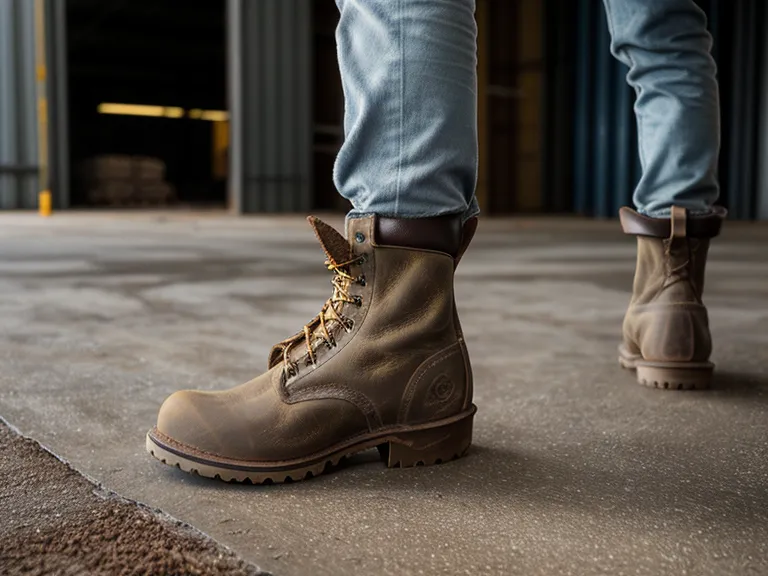
The clearest test isn't a spec sheet, it's what happens the first time the floor turns wet. One November I cut straight through a puddle that had crept across the loading bay apron, and noticed afterward that my foot had registered the wet but never the cold — the first pair I'd owned where the sole did its job quietly instead of broadcasting the weather straight up my leg. A heavy logger boot never gave me that, no matter how much leather it was wearing. On weekends I walk my mother's old Lab through South Park in whatever pair earned a day off from the warehouse, and that's usually the lightest boot in the rotation, not the toughest-looking one. So here's the actual rule, not just a gut feeling: if you're walking more than you're standing still on a given shift, weigh the boot in your hand before you judge it by how substantial the leather feels, and plan on replacing a lightweight midsole sooner than you would a welted one. If you're mostly standing, or working outdoors around debris and wet gravel, buy for the rebuild and let your legs absorb the extra weight instead. For walking a hard aisle all day, a lightweight western build like Durango Boots is still the one I reach for first, with the heavier, rebuildable options from Rocky or Georgia waiting in the closet for yard work and wet shifts.
| Product | Rating | |
|---|---|---|
| Rocky Boots Top Pick | 8.9 | Read More → |
| Durango Boots | 8.6 | Read More → |
| Georgia Boot | 8.4 | Read More → |
| Thursday Boot | 7.9 | Read More → |
| Hunter Boots | 7.5 | Read More → |
Durango Boots
Pros
- ● Lightweight build drastically reduces leg fatigue across long shifts
- ● EVA midsole absorbs unforgiving concrete shock right away
- ● 11-inch pull-on shaft eliminates tangled or frayed laces
Cons
- − Blown foam midsole compacts faster than dense rubber over time
- − Lighter leather vamp requires regular conditioning against scuffs