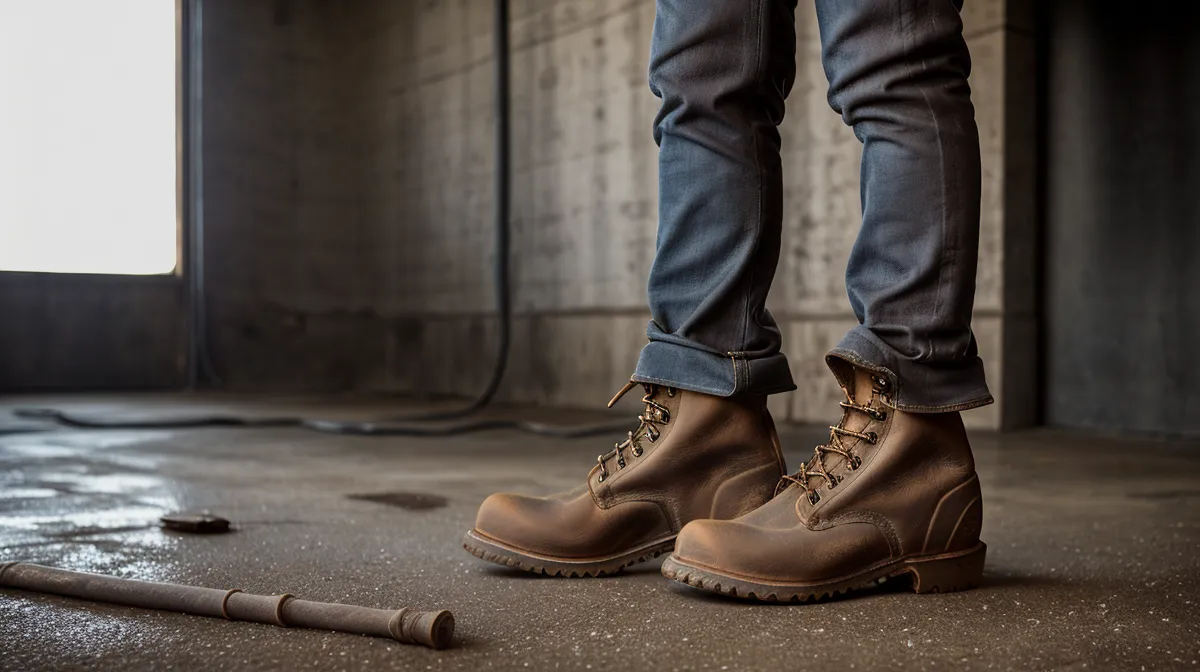
Two kinds of metatarsal guard exist on the market, and for years I only trusted the one bolted visibly to the outside of the boot. Work safety gear doesn't get much respect on a warehouse floor until something heavy tests it, and a brass manifold sliding off a pallet taught me that lesson across the laces of my boot instead of my steel toe. Rocky boots are what I've worn through most of that education, mostly because the internal metatarsal guard tucked under the leather beats the old external flap in almost every way that matters for warehouse maintenance.
The Steel-Toe Myth That Leaves Your Metatarsals Exposed
Guys grab a boot with a steel cap and figure the whole foot is covered. It isn't. The long bones that run across the top of the foot, behind the toes, sit completely outside that steel cap's reach, and those metatarsal bones take the hit whenever a rolling rack or a dropped part lands mid-foot instead of square on the toe. There's a whole separate rating system stamped into the tongue for toe and sole protection, and that's a deeper conversation for another day. For metatarsal coverage, what actually matters is whether the guard covers that stretch of bone at all, steel toe or not.
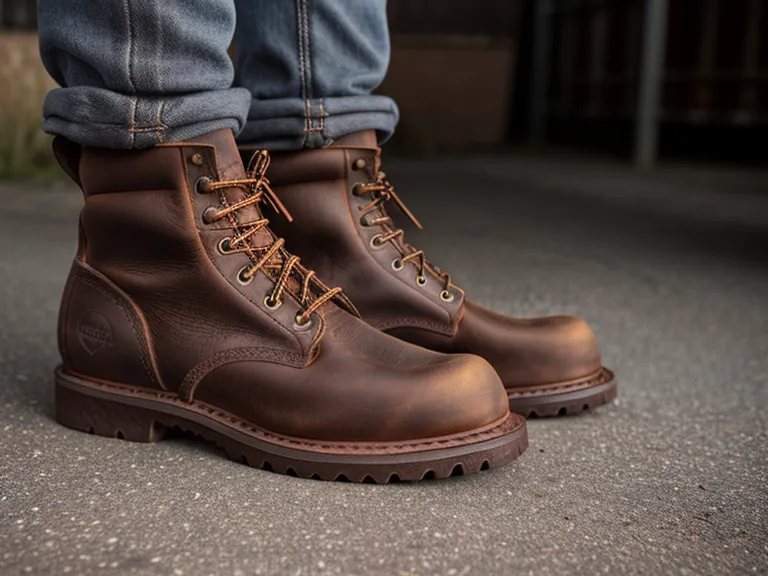
One winter morning on the dock, a heavy brass fitting slid off a pallet and came down across my laces instead of my toe. It missed the steel cap by a clean margin and landed right over the bridge of my foot, and the only reason that morning ended with a sore foot instead of something worse was the guard sitting under the leather, not the toe cap.
Why Internal Guards Beat the Old External Flap
For a long stretch, metatarsal protection meant a stiff leather flap riveted to the outside of the boot — the kind that catches on a pallet edge or a ladder rung and threatens to put you down before anything ever falls on your foot. Those flap-style boots barely needed any break-in, which was about the only thing in their favor; everything else about them was a liability waiting for the right rung or pallet corner.
Internal guards solve the snag problem by disappearing under the leather entirely. The foam Rocky uses stays soft and flexible through a normal shift, then stiffens the instant something strikes it — no flap, no rivets, nothing hanging off the outside to catch on anything. It does eat a little room inside the boot, which matters if you're deciding between standard and wide width; I keep a running note on sizing with a guard built in at How to Find the Right Rocky Boots Size for Maintenance for exactly that reason.
Terri, who runs second shift on our dock, wasn't sold on paying extra for something she couldn't see from the outside. Her exact complaint was that it cost about what a week of takeout runs for her family, and she wasn't convinced the trade made sense — until a pallet jack clipped her foot square across the guard one night, and she went quiet about the whole argument. Wide feet make the math trickier, since a guard and a thick sock both want the same room in the toe box, but the wide-last pairs I've used left enough space without pinching anything into a point.
Picking Guards That Won't Snag You on a Ladder
A reader out in western Ohio who wrenches on semis pit-side, Gus Hornak, sent me a photo of his old boots with a note scrawled across the toe, asking whether an internal guard was worth the extra bulk when his feet already spend all day banging around wrenches and jack stands. Climbing is where I'd tell him it earns its keep. The guard gives the top of the boot enough structure that it doesn't fold flat against a ladder rung, which matters more than people think when you're a good ways off the ground checking an overhead conveyor instead of standing flat on concrete.
The Welt, the Weight, and the Part That Actually Wears Out First
Durability questions circle back to the welt and the glue line eventually, and how a sole holds up after a wet winter is its own long conversation, not something one article settles. The leather itself usually gives out first at the flex point over the toes, more from salt and standing water than from the guard underneath it. I soaked a cracking vamp in mink oil once, hoping it would stop the leather from splitting along the toe box, and all it did was darken the leather while the crack kept spreading anyway. Road salt fights leather in ways that take their own conversation to cover properly, and if your floor sees hydraulic fluid or floor cleaner instead of snowmelt, the outsole compound matters more than the guard does — I've gone into that separately in Chemical Resistant Work Boots for Parts Distribution Center Workers.
Weight is the trade-off nobody mentions upfront. A guard adds ounces to a boot that's already heavier than a sneaker, and shins notice it by the end of a long shift before the legs adjust to carrying it. That's a real cost, not a made-up one, worth knowing before you buy it — tired shins beat a crushed foot on any given day, and most guys who stick with the internal version through a stretch of rough weather come around to the same math. Seeing how these have held their shape through loading-dock slush and warehouse concrete both, I'd put them on my short list of Most Durable Rocky Boots for Heavy Duty Distribution Center Work without much hesitation.
The short version: a steel toe covers the front couple inches of the foot and nothing past it, so treat a metatarsal guard as its own decision, not an upsell tacked onto the same boot. Check that the guard sits inside the boot rather than strapped to the outside, make sure it doesn't crowd the toes once a sock's involved, and don't let anyone tell you the added weight is nothing — it's something, just a smaller something than a brass fitting landing where a steel toe can't reach. On weekends I'll walk three miles or so down the towpath near Cranberry Township with the dog, and the next morning there's no stiffness in the ankle from the guard getting in the way of normal movement, which tells you the trade-off is in the weight, not the fit. None of this makes me a podiatrist, and if there's already foot trouble in the picture, a boot fitter or an actual doctor should weigh in before any guard does.