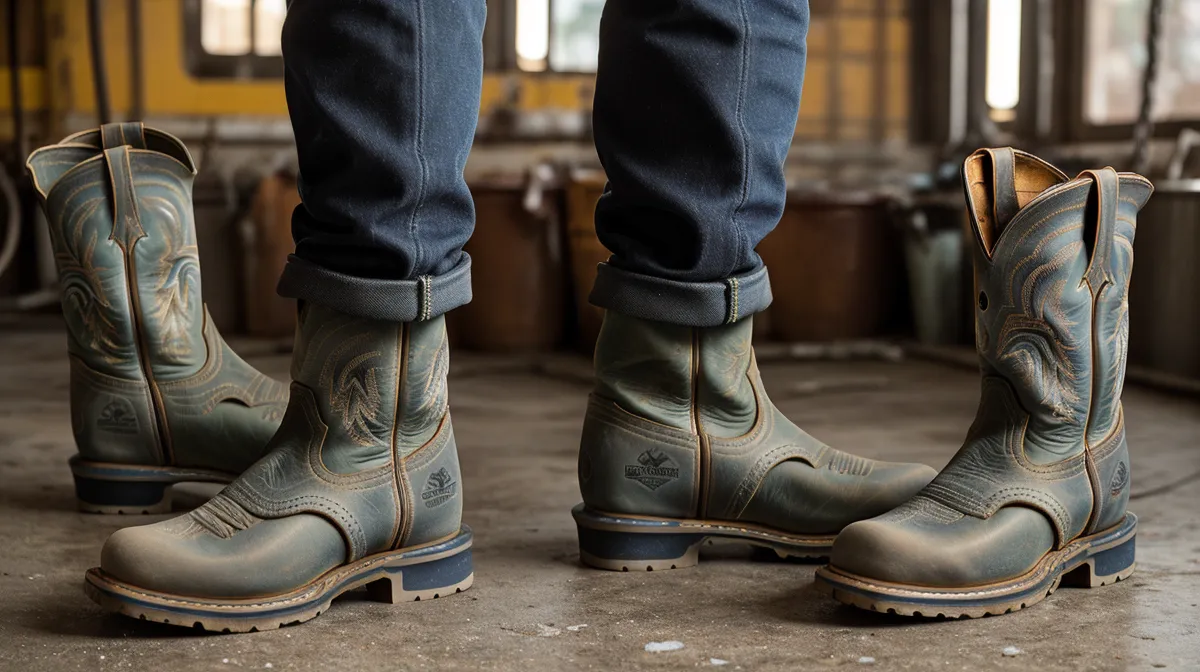
A laced-up work boot locks your ankle down the second you pull it tight; a Western pull-on lets your foot do whatever it wants the moment you step into it. That's the whole argument for and against Durango Boots once you put them on a distribution warehouse floor for heavy maintenance work. I get some version of this question every few weeks from guys on my crew who are sick of fighting laces covered in grease: do Durango boots actually have the durability to survive months of concrete, oil, and steel ladders, or are they a weekend boot that snuck onto a job site? Here's the direct answer, question by question, because that's how most guys actually bring it up with me.
Quick disclosure before anything else: some of the links on this page are affiliate links, and if you buy through one, I get a small commission at no extra cost to you. That's what pays for the next pair of boots I wreck on a concrete floor so I've got something honest to report back. None of that changes what's in the rest of this page — it's exactly what my feet told me after wearing these on shift.
Twenty years into fixing lift trucks and conveyor drives at a parts distribution hub outside Pittsburgh, I've gone through more boots than I can list from memory. My feet run EE wide, and the first pair I ever bought was whatever sat on the warehouse-club shelf in my size — no plan, no research, just grab and go. These days the pairs that don't make the cut end up lined up on a shelf in my garage over in Penn Hills, waiting their turn back into rotation, under a strip light that's had a flicker in it for longer than I care to admit. If you want the current price on these, go check the vendor page yourself since it moves around — figure it's in the range of a couple of decent takeout dinners for the family, not pocket change.
The Pull-On vs. Laced Boot Trade-Off
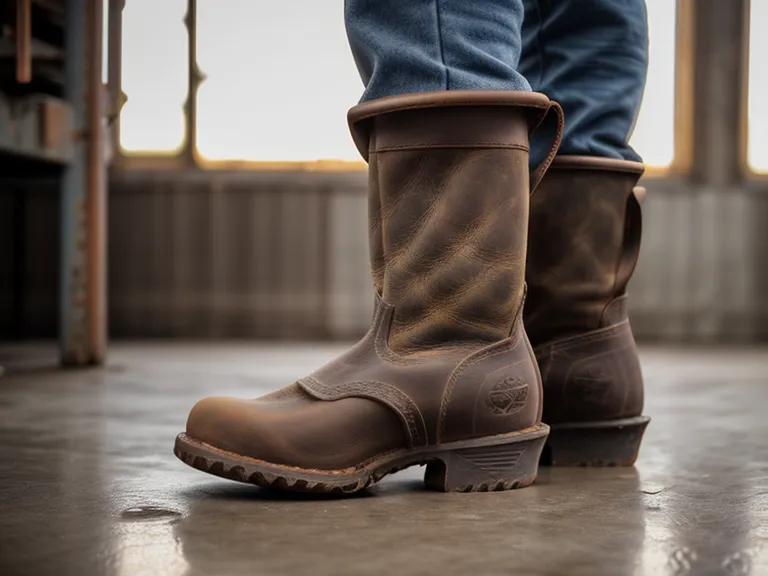
By the time I got fed up with laces, I'd lost count of how many times a loose eyelet caught on a pallet corner or soaked up black grease right when I needed to move fast. Working around heavy chains, hydraulic lines, and dusty drive motors, laces are just one more thing that fails you at the worst moment. A pull-on skips all of that. You step in at five in the morning without bending over, and there's nothing to come loose while you're kneeling under a conveyor. The trade-off, and it's real: a pull-on shaft doesn't cinch down around your ankle the way a laced boot does, and that catches up with you the first time the ground under you isn't flat.
My feet measure an EE on a Brannock device, and most pull-ons pinch across the ball of my foot or let my heel slide the second I start moving. Durango Boots' work line earned a second look because of the room up front. A wide toe box is its own rabbit hole if you want the full breakdown, but the short version here is that it gave my forefoot space without the heel slop that usually comes from sizing up just to fit the front of your foot. The shaft runs the standard eleven inches, tall enough to keep grinding sparks and metal shavings out of your socks.
When they showed up, I looked at the decorative stitching running up the shaft under my grease-spattered jeans and figured the guys on the floor were going to have a field day. We're in western Pennsylvania, not anywhere near a cattle operation. Comfort won anyway. I'll take some ribbing over arches that ache by hour four.
Do They Actually Feel Good on Concrete All Shift?
Sealed concrete gives nothing back. Every step sends the impact straight up through your midsole into your knees and your lower back, and after years of that grind you notice fast which boots soak it up and which ones just pass it through. The footbed on these absorbed that slab shock from the very first shift — my lower back, which usually tightens up by midday, stayed loose, and the outsole flexed enough that there was basically no break-in to speak of.
If you want the deeper dive on how soft soles hold up over long stretches of pacing, I've got notes on that in Best Lightweight Work Boots for Walking Miles in a Warehouse.
How long that softness holds up is really a question about arch support over the long haul — that's a bigger topic than one pair of boots can settle, and worth its own conversation if foot pain is a regular problem for you. Agata Chmura, who runs receiving on my floor, brought it up during a safety walk once when she mentioned her heels were giving her trouble; she's got no patience for anything that sounds like it came straight off a product page, so I gave her the plain version instead of a sales pitch. What I can say from wearing these outside the warehouse too: I walked three miles of towpath trail out past Cranberry Township on a weekend and woke up the next morning with no ankle stiffness at all. None of the dull ache I get from a boot whose footbed already gave up on me.
That softness has a flip side, though. Climbing a vertical cage ladder to check an overhead air drop felt completely different from walking a flat aisle. A soft leather upper and a flexible shank give up lateral stability the second your arch has to bridge a narrow steel rung. Your foot folds over the bar instead of resting flat on something rigid, and that drags on the tendons under your foot over a full shift. I've got zero medical credentials, I just notice when my own feet hurt, so if you're dealing with plantar issues or chronic foot pain, that's a conversation for a podiatrist, not a maintenance guy with opinions.
Rotating Two Cheap Pairs Doesn't Double Their Life
I tried this exact math years back — bought two cheap pairs figuring the rest days in between would stretch each one twice as far. It doesn't work that way. Both pairs wore out on their own clock regardless of how often I swapped them, and I ended up with two mediocre boots instead of one decent pair that actually held up. Leather doesn't care that it got a day off; once the fibers break down from flexing and grit, they're broken down. If you're weighing a pull-on like this against something cheaper, factor that in — the idea that rotation extends boot life almost never holds up the way it sounds like it should.
My buddy Lou Ferrante asked me about this exact thing not long ago. He's a semi-retired plumber who still picks up light commercial maintenance work, and his feet have given him trouble for years, though he'll never actually do anything about it besides complain to me over coffee. I told him the same thing I just told you: two bad pairs aren't a substitute for one good one.
The Ladder and Dock-Plate Weak Spot
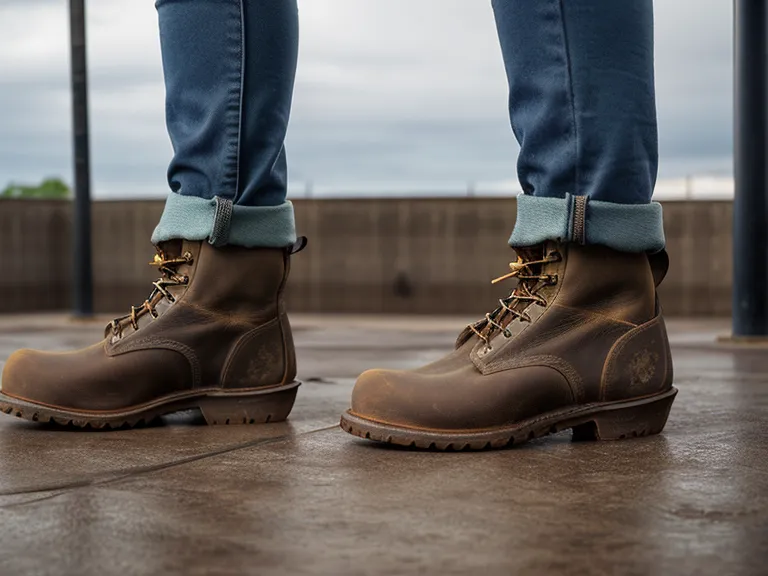
The real test came off a flat surface. Stepping sideways off an uneven dock plate with a torque wrench in hand, I felt the unlaced collar roll before I could catch it, and my left ankle nearly went with it. A pull-on shaft just can't lock your heel and ankle down the way an eight-inch laced boot can when the ground under you isn't level — that closure difference between pull-ons and laced boots is really its own topic, but the short practical version is what just happened to my ankle. How a boot's heel and shank are built plays into this too — different geometry changes how much lateral support you get — and the short version with these is that the shank flexes more than I'd want for ladder work or uneven footing.
What Happens to the Leather and Soles After Months of Grease and Heat?
Durango gives you more comfort up front than a heritage boot, but it asks for more sole replacements down the line compared to boots built with a stitched, resoleable outsole. That's the actual trade: sneaker-level flex on day one, polyurethane and rubber compounds that wear down faster once industrial grit works its way into the mix.
One stretch of summer heat turned our bays into ovens, with burnt gear lubricant hanging thick in the air while we fought an overhead gearbox. The tread handled the warm lubricant fine, but the leather upper soaked up oil faster than the stiffer, oil-tanned hide you get on purpose-built industrial boots — how different upper leathers hold up under contact with oil is a longer conversation on its own. If oily floors are the bigger hazard where you work, that's really a different question than the one this article answers, and I covered it separately in Best Slip Resistant Work Boots for Oily Warehouse Floors.
A heavy spud wrench slipped out of my hand once and landed square on the toe box. The ASTM-rated toe cap did its job — toes came out fine — but the thin leather over it gouged straight down to the liner. Where that rating actually comes from and what it requires is worth its own explainer; here, the short version is that the protection held even though the leather around it clearly didn't.
Checking how much tread is actually left doesn't take any guesswork: drag the heel of the sole across bare concrete and listen. A sole with life left in it still grabs texture on the scrape; one that's thinning out slides smooth and goes quiet fast. On these, that quick check told me the outsole was wearing out before the upper did, which is the reverse of what happens on a heavier boot.
Durango vs. Rocky vs. Georgia vs. Thursday: Where Each One Wins
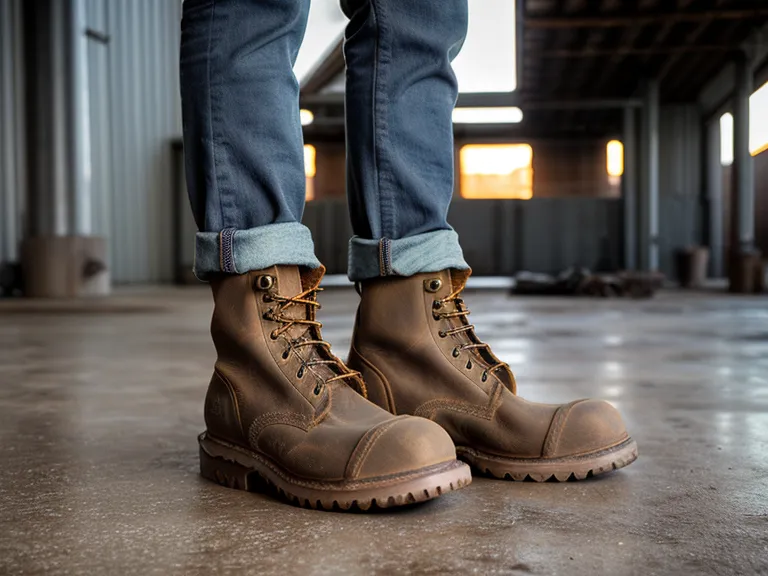
Line Durango up against the brands that actually dominate most plant floors and the differences get clear fast. Rocky Boots builds a noticeably stiffer, more supportive chassis if you need a tall shaft with real industrial backbone — their higher tiers use a genuine Goodyear welt, which means a cobbler can resole them instead of you pitching the whole boot once the tread goes. They take a good two weeks of blister-prone break-in to earn that support, but they hold your ankle on ladders and rough gravel far better than anything Durango makes. If you're sizing a pair, it's worth reading How to Find the Right Rocky Boots Size for Maintenance first, since that's a whole question on its own.
Georgia Boot is the heavy-iron standard around our shop. The leather is thick and waxy and shrugs off hydraulic oil and metal swarf without flinching, but you pay for it in weight — by the back half of a long shift, your hip flexors notice every extra ounce Georgia added to make the boot nearly indestructible.
Thursday Boot makes a genuinely handsome welted boot at a fair price, but the narrow toe box and sleek profile have no business anywhere near a mechanical bay. I wear mine on weekends walking my mother's old Lab, and I wouldn't bring them within smelling distance of a conveyor chain — they'd be ruined inside of two days.
Judging Whether Durango Boots Are Worth It for Heavy Maintenance
If your day keeps you moving across flat floors — light facility work, warehouse logistics, farm chores where stepping in fast and staying light matter more than anything — Durango Boots earns its spot. The out-of-the-box comfort on a Western-styled boot is hard to beat, and your lower back will notice the difference by the end of a shift.
Jobs that put you on structural steel, greasy dock levelers, or heavy rigging every day call for something else. Rocky makes more sense there, for the ankle support and the welted sole that'll still be resoleable once Durango's outsole has already thinned out. For my own rotation, Durango holds an honest spot by the back door — just know what it won't do before you put it anywhere near a ladder.
Durango Boots
Pros
- ● Unbeatable out-of-the-box cushion on hard concrete
- ● Fast pull-on design saves time and avoids oily laces
- ● Generous wide width options that accommodate broad feet
- ● Noticeably lightweight compared to traditional steel-toe clunkers
Cons
- − Soft outsoles wear down quickly on abrasive industrial floors
- − Limited lateral ankle support on ladders and uneven dock plates
- − Leather uppers absorb oil and scuff easily under rough contact