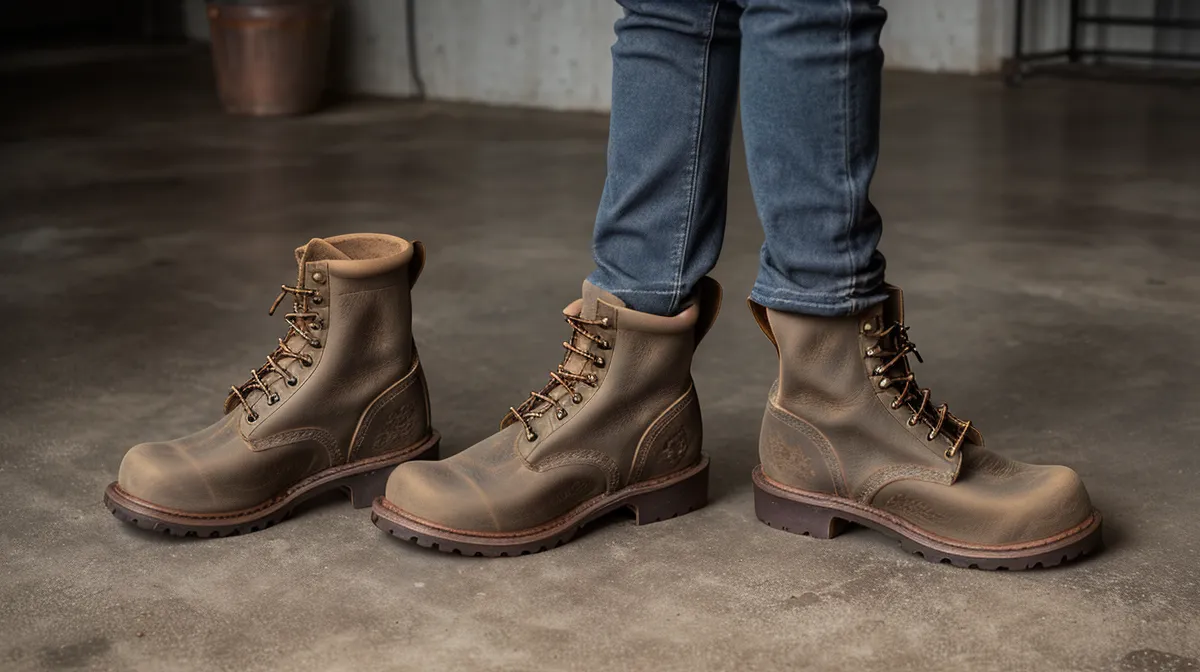
A boot that feels right standing in the aisle and a boot that feels right at hour ten under a conveyor belt are not the same boot, and that gap is where most guys buying their first pair of Rocky work boots get the sizing wrong. Rocky builds for maintenance work — crouching, climbing, wedging a foot into gaps no foot was meant to fit into — but their D and EE widths don't behave like the generic stuff off a warehouse-store rack. Grab a size the way you'd grab a six-pack and you'll end up with a heel that slips or a toe box that pinches before the second week is out.
Back when I was buying whatever size was sitting on the shelf at the local warehouse store, none of this registered. Price mattered more than width, and the only real test was whether the boot cost less than a couple of fast-food runs. That held up fine for a while, until my feet started aching through every shift and I had to figure out why.
Sizing Up for Thick Socks Isn't Extra Room — It's a Different Boot
The mistake I still see new guys make is sizing up half a size to fit a thick wool sock, figuring the extra room will matter once the loading dock turns into a walk-in freezer in deep winter. A decent pair of Rocky boots runs about half a tank of gas in my truck and outlasts the cheap stuff by years, but none of that matters if you buy the wrong size to begin with. I made the same trade for a while, buying a 12 instead of an 11.5 because "room" sounded like comfort.
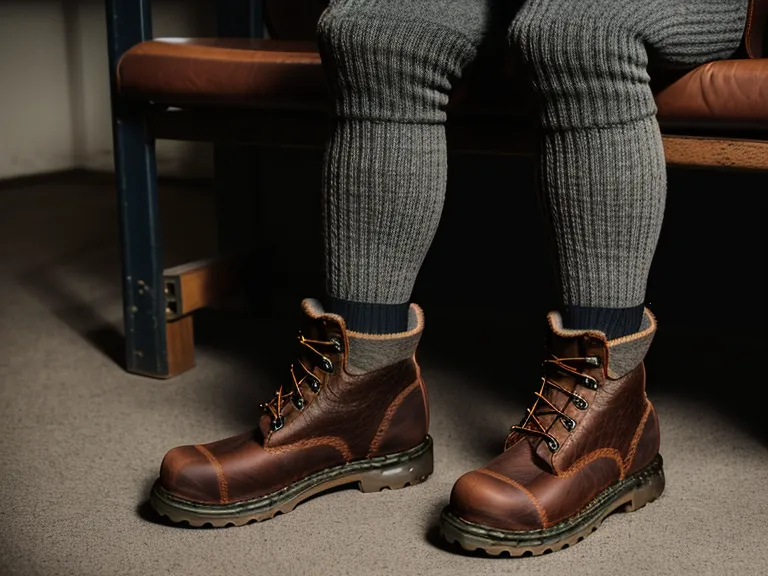
Here's what actually happens: Rocky's heavy-duty lines already run generous through the heel, so sizing up for a sock doesn't just add width, it adds length. These boots are built to the ASTM F2413 safety toe standard, and once your foot slides forward even a little, your toes end up riding right against that cap instead of sitting behind it with room to spare. A heel that's too loose also grinds against the internal counter all shift, which is a faster way to kill an outsole than anything the concrete does on its own.
None of this makes me a podiatrist, and if your feet actually hurt, that's a conversation for a professional, not a guy who smells like hydraulic fluid by mid-afternoon. For most of us the fix is simpler: buy the size that fits the foot, not the sock. Rocky's standard insulation weight is already sized to work with a normal work sock, and stuffing the boot full of extra fabric to compensate just cuts off circulation, which makes the foot colder, not warmer.
What Your Foot Does Inside a Work Boot When You Crouch, Climb, and Wedge Into a Gap
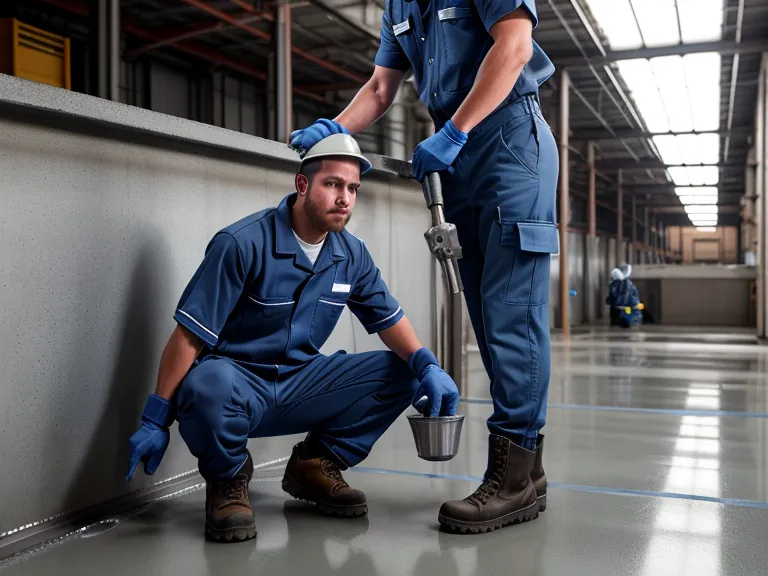
A conveyor overhaul is where the volume of a boot actually gets tested. Hours under the mezzanine swapping rollers, crouched the whole time, and a foot behaves differently under that kind of load than it does standing at a register. Go too tight through the midfoot to make up for a loose heel and the blood flow stops. Go too loose and the foot slides forward into the cap the second you crouch.
Full shoe sizes run about a third of an inch apart, which sounds small until you're wedged under a motor housing and that third of an inch decides whether you can focus on the bolt in front of you or want to rip the boots off right there. New leather also needs real time to settle around the actual shape of your foot. The break-in process on these is its own topic, and I'm not going to walk through all of it here, but don't write a pair off as "wrong" in the first couple of weeks.
Rocky's heel cup also sits deeper than most hiker-style boots, which helps on a greasy mezzanine but changes how you lace. Cranking the top laces tight and calling it done won't lock your heel into that cup — you have to snug the midfoot first. Get the length right, with roughly a thumb's width ahead of your longest toe, and the heel cup does the rest of the work for you. A lot of that holding power traces back to how the boot's built underneath, which is really a question of why Goodyear welt work boots last longer for maintenance crews rather than sizing, so I'll leave it there.
Checking Fit in July, Not in Deep Winter
Heat is the real test. Buy boots in the dead of winter and they'll feel perfectly snug with a thin sock. Then July hits, the warehouse turns into a sauna, and a foot that swells all day in that heat turns the same boot into a torture device. Try boots on at the end of a shift, not on a day off, because that's the biggest your foot is ever going to get.
One humid stretch still stands out: boots sized a touch too narrow, and by the end of that shift pulling them off felt like peeling a damp sock, with the lace pattern pressed red across the top of my foot. That's the boot telling you the volume is too low, not a lacing problem you fix by loosening the top eyelet. Rocky's Wide option covers most guys fine, but red marks after a shift mean it's time to admit you need the wider last, not a new lacing trick.
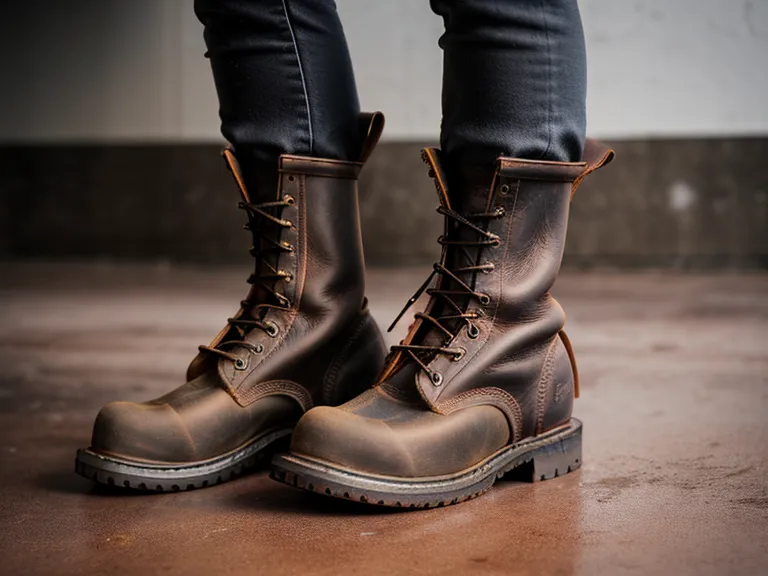
If you're bouncing between the warehouse floor and anything outdoors, the fit math changes again. Their lighter models flex more, which I like for agility, but it leaves no forgiveness if the sizing's off by even a little. Worth a look at my notes on most durable Rocky boots for heavy duty distribution center work before you commit to a pair for that kind of switching.
The Newspaper Trick That Never Worked
Curt Walczak, who works facilities on my floor and somehow keeps his boots looking cleaner than anyone else out there, used to give me grief about the state of mine after a wet shift. My fix for soaked boots for a while was balling up crumpled newspaper and stuffing it inside overnight to pull the moisture out of the lining. It never actually worked. The newsprint just went soft and left grey smudges inside the boot, and the lining was still damp by morning more often than not. Wasted paper and a boot that smelled like a basement for a week.
About five weeks into wearing that same pair, properly sized this time, I stepped square into a puddle at the edge of the loading bay on a November morning and realized nothing — no cold, no wet creeping up through the sole. That's the moment the sizing actually registered as right, not the day I bought them. A boot that fits doesn't announce itself in the store. It shows up on some ordinary bad-weather morning when you notice it isn't bothering you at all.
Before DeShawn Buys His First Real Pair
DeShawn, a forklift operator a couple of aisles over, asked me last month why I kept telling him to buy boots a half size smaller than what felt roomy in the store. He kept pushing on it instead of just nodding along, which is the only reason I actually had to think through my own answer instead of repeating something I'd heard once. The answer is the Brannock Device size on your foot, not the size that feels like a hug in an air-conditioned store.
Stick to that measured Brannock Device size, account for the real sizing increments instead of guessing at "room," and give new leather a couple of honest weeks before deciding it's wrong. That's the whole method, and it hasn't failed me on a single pair since.
If wet conditions are a regular part of your shift, it's worth reading my real-world test of waterproof boots to see which uppers actually hold up to a soaking instead of just claiming to. My mother's old Lab doesn't care what's on my feet when I walk him around South Park on the weekends in a retired pair, and neither does the conveyor line. The only thing that matters is whether you can still walk to your truck at the end of the week without your feet telling you about every hour of it.