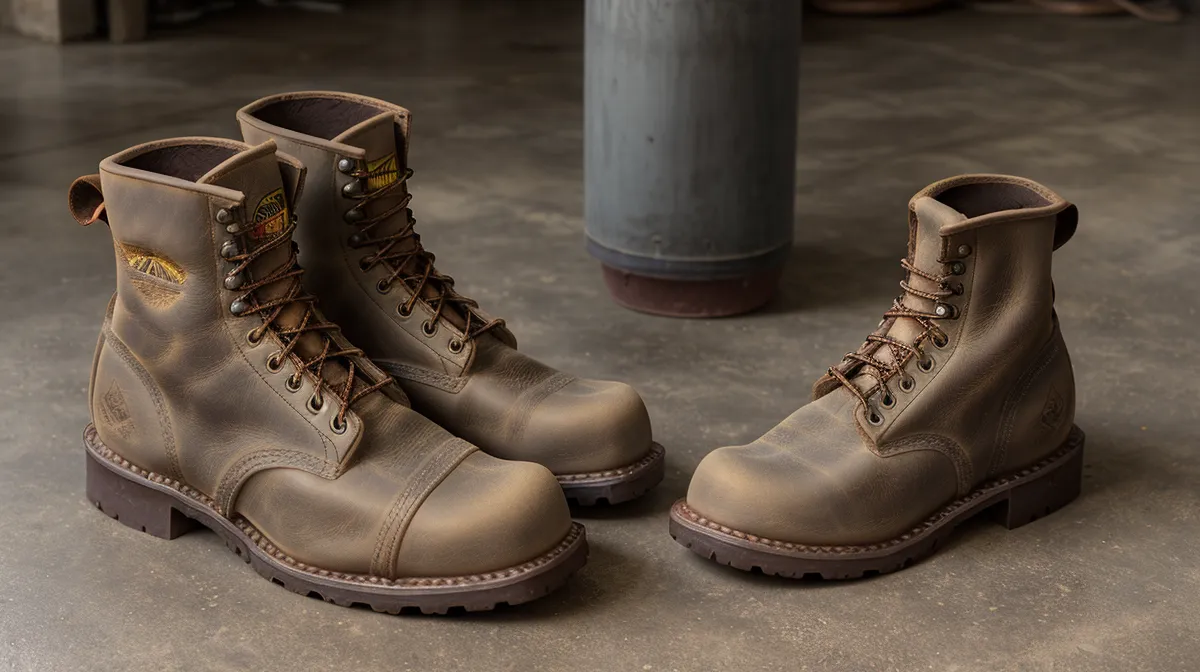
Kneeling down to grab a filter cartridge off the bottom shelf, I notice my toes aren't jammed against the front of my boot the way they used to be in my old pair. That is the kind of moment that actually tells a maintenance supervisor something about work boot comfort, not the showroom feel, not the cushy first five minutes. Twenty years of parts-room shifts have taught me that AirWair technology on a pair of Dr. Martens either earns its name by hour seven or it does not, and no amount of marketing changes that.
The short version on how this site runs: when you click through a boot link on this page and buy, the seller sends a small commission my way at no extra cost to you. That commission is basically what lets me keep buying pairs like Dr. Martens AirWair boots every season and running them through a real distribution-center floor instead of just unboxing them for a photo.
Does the AirWair Sole Actually Fix Work Boot Comfort?
Short answer: yes, for a specific kind of day. The AirWair sole is a cushioned, air-pocket build instead of a dense rubber slab, and it gives a little under your heel every time it hits concrete instead of sending that shock straight up your shin. On a shift that is mostly flat floor and long aisles, that give in the sole is the difference between my knees still working at hour seven and my knees filing a complaint. It also shrugs off the oils and grime that chew through cheaper rubber soles faster than most guys expect, so the sole tends to outlast the stitching around it.
Dr. Martens does sell steel-toe lines alongside the fashion mainline, so if your site requires a safety rating, that is a separate conversation from the comfort question here — check the rating tag on the box, not just the silhouette.
Comfort Versus the Rest of the Rotation
How does AirWair stack up against heavier work boots? Side by side with my Georgia Boot pairs and my Thursday Boot pair, the AirWair sole is noticeably softer underfoot, more like stepping on a gym mat than a wood deck. That softness costs you something: less lateral stability when the footing gets uneven. Step off a pallet edge or cross a loading ramp at an angle and the sole gives a little sideways instead of staying flat, which my Rocky Boots just do not do. My rule after years of rotating pairs is simple: if the day is mostly flat concrete and walking, AirWair wins. If I am climbing, crossing debris, or doing anything where my ankle needs to trust the ground, I reach for the Rocky pair instead. Readers chasing the right fit on that front should look at how to find the right Rocky Boots size for maintenance work before buying either one.
Traction Drops Off Once the Floor Gets Wet
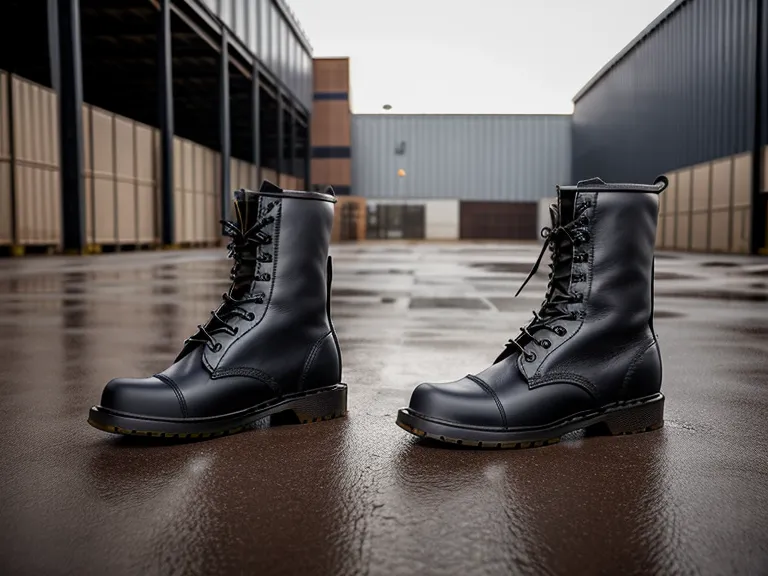
Wet concrete and oily ramps are where the tread pattern matters more than the cushion. The flatter tread on Docs gives good surface contact on dry, smooth concrete, but it turns slicker once there is standing water or a film of grease on it, nothing like the aggressive lug pattern on my Rocky Boots. If your dock floods or your yard turns to slush for part of the year, that is worth weighing before you commit to AirWair as your only pair. I have gone deeper on whether Dr. Martens are slip resistant enough for a distribution center if traction is your main worry.
Breaking Them In Without Wrecking Your Heels
Expect the break-in to be rough; the leather is thick and it will bite your heel before it loosens up. One thing that did not work for me: sizing up a half size to get more room up front, which just opened up extra space around the heel and left me with a blister across the back of my ankle before the shift was over. Stick with your true size and let the leather give, not the fit. There is no shank running through the sole either, so the boot flexes more through the arch than a traditionally built boot would — fine for standing and walking, less fine if you are on ladders all day.
For wet chores around the house, I keep a pair of Hunter Boots by the door, and broken-in Durango Boots cover the comfortable middle ground while the Docs are still softening up. My mother's old Lab gets walked in whichever pair does not currently hurt, usually looping the lot near the Settlers Ridge shopping center in Robinson Township on a Saturday. A buddy of mine who runs weekend 5Ks with his wife along the Three Rivers Heritage Trail swears his pair never fully stopped hurting at the heel, which tells you break-in time varies more by foot than by boot.
Guys who want a pair that skips this whole phase might be happier with heritage boots built for weekend chores instead of a work rotation.
These Aren't a One-Pair Solution
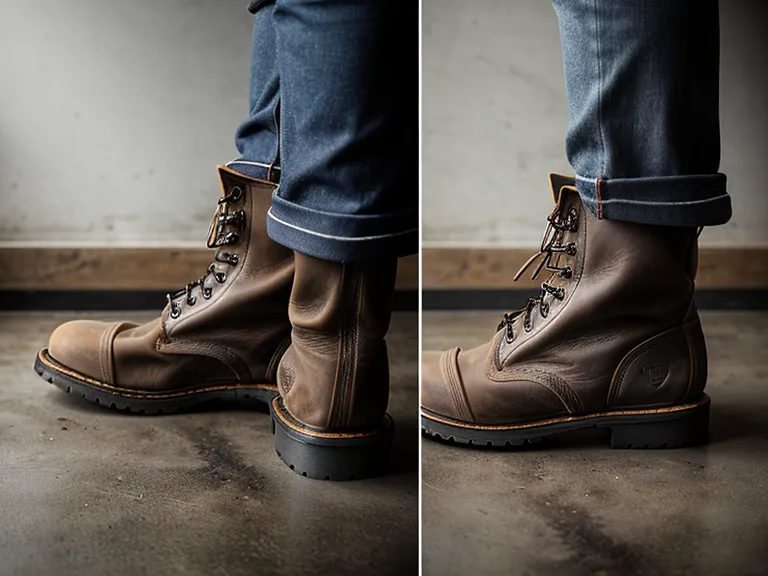
If most of your shift is flat, hard flooring and your biggest complaint is sore joints by mid-afternoon, the AirWair sole earns its keep. It is not without weaknesses, but for straight walking and standing, it beats a cheaper warehouse-store sole without me having to oversell it. Guys doing real maintenance repair work, climbing racks, or carrying awkward loads should treat these as a rotation piece, not a replacement for a proper work boot — I still switch back to my Rocky Boots the moment the job stops being pure walking. That is the whole supervisor's-eye takeaway here: match the boot to the task instead of expecting one pair to do everything.
Flat-floor comfort is the use case these are built for, so if that is your day, the current lineup of Dr. Martens AirWair boots is worth a look before your next pair wears out.
| Product | Rating | |
|---|---|---|
| Rocky Boots Top Pick | 9.4 | Read More → |
| Georgia Boot | 8.8 | Read More → |
| Dr. Martens | 8.5 | Read More → |
| Thursday Boot | 8.2 | Read More → |
| Durango Boots | 8.0 | Read More → |
Dr. Martens
Pros
- ● PVC sole resists oils and acids common in warehouses
- ● AirWair cushioning is unbeatable for long shifts on concrete
- ● Classic aesthetic that doesn't look like a clunky safety boot
Cons
- − Lack of a traditional shank reduces lateral stability
- − Heel break-in period can be brutal for the first few weeks