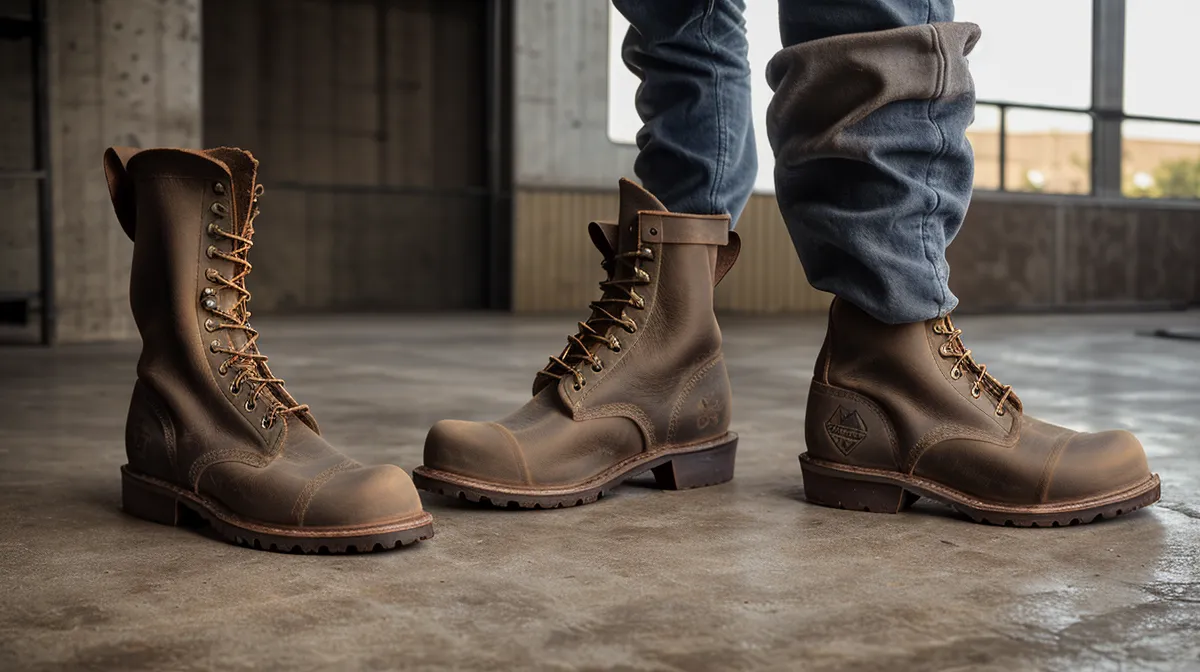
Twenty years on a distribution center floor teaches you which boots survive a spill of hydraulic fluid and floor stripper, and which ones just look tough sitting on a shelf. Chemical resistance here has nothing to do with lab coats. It means degreasers, alkaline strippers, and whatever leaks out of a forklift battery pooling on bare concrete under whatever industrial footwear you happened to grab that morning, and warehouse maintenance work chews through boots faster than almost any other trade I know.
Before you scroll past this like every other buying guide, here's the deal: some of the boot links below are affiliate links, and if you buy through one I earn a small commission at no extra cost to you. That's what pays for the boots I actually wear through double shifts and Pittsburgh winters, month after month, so I can keep testing which leather holds up and which just turns into cardboard.
What "Chemical Resistant" Really Has to Survive Here
Most guys assume "chemical resistant" means acid-proof gloves and a hazmat suit. On a parts distribution floor it means hydraulic fluid, engine degreasers, and the alkaline strippers the cleaning crew runs across the concrete every night, all soaking into whatever you're standing in for eight-plus hours. The trade-off most boots make is real: a boot built to shrug off acid often skimps on the slip-resistant tread you need for oily concrete, and a boot with an aggressive tread sometimes uses a rubber compound that softens and swells the first time it meets a strong solvent.
One heritage pair I bought, a Frye that was dress-leaning and priced like it should have outlasted me, got peeled right down to raw leather after a single rough shift near a chemical spill, and it looked like driftwood within a season. That's the kind of lesson that sends you looking for an actual standard instead of a marketing word. The ASTM F2413 rating is the one worth checking on the box, and pairing it with a look at the safety toe rating spelled out on the same label is its own puzzle of letters and numbers I won't fully untangle here — enough to say it's worth five minutes before you buy, not five seconds.
Check the Welt and the Outsole Before You Check the Price
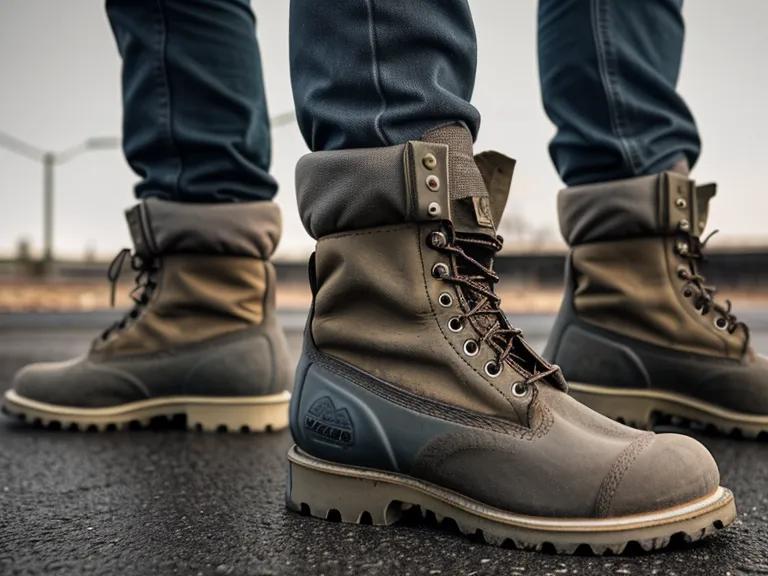
A Rocky Boots pair I've had in steady rotation is built on a Goodyear welt, which matters here for a specific reason — the stitched construction keeps the sole replaceable instead of forcing you to toss the whole boot once the tread wears flat. Welt construction is a deeper topic than one section can cover, and I've written more on why Goodyear welt work boots last longer for maintenance crews if you want the fuller case for it.
Road salt is where a cheaper welt or a cemented sole usually gives up first. Salt slurry tracked in on delivery trucks works into any seam it can find, and once it dries, untreated leather cracks along the flex points. The full-grain leather and eight-inch shaft on the Rocky pair keep that slurry off the leather entirely instead of just slowing it down — the extra height is the difference between brine hitting your sock and brine hitting your boot.
Toe Box Fit and What Actually Matters
DeShawn Quarles, one of our forklift operators, asked me once why I care so much about toe box width when a boot already carries the right safety rating. It's a fair question, and one that forces me to actually explain my reasoning instead of just repeating what worked for me. Wide toe box sizing turns into its own rabbit hole depending on foot shape, and it deserves a longer look than a single paragraph can give it.
For a long stretch I just grabbed whatever steel-toe pair was cheapest in the Walmart bin, wore it until the sole gave out, and replaced it every few months like it was never meant to last in the first place. That habit costs more over a year than buying one pair actually built for the floor, and it never solved the real problem, which was fit and construction, not price. Break-in period is a separate factor entirely — how fast a boot stops feeling like a wooden clog depends on the leather and the lasting, and a pair deserves to be judged over its first couple of weeks rather than its first shift.
The Upper Material Is Where Chemical Resistance Lives or Dies
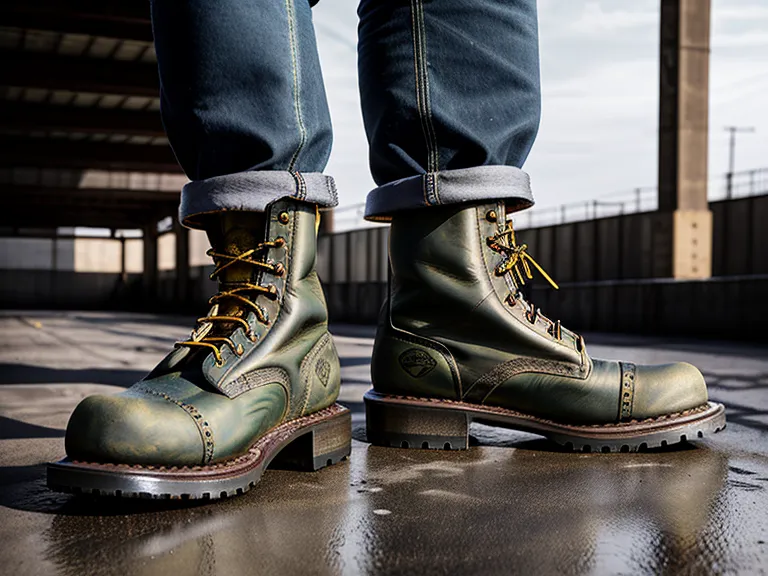
Leather reacts to solvents differently depending on how it's tanned and finished, and that's the piece most guys skip past when they're comparing boots. Guys who wear Dr. Martens on a floor like ours will tell you the upper holds up differently than a treated split leather, and that comparison alone is worth its own article rather than a sentence buried in this one. There's also a real difference between a taped waterproof membrane and leather that's just been surface-treated, and sorting that out matters more if you're dealing with standing liquid than if you're just dealing with splashes.
Curt Walczak, who does facilities maintenance on the same floor as me, keeps his boots looking barely worn no matter how bad the shift gets, mostly because he's disciplined about wiping salt and grime off before it dries in. Salt-and-leather conditioning is a habit, not a one-time fix, and it's a bigger factor in how long a boot lasts than most guys give it credit for.
Weight, Arch Support, and Getting Through a Double Without Aching
Even after a double, when I finally sit down and peel them off, the footbed on a decent pair still has some give left in it instead of feeling pressed flat like a pancake. That's usually the tell that the midsole hasn't given up yet. Whether that support holds its shape past the first few months is a longer conversation than fits here, but it's the single biggest reason a boot starts causing back pain that has nothing to do with your actual back.
Boot weight drags on a supervisor differently than it drags on someone stationed at one line all day, since covering the whole floor means more walking than standing still. That fatigue factor is its own question and it's bigger than most buying guides admit. If you're mostly parked on a cold loading dock rather than moving the whole shift, the insulation rating you actually need changes, which is exactly why I wrote about insulated Rocky boots for cold warehouse loading docks as its own piece instead of cramming it in here. Heel and shank geometry is another piece of that same puzzle — how a boot handles bare concrete isn't how it handles gravel or a graded lot, and that's a comparison for another time.
Rocky Boots Against the Rest of the Lineup
Georgia Boot makes a heavy-duty option that's genuinely built for puncture resistance if you're doing serious maintenance work, though it sits heavier on the foot than the Rocky models once you've been walking on it for hours. Wedge sole versus a lugged outsole is its own trade-off worth knowing before you choose — a wedge grips a smooth painted floor differently than lugs grip loose gravel or a wet dock, and which one is right depends on what you're actually standing on all shift.
On the other end of the spectrum, Hunter Boots carries a rubber-boot heritage going back to 1856 and genuinely reliable waterproofing, but it's built for mud and yard work, not a maintenance bay where you might drop a transmission pan on your toe. It's for standing water, not the machine shop floor.
Thursday Boot earns a spot in my weekend rotation for looking presentable when I'm out and not on shift, but the toe box runs tighter than most guys used to industrial widths expect, and I wouldn't wear it to clear a floor drain. For a Western-leaning option that still holds up to a wrench, Durango Boots offers steel-toe models that are more comfortable on concrete than their look suggests.
The Bottom Line
None of this replaces an actual fitting or a look from someone qualified if your feet genuinely hurt. That's outside what twenty years on a warehouse floor qualifies me to tell you. What it does mean is that a boot meeting the ASTM F2413 standard and holding up through an actual chemical-heavy shift is worth more than saving a little upfront and replacing a pair every few months.
Weekends, I walk my mother's old Lab through the streets around the Monroeville Mall area in a completely different pair, and I still notice the gap between a boot that was actually built for a chemical-heavy floor and one that wasn't. If you're tired of your soles softening and your back aching by the time you clock out, a solid pair of Rocky Boots is worth the look before you grab another bin special.