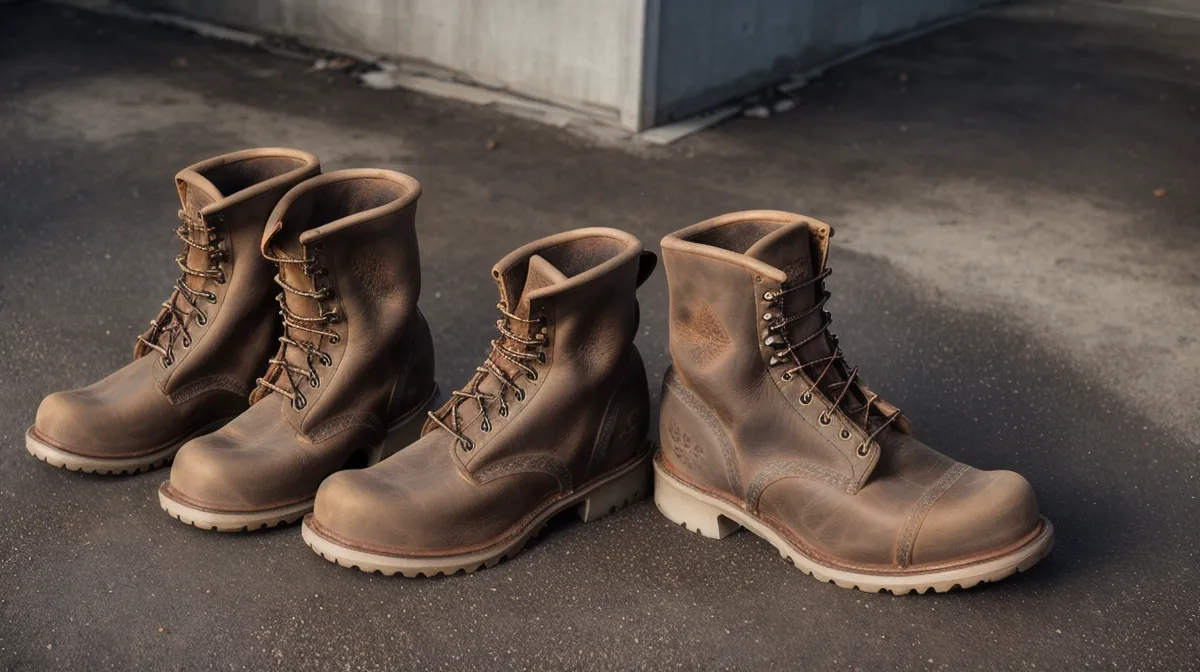
Every catalog line treats 400 grams of insulation like it automatically beats 200 grams for a warehouse maintenance shift. Nobody selling insulated Rocky boots or any other cold-weather gear ever really answers this question, and it's the one that matters if your boots need to survive a full ten-hour shift on a loading dock near the Monroeville Mall corridor, not just a walk from the truck to the mailbox.
Here's the part that trips up guys buying their first serious pair: more insulation is not automatically the safer choice once you're actually moving in the boots instead of just standing in them. Twenty years of rotating through boots for warehouse maintenance work taught me that the number stamped on the tag means almost nothing without knowing how much walking, kneeling, and standing-still-in-the-cold you're actually doing in a shift.
Insulation Weight for Warehouse Maintenance Work
The myth goes like this: colder job equals more insulation equals problem solved. It falls apart the moment you factor in movement. Maintenance work on a distribution floor is a mix of sprinting to a jammed leveler and standing dead still to fill out a work order, and those two states do very different things to a sweaty sock. I've tested a heavy 400-gram pair against a lighter 200-gram set during the same cold stretch, swapping back and forth, and what showed up is something I still call the Boiler Room Effect, the same reason I gave up on Timberland PRO's heaviest insulated line a couple of winters back. It ran fine standing at a bench and turned my socks into a swamp the second I started moving.
Heavy Thinsulate traps so much heat while you're moving that your feet are already damp before you've grabbed your tools. Stand still for ten minutes after that and the boot turns into a small refrigerator around your foot.
That fix isn't complicated, even if it runs against what the sales rack tells you. For active dock work, 200 grams under a boot with a proper break-in has done more for my feet than any heavier pair ever did. I get into how that break-in period actually plays out over a season in Six Months on the Warehouse Floor. Skip the upgrade to 400 grams unless you're standing outside directing traffic for most of your shift, and put the money you saved toward socks that actually wick moisture instead.
My buddy Lou Ferrante ignores foot pain the way some guys ignore a low tire. He's a semi-retired plumber who still picks up light commercial jobs, and for years he shrugged off cold feet as just part of the trade. He finally started asking me about insulation weight instead of grabbing whatever felt heaviest off the shelf, and less bulk turned out to be the answer he wasn't expecting.
Steel Toes and the Cold You Can't See Coming
Steel toes have a problem nobody mentions on the box: steel conducts cold straight into your skin. I used to just check for the ASTM F2413 stamp and call it a day, the same rating stamped on nearly every safety toe out there regardless of what it's made of, and never once thought about what the toe cap itself was doing to my feet in January. Composite toes don't carry cold the same way. Switching over meant my toes stopped doing that rhythmic throbbing thing by hour six of a cold shift, and that's a bigger deal on a warehouse floor than most guys give it credit for.
The give in a good outsole matters just as much as the toe. Frozen dock plates send a stinging vibration up your shins through a stiff sole, and a rubber compound with the right amount of flex eats that impact without going soft enough to wear out in a month. None of that matters if you skip the actual break-in, because even a well-built boot will bite your heel before it molds to your foot, and how to break in new work boots the right way saves you two weeks of blisters most guys just accept as normal. The leather on the upper matters here too. Cheaper uppers crack at the flex point by midwinter no matter how good the insulation is; better hide just holds its shape longer under the same abuse.
Salt Doesn't Wait for Spring
Rock salt and slush turn a loading dock into a chemical bath by the back half of winter, and cheap uppers don't survive it. I tried spraying a waterproofing aerosol from the checkout aisle on a pair one season, the kind that promises to seal anything, and it washed off by the second wet day like it was never there. Salt pulls moisture straight out of the hide at the flex point, and if you don't wipe it down, the leather splits before the thaw. A five-minute wipe with a damp rag every few days is cheaper than replacing the pair, and I treat the cost of a good boot about like a half-tank of gas for the truck, worth protecting either way.
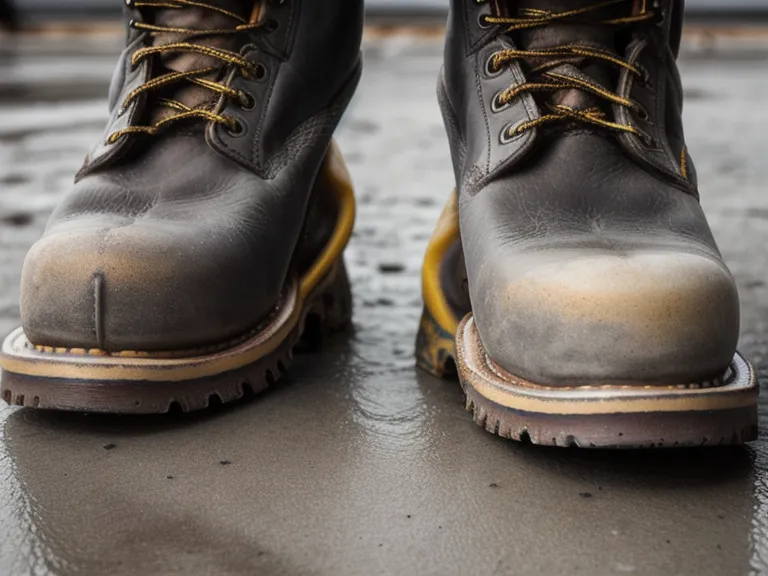
Waterproof, on a lot of boots, means dry for the first twenty minutes and soaked after that. What actually held up through the February mess wasn't the leather treatment alone. A sealed membrane behaves differently than plain treated leather once you're standing in slush for hours, which is the whole subject of picking the best waterproof Rocky boots for outdoor yards where standing water is a daily problem rather than an occasional one. Conditioning the leather after a salty stretch keeps the hide from drying out and cracking, and it's a five-minute habit, not a project.
Judging a Boot by What's Left in Spring
Agata Chmura, who runs receiving and asked me about her boots again last month after her heel started barking again, doesn't want to hear anything that sounds like it came off the side of a box, and she's right to be skeptical. What actually tells you if a boot survived a winter isn't the marketing copy. It's the welt where the upper meets the sole. If that stitching is still tight after a season of salt and cold, the rest of the boot probably held up fine too.
Even after a double shift, when I pull my foot out at the end of nine hours, the footbed still has some spring left in it instead of going flat and dead the way a cheap one does by month two. There's a faint, almost sweet smell that comes off a footbed when it peels away from a compressed midsole like that. Not unpleasant, just a sign the cushioning actually did its job all day instead of bottoming out by lunch. Back in my garage in Penn Hills, where the boots I'm rotating through sit lined up on a metal shelf waiting their turn, that's the pair that gets pulled back down first.
None of this makes a boot fancy, and salt plus steel will still beat on it by the end of a hard winter regardless of brand. What it comes down to is matching the insulation and toe material to the actual work, not to the coldest number on the shelf tag. More grams of Thinsulate is not a badge of toughness, and a steel toe is not automatically the safer pick just because it's the traditional one. Buy for the shift you actually work, not for the temperature printed on the map, and you'll keep more feeling in your toes by hour six than any heavier boot will ever give you.