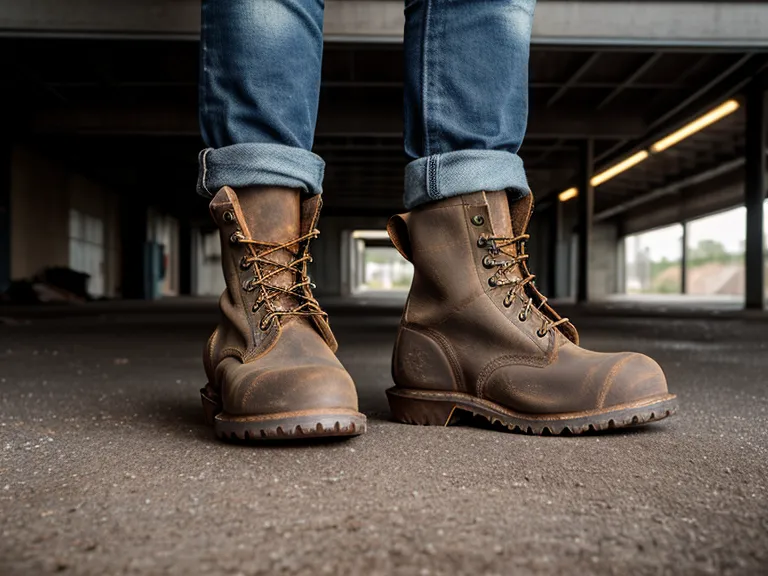
A warehouse floor and a construction site both wreck a pair of work boots, but not the same way. Flat concrete under a rolling cart grinds a sole down slow and even. Loose gravel, wet plywood, and a stray screw tear into leather and stitching from every direction at once. Running maintenance at a parts distribution center outside Pittsburgh puts me closer to the first kind of floor, which is exactly why I treated boot leather and construction-grade gear like they were interchangeable for longer than made sense.
Before you read another word: a few of the boot names below are linked to sellers, and if you buy through one, I get a small cut of the sale at no cost to you. I'm mentioning it now because a comparison like this only means something if you know where my paycheck is coming from, and it isn't coming from talking any one brand up past what it actually did on my feet.
Warehouse Floor vs. Job-Site Concrete: Two Different Kinds of Wear
My floor is the first kind: steady, oil-slicked, hard on the joints rather than sudden. Framing crews and guys pouring footings a few miles away are fighting the second kind, where a stray nail or a sheet of wet plywood can end a shift fast. For longer than made sense, I dressed both jobs in the same boot: whatever was cheapest that week, worn until the sole started peeling away from the upper, then tossed and replaced without much thought. That gets you by when you're only comparing two bad options. It stops working the moment you actually need a boot built to the ASTM F2413 rating that construction crews lean on and plenty of warehouse floors quietly skip, which is the real reason I put a pair of Rocky Boots on my feet instead of grabbing whatever was cheapest again.
Lou Ferrante, a semi-retired plumber who picks up light commercial maintenance work now, can read a boot's construction from across a room just by how the welt sits. He did it to a pair of mine in about two seconds, the first time he saw them lined up on the shelf in my garage in Penn Hills. That shelf holds most of what I own in boots these days, rotated in the order I plan to wear them, under a strip light on one end that's flickered for longer than anyone's bothered to fix. Welt construction, whether the sole is stitched to the upper or just glued on, is its own subject I won't fully get into here, but it's the difference between a boot a cobbler can rebuild and one you just throw in the trash.
Thursday Boot for the Dog Walk, Rocky Boot for the Loading Dock
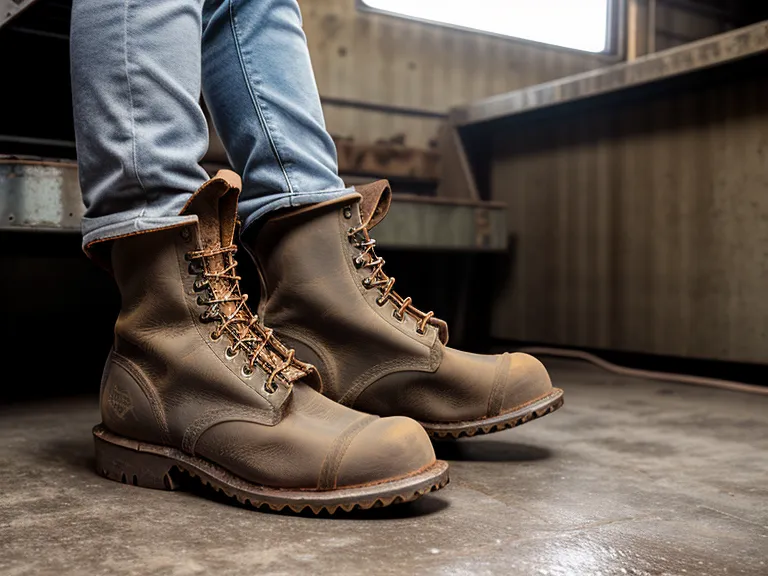
Thursday Boot makes a good-looking pair, the kind I actually reach for on a Sunday walk along the riverfront at Station Square with my mother's old Lab, not the kind I'd trust on a receiving floor. They're comfortable close to out of the box, and that's really all I'll say about break-in periods: if a boot is still fighting you after two weeks, the last it's built on is wrong for your foot, full stop. What the Thursday Boot doesn't give me is the shaft height or the wide toe box I actually need once the day turns into moving pallets. I run an 11 wide, and a boot that pinches across the forefoot by lunch isn't loosening up by quitting time no matter how many miles you put on it. For the loading dock I go back to the Rocky pair, and I laid out the deeper case for stitched-versus-glued soles in Why Goodyear Welt Work Boots Last Longer for Maintenance Crews.
What Actually Held Up Through a Winter of Road Salt and Leather
Road salt is where cheap leather gives up first. One winter, before I trusted anything long-term, I tried spraying a can of waterproofing aerosol from the checkout aisle onto a pair of uppers that were already starting to crack. It held up for exactly one wet day and washed clean off by the second. What actually holds through a real freeze is the leather itself, not a can sprayed on top of it. Between the Rocky pair and a set of Georgia Boot heavy-duty boots I ran that same winter, both used full-grain leather, and neither one split at the vamp the way a coworker's bargain pair did. Insulation matters less here than people think, too. How much you're moving around a shift counts for more than how many grams of fill are stuffed into the boot, and that's its own topic.
What actually saved those boots is Goodyear welt construction, a stitched sole a cobbler can replace instead of a glued one you throw out whole. Checking the welt on that Rocky pair this past February, into a second winter of road salt and slush, the stitching hadn't budged an inch, which is more than I can say for that aerosol spray or for most of what I bought in my twenties. Salt and leather don't mix well without some upkeep either, and how you actually condition a boot after a salted lot is a subject on its own. I'm not getting into the full routine here.
Where a Work Boot Stops and a Rain Boot Starts
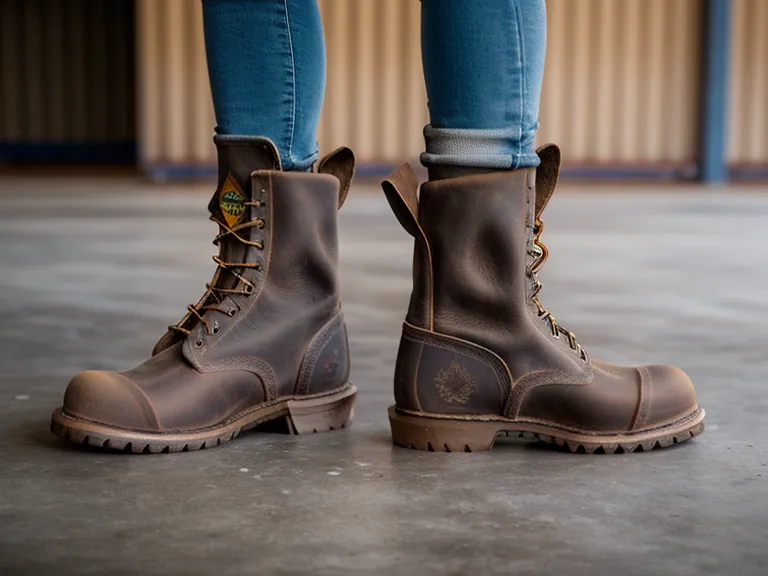
Mud season changes the math again. The Georgia Boot pairs I've run have a deeper lug pattern than the flatter tread on most warehouse boots, and it sheds mud instead of packing solid the way a wedge sole tends to on wet ground. Different sole shapes solve different problems, and picking between a wedge and a lug really depends on what you're walking through more than which one looks tougher on a shelf.
Durango Boots lean Western, which I like for a lighter, more casual day, and they held up better in the muck than I expected, though I still wouldn't send them onto a real job site. On days when I'm just clearing a drainage grate and don't need steel-toe protection, I've reached for a pair of Hunter Boots instead: pure rubber, genuinely waterproof, and completely wrong for dropping a pallet on your foot. A treated leather boot and a rubber boot handle water differently under the surface, and that's a longer conversation than I have room for here. If you want to keep leather boots alive through a wet season instead of switching to rubber, I put the details in How to Condition Leather Work Boots for Maximum Water Resistance.
Which Pair Actually Belongs on a Maintenance Floor?
Agata Chmura runs receiving on my floor, and she started asking me about boots after I noticed her limping during a walk-through last year. Every time her footwear situation changes, she asks what I'd do, and unlike most people who ask, she actually buys the pair she decides on instead of sitting on it for another six months. What her feet need and what mine need aren't identical, and neither of us is a podiatrist, so if you're dealing with real arch pain or a standing diagnosis, that's a conversation for a foot specialist, not a boot comparison article. What I can tell you is the trade-off. A heavier boot with a real shank and a lug sole protects more of your foot and holds up longer against rebar, gravel, and salt, but it costs you something in fatigue by the back half of a long shift. A lighter boot saves your legs but won't survive what a real job site throws at it. Choose the heavy pair when you're on uneven ground, near anything that could land on your foot, or fighting weather most of the year. Choose something lighter, like the Thursday Boot or even the Durango, when your floor stays clean, dry, and indoors. For anyone stuck between a warehouse pair and an actual construction boot, start with Rocky Boots. They're the pair that's stayed on my feet the longest, and they're built for a wide foot standing on concrete all day, not for looking good in a catalog.