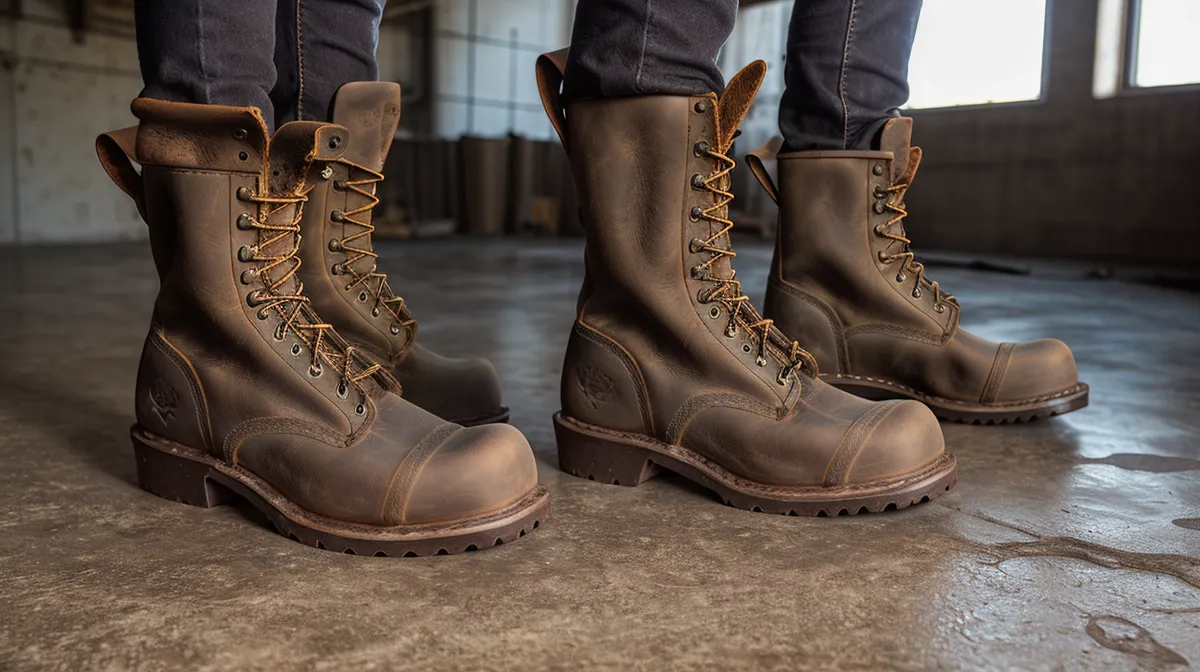
I've burned through countless pairs of work boots before I finally stopped blaming the floor and started looking at my own feet instead. I've lost count somewhere past a dozen, between the ones that flattened out by month two and the ones that just gave up at the seams. What I do know is that warehouse safety starts at the toe, and for most of my time on this floor that meant a composite cap and a shrug. Carbon fiber toe caps turned that shrug into an argument I've been having with myself for the better part of a year.
Before the leather and the lab coat words, here's the deal on how this page pays for itself. Click one of the links below and buy a pair, and the seller kicks a small finder's fee my way. It doesn't touch what you pay, and it's the only reason I can keep buying new boots to run through another winter and tell you honestly how they held up.
Why the Toe Cap Decides How the Back Half of a Shift Feels
Moving into the supervisor slot years back got me off the forklift and onto the concrete full time, something like twelve to fifteen thousand steps a shift, six days a week, no cart to lean on anymore. Early on, back in my twenties, my whole strategy was grabbing whatever steel-toe pair was cheapest in the bin at the warehouse store, wearing it until it fell apart, then grabbing another one every few months. I treated boots like they were disposable because the bin made it easy to think that way. Those pairs never made it past month four. The insoles flattened out like a pancake, and the steel toe sat on my foot like a cold anchor once cold-storage season rolled around.
Weight stops being an abstract spec once you're logging that many steps. Every ounce left on the boot is an ounce your knees pay for by the back half of a shift, and that's the real reason the industry moved off steel and onto composite caps in the first place. Composite doesn't turn into a block of ice in the cold-storage bays either, the way steel always did. Lately carbon fiber has crashed the conversation, thinner, lighter, and supposedly tougher than the composite everybody already trusts. I spent a good stretch of the year, spring clear through to the edge of fall, trying to figure out if that was a real upgrade or just another label stuck on the box.
Carbon Fiber Versus Composite: What's Actually Different Inside the Cap
Steel, composite, carbon fiber, whatever's in the cap, it still has to clear the same ASTM International testing before it's allowed anywhere near my floor. I'll leave the fine print on impact and compression numbers to people who write standards for a living. What I care about is what the cap does to my foot after the testing's done.
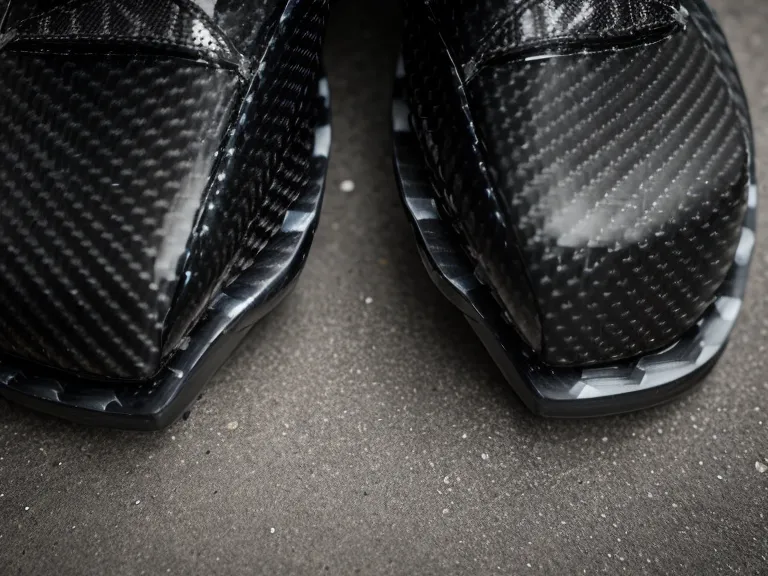
A composite cap usually has to be built thick, a dense mix of plastic, Kevlar, and fiberglass, because the material itself isn't as strong as metal pound for pound, and that pushes the whole toe box toward a bulbous shape. On a wide foot like mine, that bulge turns into a squeeze by midday. Carbon fiber is dense enough that the cap can run thinner while clearing the same testing, and that thinner cap is the single biggest difference I noticed for guys built like me. If the squeeze is your issue too, I went deeper on sizing around it in Finding the Best Fitting Wide Width Work Boots for Men. Carbon fiber is also non-metallic, which matters walking through a metal detector or working anywhere near an electrical hazard, though that's its own rabbit hole I won't drag you down here.
None of that matters if the rest of the boot gives up around it, either. The shank under your arch, the plate under the midsole, how the outsole holds up to grease and chemical splash near the dock, how the eyelets lock your ankle down, whether the sole stays grippy near anything running hot, whether the lining breathes or just cooks your foot by lunch. The toe cap is the headline. It's not the whole story.
Trying the Rocky Boots Against My Usual Composite Pairs
I put a pair of Rocky Boots through the wringer for this one, the 8-inch shaft version with the carbon fiber toe. Rocky's been building work boots since 1932, and that shaft height is something I've come to want on purpose. It keeps debris out and gives my ankle something to lean on stepping over pallets all day. Curt Walczak, who runs maintenance on my floor and will spend three weeks comparing reviews on something as small as a flashlight before he buys it, ordered a pair the week after I did and still second-guessed the purchase the moment the box showed up at his door.
Straight out of the box the Rocky pair felt lighter in hand than the Georgia Boot composite pairs I'd been rotating through before. Hand-weight doesn't tell the whole story, though. It's by the back half of a long shift that the difference actually shows up, and that's where the Rocky pulled ahead for me. Surface matters here too, and I've broken down how these brands handle different warehouse floors over in Lug Sole vs Wedge Sole Boots for Different Warehouse Surfaces.
The real test came once the warehouse turned into a swamp during the thick of summer. That's when you find out fast whether a boot actually breathes or if it's just a leather bag holding your sweat in. I rotated the Rocky carbon fiber pair against the Georgia Boot composite pair through the worst of it, and the Georgia held up fine structurally, thick leather, solid build, but it ran noticeably hotter at the front of the foot where that thicker composite cap sits, even though the footbed underneath held its arch shape longer into the shift than I expected. By around six weeks into wearing the Rocky pair daily, the leather had eased up and the toe box stopped feeling tight at all. One thing worth knowing going in: Rocky runs a size large on most of their lineup, and I had to find the right lacing tension before the fit settled. I wrote up exactly how in How to Find the Right Rocky Boots Size for Maintenance.

A Pallet Jack Clipped My Toe, and Here's What Happened
Late in a busy morning shift, a coworker swinging a pallet jack loaded with engine parts caught the corner of my boot coming around a blind corner, a few hundred pounds of momentum behind it. In the composite pairs I used to wear, a hit like that would leave the toe box feeling a little tighter afterward, like the material compressed and never fully sprang back. The Rocky Boots took that same kind of hit clean. A scuff on the leather, nothing on the structure.
That's the real difference I'd point to if someone's deciding between the two: carbon fiber seems to hold its shape better than composite across repeated hard hits, not just the first one. Composite is fine for a one-and-done impact, but if you're clumsy the way I am, or you're constantly clipping steel racking with your foot, that matters over a full year of shifts, not just the first month. DeShawn Quarles, who runs a forklift on my floor and burns through heels faster than anyone I've tracked, asked me flat out after that shift whether the switch was worth it for someone as hard on boots as him. I told him the toe cap wasn't going to save his heels, that's a different fight entirely, but for the front of his foot, yes.
The Other Warehouse Boots I've Cycled Through
Rocky's my pick for the long warehouse grind, but it's not the only brand that's passed through my rotation. Durango Boots lean Western, and they're comfortable, but they don't have the industrial feel I need day in and day out on a maintenance floor. I gave Thursday Boot a run for weekend wear, and they look sharp walking my mother's old Lab along the riverfront down at Station Square, but they're not built for a twelve-hour shift on concrete and I wouldn't pretend otherwise. And if standing water is the actual problem you're solving for, Hunter Boots are hard to beat for keeping your feet dry, though they offer exactly zero toe protection, which rules them out anywhere near a warehouse floor.
Is Carbon Fiber Worth the Jump?
I'm not a podiatrist, and I'm not going to pretend otherwise. If your feet hurt in a way that goes past being tired at the end of a shift, that's a conversation for a professional, not a guy with strong opinions about toe caps. From someone who's spent most of his working life on these floors, though, carbon fiber is one of the few upgrades in this industry that's actually earned its price difference, somewhere around the gap between a cheap takeout dinner and a couple of fast-food runs, not a number that should scare anyone off.
Part of what won me over with the Rocky Boots was the Goodyear welt stitching holding the sole to the upper. It's the reason these can get resoled down the road instead of thrown out whole. Last February, pulling them on cold and stiff from a night sitting out in the garage, I checked that stitching out of habit more than worry. Second winter in, through a couple of salt-heavy months, and it hadn't given an inch anywhere around the welt.
The part worth remembering isn't the brand name, it's this: a boot that still passes a cold-morning once-over two winters in has already told you everything a spec sheet can't. Weight you stop noticing by the back half of a shift and stitching that survives a second salt season are worth more than anything printed on the box. If you're tired of the squeeze in your toes and the ache in your knees before lunch, carbon fiber is worth a look. Check the current pricing on the vendor's page for the Rocky Boots, since it shifts around, but for my money it's held up better than anything else I've put on my feet this year.
| Product | Rating | |
|---|---|---|
| Rocky Boots Top Pick | 9.2 | Read More → |
| Georgia Boot | 8.7 | Read More → |
| Durango Boots | 8.1 | Read More → |
| Thursday Boot | 7.8 | Read More → |
| Hunter Boots | 7.5 | Read More → |
Rocky Boots
Pros
- ● Carbon fiber toe is much thinner and lighter than bulky composite
- ● Goodyear welt construction means you can actually resole them
- ● 8-inch shaft provides excellent ankle support on uneven floors
- ● Non-metallic and non-conductive for all-day warehouse safety
Cons
- − Sizing runs noticeably large; consider sizing down
- − Higher-tier models require a longer break-in period