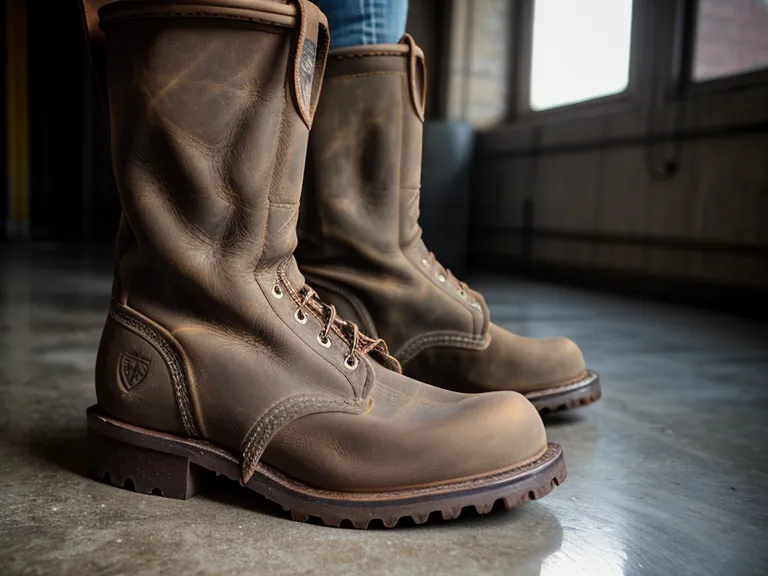
Most people don't realize they're choosing between buying three pairs of cheap steel toe boots a year or one pair that still holds up when the third year starts. The guys I work with have never actually run that math. They grab whatever fits in their size and hope the leather doesn't quit before the next paycheck. Work boot durability and steel toe protection aren't marketing phrases to me; they're the gap between clocking out upright and clocking out limping.
Quick disclosure before we get into it: some of the boot links ahead are affiliate links, and if you click through and buy, I get a small commission at no extra cost to you. That's what keeps this site running instead of plastering it with banner ads. I'm a maintenance supervisor at a parts distribution center outside Pittsburgh, not a podiatrist or a boot fitter, and I've burned through more pairs of steel toe protection than I can count keeping my mother's old Lab in dog treats between paychecks. If your foot pain is serious, go see someone with an actual license before taking my word for anything.
Rocky Boots vs. Georgia Boot: Two Different Bets on a Long Shift
Every steel toe boot sold here is supposed to meet the ASTM F2413 impact and compression rating, but that number only tells you the toe cap survives day one; it says nothing about whether the rest of the boot survives the year. That's where two boots keep coming up whenever a coworker corners me on break: Rocky Boots' flagship work line, and Georgia Boot's heavy-duty lineup. They're not really built for the same job. Rocky comes out of a long history in agriculture and forestry work, with wide-width options and construction meant to be resoled instead of tossed. Georgia Boot goes the other direction, wrapped around oil resistance, puncture protection, and enough weight to make itself known the moment you lace up, which is maintenance supervisor gear, not something picked for how it looks. My buddy Lou Ferrante, a semi-retired plumber who still picks up light commercial jobs, won't hear a word against Georgia Boot. He's tried other brands over the years and walks right back to that one every time, which says something about how a boot earns loyalty even when it's not the lightest thing in the closet.
The Goodyear Welt and the Toe Box Decide More Than People Think
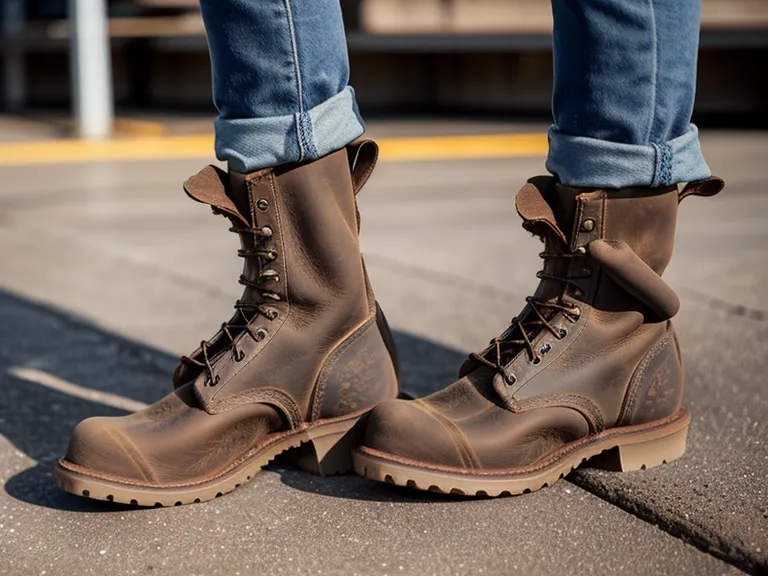
Rocky's flagship line uses a Goodyear welt construction on its higher tiers, which just means the upper gets stitched to the sole instead of glued on, so a cobbler can replace a worn outsole instead of you pitching the whole boot. Georgia Boot doesn't lean on that same welt story across its heavy-duty range, but it makes up ground with a wider stance built for guys who need room without the boot feeling loose on a wet floor. That wider fit is what actually changed something for me one afternoon at the parts counter — I was crouched down pulling a case off the bottom shelf and noticed, for the first time in a long while, my toes weren't jammed against the front of the boot. Break-in on Rocky's welted line runs longer than most of the newer direct-to-consumer boots on the market, which is a real cost if you need boots ready by Monday and only bought them Friday. For a while I ran two cheap pairs in rotation, banking on the idea that resting one while wearing the other would double how long each pair lasted. It didn't work that way. Both pairs went soft in the arch around the same point anyway, because the foam breaks down on its own schedule regardless of how often you've got it on your feet.
Leather, Salt, and What Actually Survives a Pittsburgh Winter
Full-grain leather takes scuffs and repeated wetting a lot longer than corrected-grain leather that's been sanded down and coated to look uniform, and that's most of the real difference in upper material durability between a cheap boot and a good one. Durango Boots lean western and casual more than industrial, but their better lines use a full-grain leather that holds up fine outside a heavy chemical environment. Rubber boots like Hunter Boots solve the water problem outright, but they're built for the yard or a downpour walk, not for standing on a distribution floor for a full shift. Treated leather breathes in a way a fully sealed rubber boot or membrane liner doesn't, which matters more than people expect once your feet are sweating through eight-plus hours of movement. Road salt is the other test every winter brings back — it doesn't just sit on the leather, it works into it and dries it out from the inside if the boot never gets conditioned after a wet shift. Outsole rubber takes its own beating from spilled oil and floor-cleaning chemicals on a distribution floor, and the compound goes slick and breaks down years before the tread pattern actually wears flat, which is the entire reason Georgia Boot builds its heavy-duty compound around resisting exactly that.
Carrying the Weight Without Wrecking Your Arches
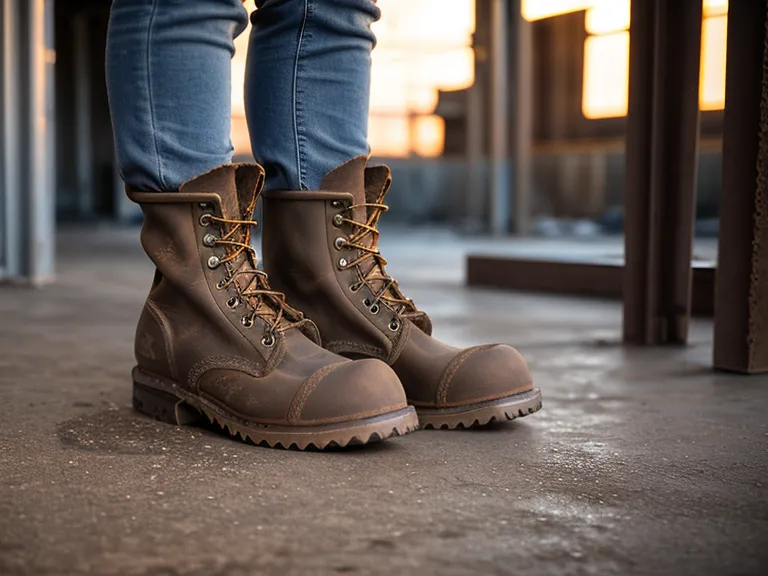
Heavier doesn't automatically mean better, but a boot built deliberately light usually gets there by thinning out the midsole, and that foam bottoms out under walking fatigue long before the upper shows any real wear. A steel shank sitting between the insole and outsole keeps the heel from twisting on a ladder rung or a conveyor step, and that heel-and-shank geometry is doing more on a bad day than most guys give it credit for. Arch support fades on its own schedule, separate from how the outside of the boot still looks, which is exactly what caught up with Agata Chmura, who runs receiving and is on her feet a minimum of nine hours with no real chance to sit down, and by the time she asked me about her boots, they looked fine on the outside while her arches had already given out underneath. A wedge sole spreads pressure differently than a lug sole, and for someone standing in roughly one spot for most of a shift, that difference matters more than tread depth ever will. Insulation is its own trade-off entirely — a heavily insulated boot makes sense for someone posted up at a cold dock door, but it turns miserable fast on a job that has you moving at a steady pace, since activity level generates its own heat no matter what the liner is rated for.
Safety Ratings Once You're Clocked In
Electrical hazard protection is a rating almost nobody checks until they're working near live equipment and realize their boots were never rated for it, and it's worth confirming before assuming any work boot automatically covers you. A puncture-resistant plate built into the midsole is the other spec that only matters on the one day you step on a stray screw or a piece of scrap metal, and by then it's too late to wish you'd checked the tag. You can read my Thursday Boots review for the long version, but the short version is they're a genuinely nice boot built for an office-to-weekend rotation, not for a floor where any of these ratings actually get tested.
Picking Between the Two When Your Feet Are on the Line
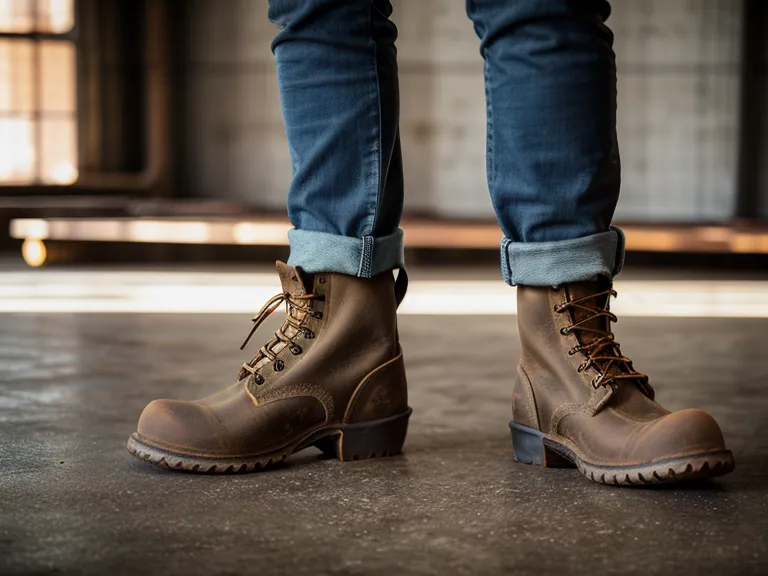
So here's where it actually lands. Pick Georgia Boot's heavy-duty lineup if your floor has oil, chemicals, or puncture risks that make a lighter boot a liability, and you don't mind the extra weight in trade for that protection. A Thursday Boot makes more sense if half your week is spent somewhere that actually cares what your boots look like, but I wouldn't trust either one for a full shift on a distribution floor. For that, I keep going back to Rocky Boots' flagship line — a wide fit that doesn't slide around, a welt built for resoling instead of replacing, and enough patience through the break-in to get years out of one pair instead of months. On the weekends, whichever pair I'm testing gets worn out to run errands at the Settlers Ridge shopping center in Robinson Township, just to see how it handles polished tile after handling concrete all week. That side-by-side tells you more than anything printed on a hangtag.
Neither boot fixes a foot problem that's already serious. If something hurts bad enough to change how you walk, that's a conversation for a podiatrist, not a boot comparison from a guy on his lunch break. But if the actual problem is burning through cheap boots every few months, the fix is picking the side of this comparison that matches your floor and living with the trade-off you chose.