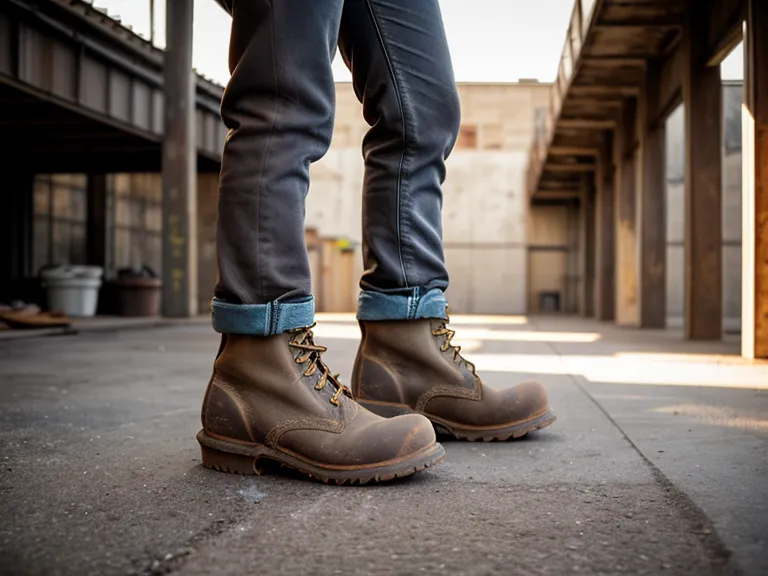
The welt on this pair is stitched all the way around, not glued down and left to fail the first time it takes on water. That's worth knowing before anyone spends real money on a heritage-looking boot for shift work. I'll say upfront that I earn a commission at no extra cost to you if you buy through the links in this Thursday Boot review — that's how I keep testing boots instead of guessing off a store shelf. Twenty years into cycling through work boots as a maintenance supervisor at a parts distribution center outside Pittsburgh, I've worn enough garbage to know what real durability looks like once the leather's been through an actual shift instead of a showroom.
Half my day is spreadsheets and the other half is chasing down whatever broke on the sorting line, so my feet pull double duty between polished floors and bare concrete. Guys logging serious mileage on foot are usually better off in Rockport work boots — that's a boot-weight conversation worth having on its own — but what I wanted to know here was whether a Thursday Boot built on heritage lines could actually survive a distribution center instead of just looking sharp in a break room.
What the Construction on a Heritage Boot Actually Tells You
This pair uses a 360-degree Goodyear welt, which is the reason a cobbler can rebuild the sole down the line instead of you tossing the whole boot once the tread wears through. Most of the cheap pairs I've cycled through over the years are cemented together, and once that cement gets hot or wet enough, the boot is finished for good. The upper is full-grain leather, and it's holding its shape without the cracking I've watched cheaper hides develop after a season of scuffing against pallet racks and steel shelving.
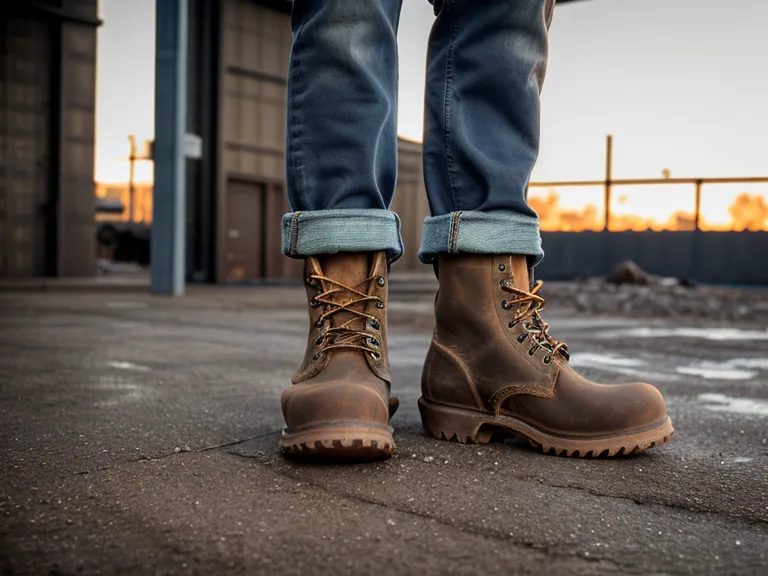
Getting a stiff heritage upper to stop fighting your foot takes longer than it does with a softer, cemented work boot, and patience matters more here than most guys expect walking in. The toe box on this one also runs narrower than the wide work boots I usually reach for, which is worth knowing if you're built for a true wide width — a narrow-toed heritage boot isn't going to widen out just because you want it to.
How the Fit Holds Up Over a Full Maintenance Shift
Hour seven on the concrete is where a boot either holds up or starts talking back, and by that point in a shift this pair isn't announcing itself the way a cheaper one does. Credit the cork midsole under the arch, which hasn't packed down flat the way a foam footbed does after a long stretch of daily wear. The heel sits low, and the shank underneath is stiff enough that stepping wrong off a pallet jack doesn't turn into a rolled ankle — though anyone used to a Western-style heel and shank setup is going to feel that difference the first time they lace up.
Fit isn't universal, and I found that out the hard way after a wet shift when I stuffed crumpled newspaper inside overnight trying to dry the lining faster. It didn't work — the leather just stiffened up strange in spots, and I spent the next few days working it soft again by hand instead of just letting it air dry properly. DeShawn Quarles, one of the forklift operators on my floor, asked me about these between shifts, and I told him straight that a pair like this wouldn't survive his pace. He burns through heels faster than anyone I've tracked on that floor, and a narrower heritage boot isn't built for someone that hard on the back half of a boot.
Don't Expect This Pair to Do Everything
It doesn't carry a certified safety toe, so if your site requires steel or composite toe protection, this pair is off the list before you even try it on. It's not rated as an electrical-hazard boot either, so anyone working around live panels needs something else entirely. There's no puncture-resistant plate in the midsole, so stepping on a stray screw or a dropped tool isn't something this boot is built to shrug off, and the outsole compound isn't made for standing in chemical runoff — I've seen rubber like this go soft and tacky faster than a chemical-resistant compound once it's exposed to solvents on a regular basis.
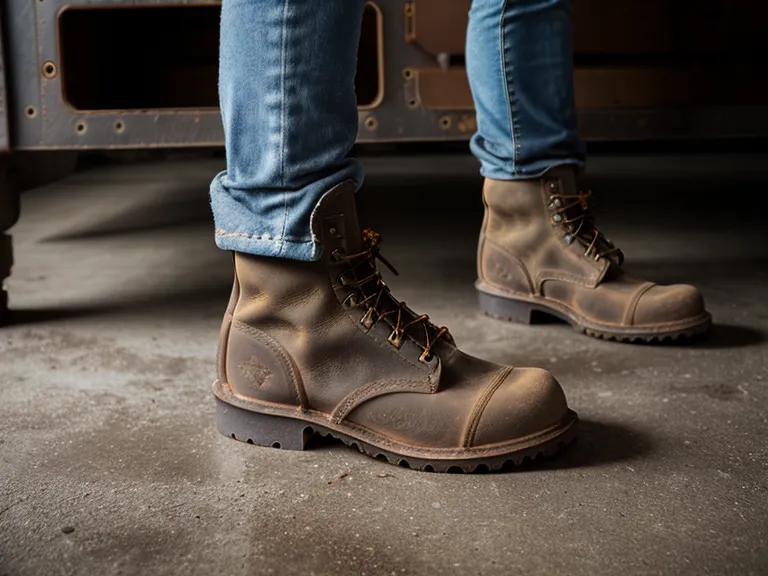
My coworkers are mostly in Durango Boots or heavy-duty Rocky Boots, and next to either one this pair looks almost delicate. When a conveyor motor needed pulling apart and I was kneeling in grease past my wrists, I wasn't wearing the Thursdays — I reached for my Georgia Boot pair instead, because that's the boot built for kicking steel plates and standing in whatever spilled on the floor that day. The Thursdays hold up fine on their own turf, but they aren't industrial armor, and expecting otherwise is how a good boot ends up blamed for a job it was never built to do.
Sole, Traction, and Weather Protection
The lug sole vs wedge sole debate comes up constantly between guys comparing notes on the floor, and while this pair runs a slimmer lug profile than a true work boot, the grip on polished concrete hasn't given me a reason to complain. There's no waterproof membrane inside, just treated full-grain leather, so a soaked shift means drying the boot out properly afterward instead of trusting a liner to bail you out. Road salt is hard on this leather the same way it's hard on any full-grain upper, and wiping it down and conditioning it after a slush shift is what keeps the vamp from drying stiff and cracking along the crease. There's no insulation built in either, which is fine for a supervisor moving most of the shift but would be the wrong call for someone posted at a loading dock door all day in the cold.
Does Anything Else in the Rotation Do It Better?
Comparing this to Hunter Boots — a brand that's been making rubber boots since 1856 — isn't really a fair fight. Hunter is built for mud and standing water; Thursday is built for a supervisor who needs to look presentable in a safety meeting and still climb a ladder afterward. Curt Walczak, a facilities tech I've worked alongside for years, spent weeks reading every review he could find before he finally ordered a pair, then texted me the day they landed asking if he'd made a mistake. That's Curt — he researches a purchase to death and still second-guesses it the second the box hits his porch. I told him what I'd tell anyone: give the leather time to stop fighting your foot before deciding it was the wrong call.
This Boot's Durability Fits My Shift, Not Every Shift
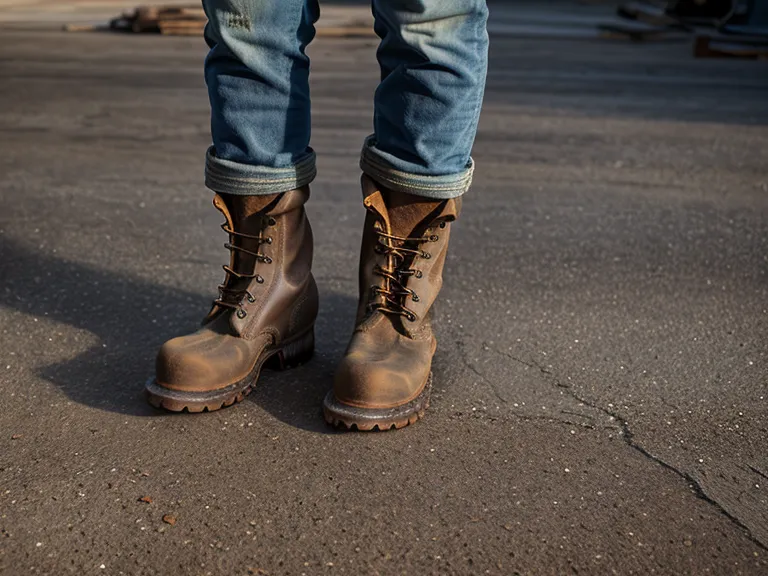
For a maintenance supervisor splitting time between an office and a distribution floor, the Thursday Boot earns its keep in a way none of the beefier pairs in my rotation can match, since it's the only one that works for both a safety walk and a Monday morning meeting without looking out of place in either room. Back home, this pair goes on the metal shelving in my garage in Penn Hills where the rest of my rotation sits in the order I plan to wear them, and setting it down heel-first still makes that same flat thud the rest of the shelf makes when a boot lands wrong. The same pair walks my mother's old Lab through the Strip District on weekend evenings, and I've stopped feeling the itch to swap into sneakers the moment I get back to the truck.
That doesn't make the Thursdays a universal answer. Guys doing heavy masonry or working a trench every day still belong in something like Georgia Boot, and guys hard on heels like DeShawn are better off elsewhere entirely. But for the floor-to-office rotation a lot of maintenance supervisors actually live in, this is the pair I'd point a coworker toward before he spends two paychecks on anything else — heritage looks that hold up, a welt that can be rebuilt down the line, and durability that's been earned on a real shift instead of advertised on a box.
Thursday Boot
Pros
- ● Goodyear welt construction that actually lasts
- ● Polished look works for meetings and the shop floor
- ● Full-grain leather develops a great patina
- ● Midsole molds to your foot over time
Cons
- − Brutal three-week break-in period
- − Toe box is narrower than traditional work boots