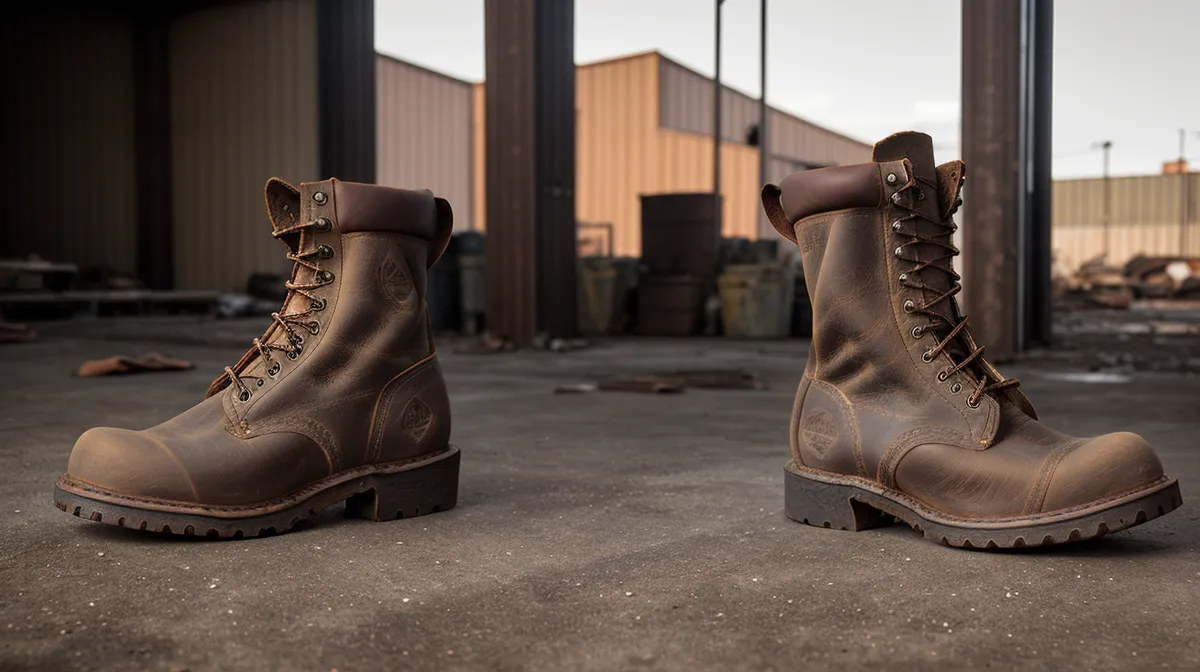
A boot that gets a light wipe of oil every other week and a boot that gets a real wax treatment twice a season can look about the same sitting in a locker, but only one of them is still holding its shape by the second salt season. That's the whole argument for real leather care over the quick-spray version of waterproofing most guys reach for. Boot maintenance isn't about keeping the leather soft; it's about keeping the structure and the water resistance intact at the same time, and those two goals fight each other more than people expect. Get the balance wrong and you lose durability long before the sole wears through.
My neighbor runs weekend 5Ks with his wife along the Three Rivers Heritage Trail, and his shoe problem has nothing to do with mine. His soles wear down from mileage. Mine take on road salt, grease, and standing water for eight-plus hours at a stretch on a concrete floor, and if the leather isn't conditioned right, it fails from the inside before it ever looks worn out. That's the distinction worth making before anybody buys a tin of conditioner: this is about shift-grade leather, not casual footwear, and it gets treated differently.
Conditioning and Waterproofing Are Not the Same Job
Conditioning feeds the leather. Waterproofing seals it. A lot of guys use one tin of grease and expect it to do both, and that's usually where the trouble starts. Oil goes into the fibers and keeps them from drying out and cracking. Wax sits closer to the surface and builds the barrier that actually keeps water from soaking through. A conditioner that leans hard on wax content does more for water resistance than one built around a thin leather cream, because oil alone doesn't give you much of a physical barrier against slush or standing water.
Look for a conditioner that blends both — some oil to keep the hide from going brittle, enough wax to build a shell on top of it. A tub of a wax-heavy conditioner runs about what you'd spend on takeout for two, and if you're not overdoing it, one tub gets you through a few seasons of shift wear.
Why Clean Leather Comes First
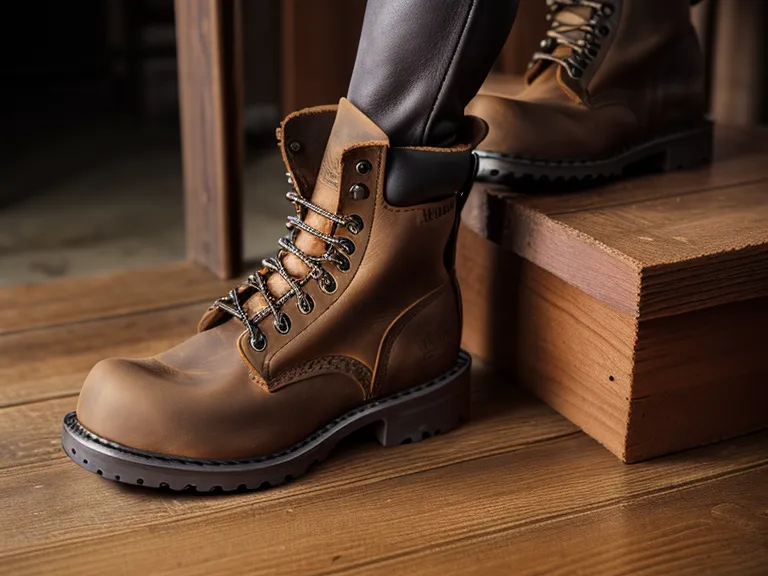
None of that works on dirty leather. Salt and grit left under a coat of wax cause their own problems, which is exactly why I've written separately about how to clean salt and winter slush off your boots — that step happens before any of this. Brush the creases out, let the boots dry away from direct heat, and only then start conditioning. A boot dried next to a heater cracks before you even get the tin open.
How Much Wax Is Enough?
Less than you'd think. Frequent heavy applications stretch the fibers out and soften the structure — the heel counter loses its shape, the boot stops holding your foot in place, and you end up with a floppy boot instead of a supportive one. Some guys condition every couple of weeks because that's what the guy at the counter told them to do, and it's the fastest way to turn a stiff, protective boot into something closer to a leather bag.
Twice a season is plenty for most shift work — once when the weather turns cold, once when road salt is at its worst. In between, a damp cloth wipe-down handles the surface dirt. The tell that it's time to reapply is simple: water stops beading up and starts soaking in instead. Until then, leave it alone. Over-conditioned leather also tends to develop a white, waxy film where the excess fat works its way back to the surface — it looks like mold, but it's really just the leather telling you it's had enough.
Warming the Leather Before You Work the Wax In
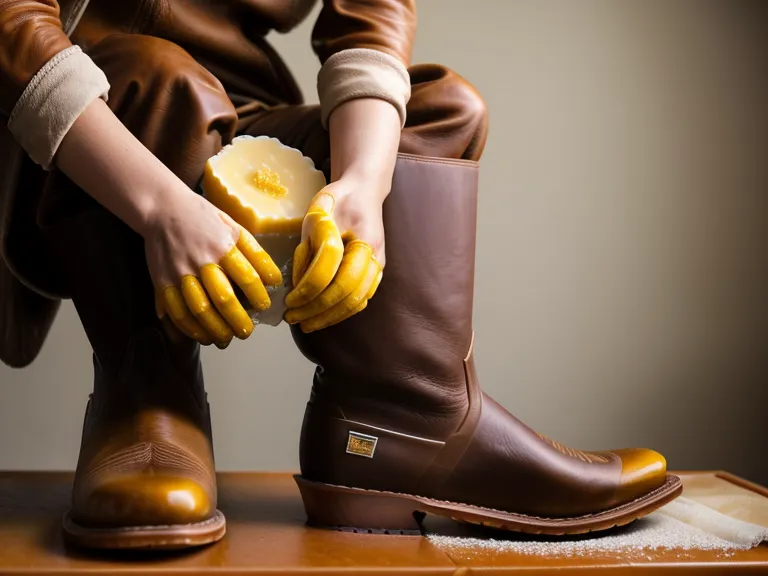
Cold wax sitting on cold leather doesn't do much. Warm the boots gently first — a hair dryer at a distance works fine, a heat gun scorches the leather, so skip that. Warming opens the pores enough that the conditioner actually gets worked in instead of sitting on top as a film. Rub it in with your hands or a cloth until it disappears into the leather rather than sitting on the surface in a visible layer. If you can still see wax sitting on top after a few minutes of working it in, you've put on more than the leather can absorb.
The Stitching Needs Sealing, Not Just the Leather
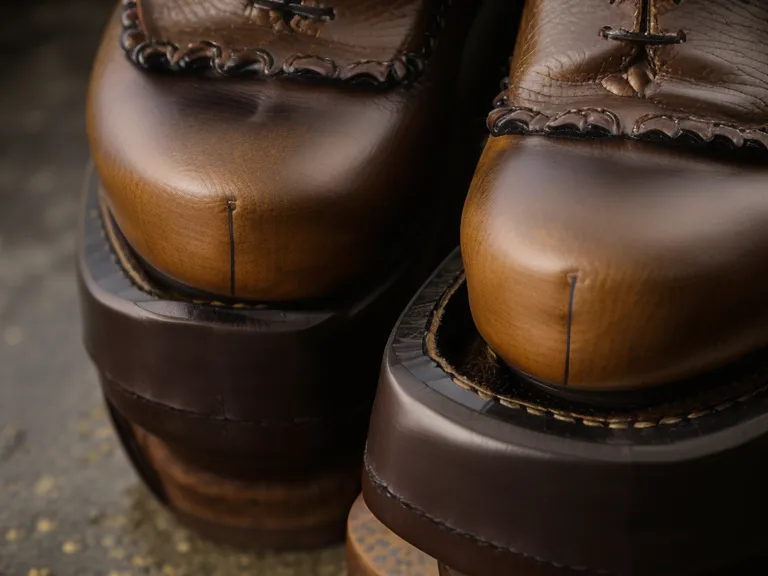
Most guys focus their conditioning on the toe box because that's the part that looks scuffed. The water that gets you usually comes in somewhere else — through the seam where the sole meets the upper. That stitching sits low, stays wet longer than the rest of the boot, and rots out from salt exposure faster than people expect. Pack wax into it with an old toothbrush every time you condition, not just the visible leather on top. I've seen boots with uppers that looked perfectly cared for and a seam underneath that had gone dry and brittle, and once that stitching goes, the boot is done regardless of how good the leather still looks.
If you're dealing with a new pair that's still stiff, that's a separate problem from waterproofing — I've got notes on how to break in new work boots without getting blisters for that. Just know that a boot that's been broken in and flexes easily is also more exposed at those same seams, so don't let a comfortable boot make you skip the stitching.
Conditioning Cannot Fix a Boot That Fits Wrong
No, and this trips people up because a stiff or awkward-fitting boot feels like a leather problem when it's actually a sizing problem. I sized up half a size once thinking the extra room would make a new pair easier to live with, and all it got me was heel slippage that blistered the back of my ankle before the boots were even broken in. No amount of conditioning changes how a boot is built around your foot. If the fit is wrong, wax and oil aren't going to solve it — that's a different pair of boots, not a different maintenance routine.
What You Give Up With a Heavy Wax Coat
There's a trade-off nobody mentions at the boot counter. More wax packed into the leather means less breathability. If you're working somewhere climate-controlled, you probably don't need this level of treatment, and a heavy coat will just make your feet sweat more than they need to. Guys who need breathable work boots for hot warehouse and distribution centers are usually better off with a lighter conditioning routine and a boot built for airflow instead. For me, moving between a cold loading dock and a wet maintenance bay all shift, the trade is worth it. Somebody working an indoor line in a heated building might come out the other way.
How Do You Know the Seal Is Actually Holding?
Seven hours in, standing on concrete, and I've stopped noticing my heels entirely — that's the actual test, not whether the leather looks shiny walking out of the garage. Dry socks at the end of a wet shift tell you more than any amount of admiring the finish in a locker room mirror.
It's worth checking more than just the outside leather while you're at it. Pull the footbed out every so often and take a look — there's a faint, sweet chemical smell that comes off an insole that's been compressed flat under your weight for a season, and that's the foam breaking down, not the leather failing. No amount of wax on the upper fixes a dead footbed; that's a separate replacement, not a conditioning problem.
Weekends, I walk my mother's old Lab through the Strip District in a different pair entirely, and those boots barely see this treatment because they're not taking the abuse a shift boot does. That's the real gauge for how much of this routine you actually need — how many hours a day the leather is standing in weather, not how the boot looks on a shelf.
Ten minutes a couple times a season beats ten hours of misery on the floor with wet feet. Keep the leather clean before you condition it, keep the wax worked into the seams and not just the surface, and back off once the water starts beading up on its own. That's the whole system — nothing fancier than paying attention to what the boots are actually telling you.