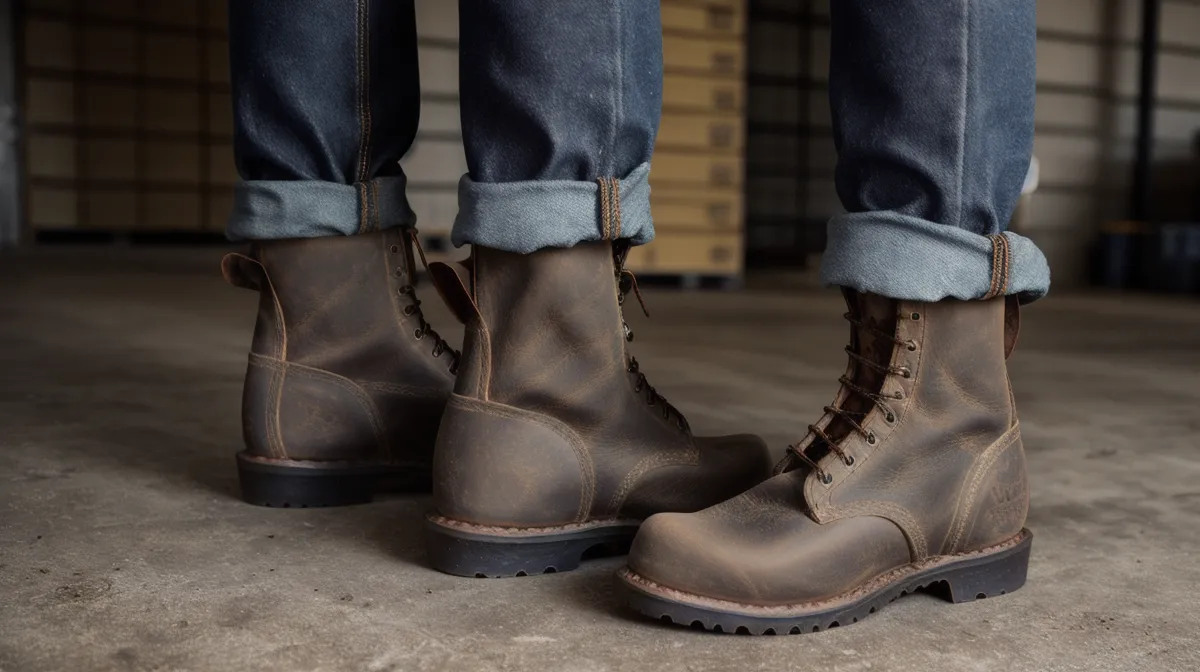
DeShawn's got his boot up on the tool crib counter before I've even topped off my coffee, jabbing a finger at a seam splitting along the toe, wanting to know if switching to Rocky boots is worth two paychecks. That question comes up more than you'd think once guys on this floor figure out I've run more work boot durability tests than anyone should probably admit to. Warehouse maintenance chews through footwear in ways a sneaker company never plans for, and safety footwear that can't survive a full rotation on concrete isn't really safety footwear — it's a liability with laces.
Money's part of why any of this matters beyond my own feet, so it's worth saying up front: clicking one of the boot links here and buying through it sends a small commission my way, and it doesn't change what shows up on your receipt. That's the only reason this site keeps running long enough for me to put another pair through a full year on this floor.
What Actually Kills Work Boot Durability on a Warehouse Floor
Concrete doesn't give an inch. That's the part people miss when they're judging a boot by how soft the insole feels standing in a store aisle. Flooring guys call a slab like that non-resilient — it absorbs basically nothing, so every ounce of shock gets eaten by your boot or by your knees instead. Foam midsoles feel great for the first stretch, then they flatten out and stay flat. That's exactly the trap I fell into: buying whatever steel-toe pair was cheapest in the bin at the big-box store every few months and telling myself that was just how work boots went — disposable, replace on a schedule, don't get attached.
Get the Fit Wrong and Everything Else Stops Mattering
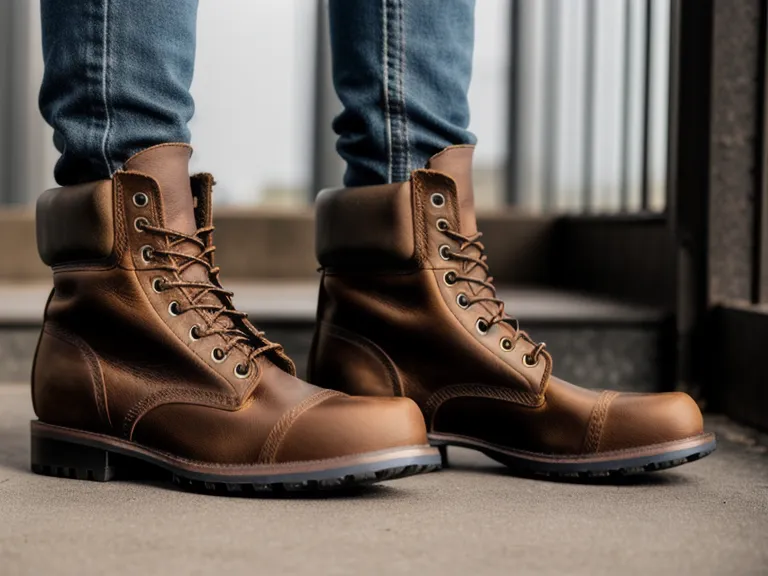
None of the welt or leather or sole compound matters if a boot doesn't fit your foot to begin with. Size 11 wide has burned me more times than I can count. Most off-the-shelf lasts run narrow, and a tight toe box under feet that swell by hour eight turns into blisters fast. A younger tech in the shop talked me into a pair of Thursday Boots a season or two back, all heritage looks and a welted sole. The toe box was snug enough that I walked out of a shift with a blister I felt for days after. Wide steel-toe fit is a bigger subject than one paragraph can do justice to, and I've gone deep on it elsewhere. Here it's enough to say the Rocky boots I switched to actually carry wide-width options that fit a foot like mine without shorting the room up front.
Stiffer Midsoles and What They Trade Away
The Rocky stiffer midsole is the tradeoff nobody wants to hear about when they're shopping for something that feels soft on day one. You lose some of that sneaker-like give, and for the first week or two your feet notice it. Once you're seven hours into a shift on concrete, though, a stiffer platform is doing more work than a cushioned one that already caved in months back. I'm not a podiatrist, and if there's a real medical issue behind foot pain, that belongs with a specialist, not with a boot review.
Against my old pair of Georgia Boots — built like tanks, and just about as heavy — the newer setup felt more balanced through a stretch of humid summer shifts that turned the floor into a sauna, without giving up anything on how the leather held together.
Goodyear Welt Construction: When It's Worth the Extra Cost
Short answer: yes, if you're keeping a pair long enough for it to matter. A pallet jack got away from a coworker near me in the heavy-parts aisle a while back and came down right where my toe was. The boot held. Whatever combination of welt and reinforced toe did that job earned more credit from me than I'd given it going in. The toe's rated for real impact loads, not just labeled that way for the box. The fine print behind those safety ratings is its own article, not a sentence here. Break-in on this line ran longer than some of the newer direct-to-consumer brands — that's its own field test I've written up separately. Heel and shank geometry felt right for how I actually stand and pivot all day. Shank shape by itself is a deeper topic than fits here. A welt is also why a boot like this can go back to a cobbler for a new sole instead of the trash. That matters more for figuring out when a pair's actually done than most people think, and it's its own piece I've written elsewhere.
Leather, Salt, and Chemical Exposure on a Distribution Center Floor
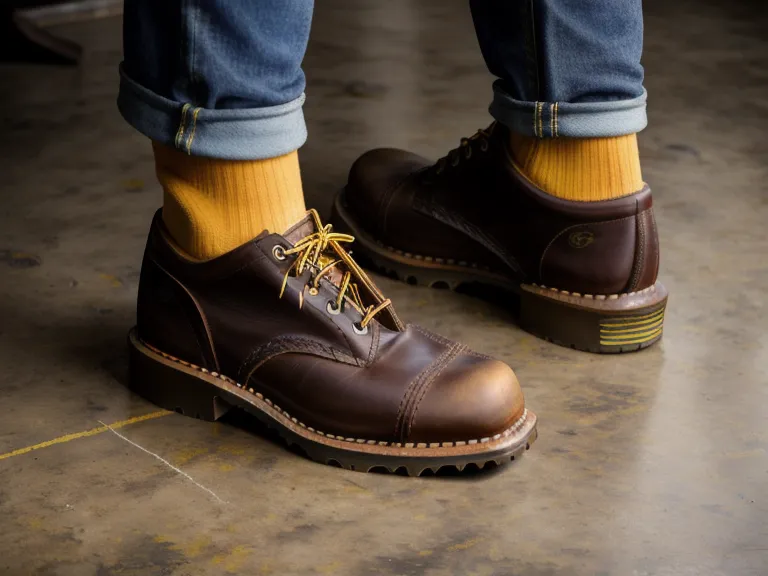
Full-grain leather is the strongest cut of the hide. It shows the first time a boot takes a chemical splash or a scrape off a rack corner instead of soaking it in, the way bonded or "genuine" leather will. How different uppers hold up against slip-resistant floor treatments is its own comparison — especially once you throw a brand like Dr. Martens into the mix — and that's a topic for a different piece. Winters here mean road salt working into the leather every time the lot gets treated. Staying ahead of that with real conditioning instead of ignoring it until the leather splits along the crease is its own maintenance routine I've laid out elsewhere. Whether you want a taped waterproof membrane or just well-treated leather underneath is a separate argument too, and I've hashed that one out in more depth in another post. The outsole compound matters just as much. Some rubber blends hold up to whatever's leaking in a parts aisle better than others, and that chemical-resistance question deserves its own deep dive rather than a paragraph here.
Weight, Arch Support, and Standing Through a Full Shift
Extra weight on your foot adds up fast once you're logging real distance on a floor. That's a bigger conversation than one review can hold — I've put it head to head with lighter options built more for walking supervisors than standing techs. Arch support longevity is the one thing I won't pretend to judge for somebody else's foot. That's a longer conversation than a boot review, and it belongs with a specialist. Curt, a facilities tech I've traded notes with since we worked a plant expansion together years back, runs cold every winter. He won't stop talking about matching insulation rating to how much you're actually moving instead of just how cold the dock reads on a thermometer — that's its own topic I've covered separately for the loading-dock crowd. Some floors also want an electrical-hazard rating baked into the sole compound. Untangling what that rating actually covers is a can of worms for another article entirely.
How Rocky Stacks Up Against Everything Else in My Rotation
If you want the deeper breakdown on any of this, I've written about how Steel Toes and Concrete Floors actually interact, and separately worked through the argument on Lug Sole vs Wedge Sole Boots. Sole shape changes how a boot grips and wears depending on the floor it's living on — that's worth its own read rather than a summary here. The Thursday Boots after a few months piece covers what that brand looks like once the shine wears off, if the heritage styling is still tempting. Puncture resistance in the midsole plate probably did more to save my toe under that pallet jack than the leather on top ever could. How those plates get built is a rabbit hole for a different piece.
The Bottom Line for a Parts Floor
DeShawn's the one guy on this floor who cares as much about how a boot looks as whether it survives a shift, and even he'll admit the newer pair doesn't embarrass him standing next to a set of Durangos on a Friday night. A shelf of boots in the garage back in Penn Hills sits sorted by whatever's due back into rotation, and the pair I keep pulling off it first is still going after a full run through a wet winter and a brutal stretch of summer heat, leather holding at the flex point, welt looking as solid as the day it arrived. I took a retired pair out for three miles on a towpath stretch near Cranberry Township this past year, just walking the dog, and didn't feel a hint of ankle stiffness the next morning — which told me more about that 8-inch shaft than any shift on concrete ever had.
None of that makes these cheap. You're paying more up front than a warehouse-store special, somewhere in the range of a nice dinner out plus a tank of gas, but you're not replacing them every few months either, and a boot that can be resoled changes the math on your paycheck over a year in a way a disposable pair never will. If pure durability on a hard floor is the goal, Rocky Boots are what I'd point a coworker toward. If you're mostly on your feet for light chores or want something that looks better with jeans on a Saturday, Durango Boots are the better fit, but don't expect them to survive my floor for long.
Check the vendor's page for current pricing since it moves around through the year. My money's staying on the pair that doesn't leave me limping to the truck by Friday.
Rocky Boots
Pros
- ● True Goodyear welt construction makes resoling easy
- ● Full-grain leather holds up against warehouse chemicals
- ● Excellent ankle support with the 8-inch shaft
- ● Wide width options actually fit a size 11 wide foot
Cons
- − Midsole is stiffer than foam alternatives
- − Sizing runs a bit large, maybe half a size over