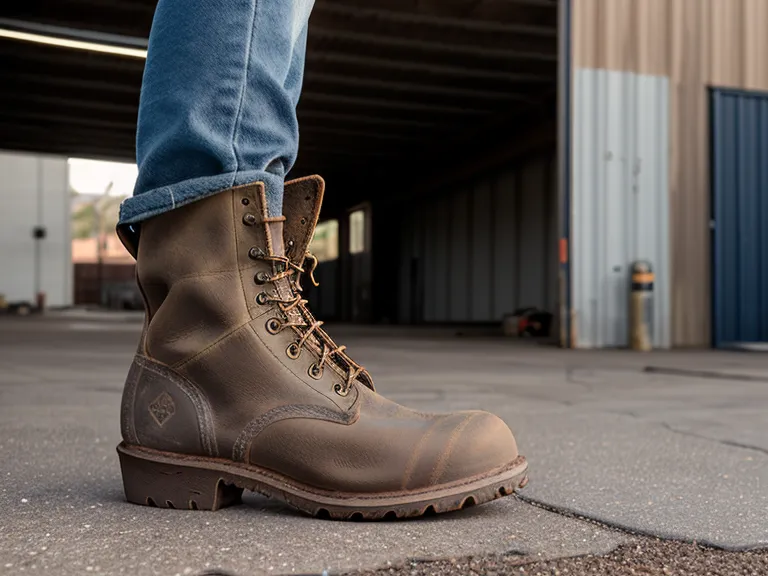
A boot that feels rock solid all morning on a polished aisle turns into a liability the moment you step off the main floor and onto gravel or an oily bay. I hear some version of that question from guys buying their first real pair for shift work more often than almost anything else, and it's exactly why a real work boot comparison has to start with sole type — lug versus wedge — instead of brand loyalty. Warehouse safety and footwear durability both hinge on that mismatch, and it's worth working through surface by surface rather than taking anyone's word for it.
A quick disclosure before any of that: some of the boots named below carry an affiliate link, and buying through one earns me a small commission at no extra cost to you. That's not a knock against any brand here — every one of them has actually spent time on a job site floor, not just a marketing deck — but you should know the incentive going in. None of this replaces a proper fitting, either, and if you've got a diagnosed foot condition, a stranger's boot recommendation on the internet is no substitute for a podiatrist.
Here's the short version. A wedge sole is one continuous slab of rubber or crepe that spreads your weight across more of the footbed, while a lug sole is cut with deep, separated channels built for grip and self-cleaning on loose or wet ground — that's about as far as the anatomy lesson needs to go, because the more useful question is which surfaces call for each one. Flat, dry, polished concrete rewards the wedge. Anything with oil, gravel, standing water, or road salt tracked in rewards the lug. Everything past that is detail.
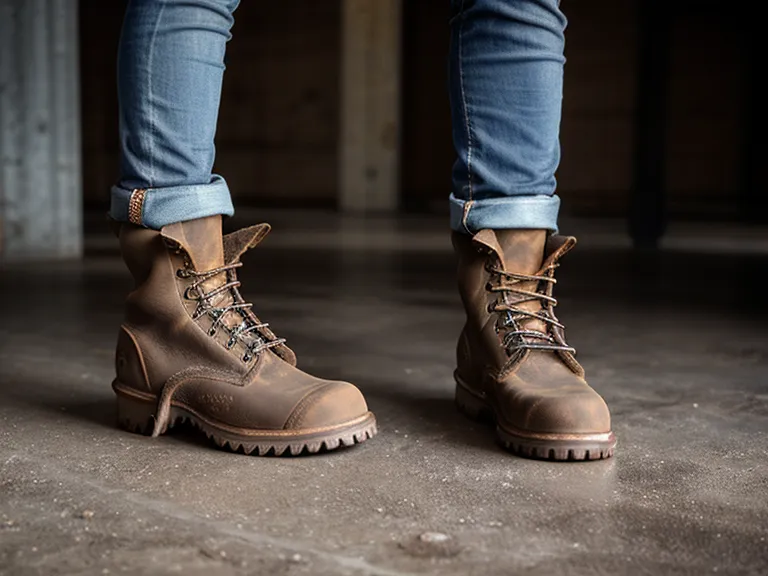
Which Sole Actually Holds Up Better on Flat Warehouse Aisles?
A wedge sole wins the comfort argument on ten hours of flat concrete, no contest. Thursday Boot models are a decent example, the kind some of the office-to-floor guys keep in rotation, because that continuous sole spreads pressure across the whole foot instead of stacking it on the heel and the ball. Less weight concentrated in one spot means less fatigue by the time you've logged a few miles of aisle walking in a shift, and some of that feel also comes down to heel and shank geometry rather than the sole material alone, though that's a deeper rabbit hole than belongs here. The trade-off shows up in the tread. Polished concrete is more abrasive than it looks, and a soft wedge compound wears thin faster than a deep lug ever would. Drag a worn sole across bare concrete and the scrape alone tells you how much depth is left before it goes slick — that's a better gut check than eyeballing it under warehouse lighting. Comfort now, tread later, that's the whole trade.
Lug Soles Win the Durability Fight the Moment the Floor Turns Messy
Step off the main aisle into a maintenance bay with hydraulic fluid on the tile, or out into the scrap yard where it's all gravel and loose fill, and the calculation flips. A Georgia Boot pair with deep, aggressive lugs earns its keep there, because those channels are cut to clear debris and bite into loose or uneven ground instead of skating across it. Road salt tracked in during a bad winter stretch does real damage to leather over a season, and that's a separate maintenance habit from picking the right sole, so I'll leave it there. Insulation matters too, but only relative to how much you're actually moving — someone stationed at a loading dock all shift needs more of it than someone walking a route all day, and matching the two is its own decision entirely.
Hunter Boots have a real wet-weather pedigree, a brand that traces back to 1856, but that's molded rubber, not a waterproof membrane or treated leather the way a real work boot handles water, and weighing those two approaches is a comparison for another day. Either way, a wellington isn't built with the structure a heavy maintenance shift demands, so I'd only reach for one in a genuinely swampy outdoor stretch. For daily bay work I want something with more backbone, usually a Goodyear welt work boot, because a welted build holds up to resoling and heavy strain in a way a cemented sole never will.
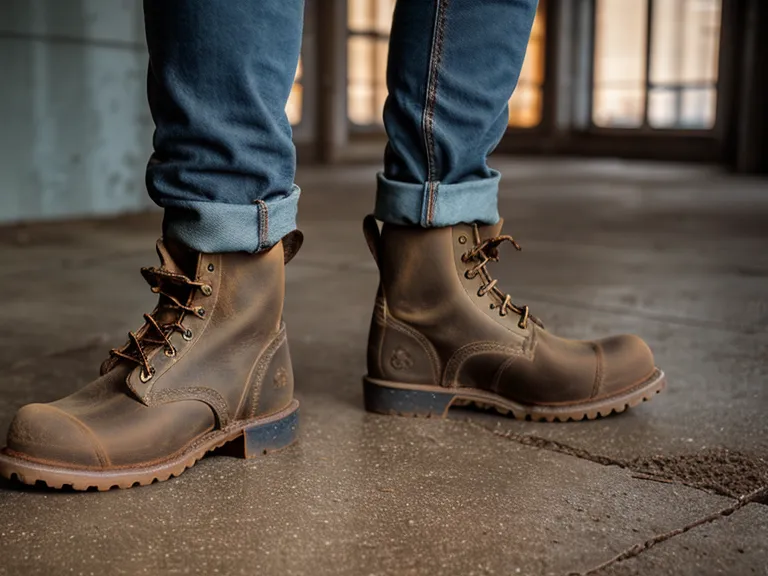
What About Wide Feet or a Foot That's Already Sore by Lunch?
Wide feet change this whole equation, and a boot that fits fine in a standard width can pinch by the second hour when you're an 11 wide. That's really a toe-box question more than a sole question, and it deserves its own breakdown rather than a paragraph here. Arch support is the other piece guys underrate, mostly because they judge it on day one instead of months in. Shoving a drugstore gel insole into a boot whose footbed had already gone flat in the arch never actually fixed anything for me; it just papered over a problem that was already sitting in the sole, and inside of a couple weeks the arch felt exactly as dead as before.
The real test came on a weekend walk, three miles down the towpath trail out toward Cranberry Township with my mother's old Lab pulling the leash the whole way, and there was no ankle stiffness the next morning — that told me more about a boot's actual arch support than any spec sheet could. Rotating between a Rocky Boots pair and a set of Durango Boots taught me the other lesson: the wide widths on Rocky's flagship line don't pinch by lunch, but you pay for it in a break-in period that runs longer than most of the newer direct-to-consumer brands. Durango's lighter build feels more like a sneaker and suits a day split between the office and the floor, but it doesn't carry the same bite in gravel or mud that a heavy-duty lug boot has.
The Real Risk Hiding in a Good-Looking Boot
Heritage styling can fool you into thinking a boot is job-site ready when it isn't. A pair of Dr. Martens early on looked tough enough for anything, but the upper split at a stress point sooner than it should have under real warehouse duty, and that brand got dropped from shift-work rotation after that — upper material is its own conversation and I won't unpack it here. A near-miss on a wet patch of cleaning chemicals one summer made the bigger point: a wedge sole's extra surface contact only helps when there's still tread left to grip with, and worn tread turns that same advantage into a slide risk fast.
Safety toe ratings are a separate certification from any of this and worth checking on their own terms instead of assuming a sole type covers it. A solid steel toe Durango or a heavy-duty Georgia Boot tends to hold its shape through that kind of exposure, and if chemical spills are a regular part of your shift, dedicated chemical resistant work boots exist for exactly that reason.
Match the Sole to the Surface, Not the Sale Rack
Match the sole to the surface, not to whatever's stacked on the sale rack at the big-box store. Flat, dry, polished concrete for most of the day means a wedge sole is going to save your knees and your lower back, and the extra tread wear is a fair price for that comfort. A shift that moves through a maintenance bay, out into a gravel yard, or across a loading dock in a bad winter makes the lug sole non-negotiable — it's the difference between staying upright on a spill or an ice patch and not. Guys who split time between both surfaces should keep two pairs in rotation instead of asking one boot to do a job it was never built for.
That's where the breakdown below comes in. Rocky, Georgia Boot, Durango, and Thursday each nail a different piece of this puzzle, and the ratings underneath sort out which one actually fits your floor before you spend a shift regretting it.
| Product | Rating | |
|---|---|---|
| Rocky Boots Top Pick | 9.2 | Read More → |
| Georgia Boot | 8.9 | Read More → |
| Thursday Boot | 8.5 | Read More → |
| Durango Boots | 8.2 | Read More → |
| Hunter Boots | 7.8 | Read More → |
Rocky Boots
Pros
- ● Heavy-duty lugs that bite into gravel and oil
- ● Goodyear welt construction that actually takes a beating
- ● Wide widths that don't pinch by lunch
- ● Solid ankle support for uneven yard work
Cons
- − Heavier than your average warehouse boot
- − Requires a proper break-in period