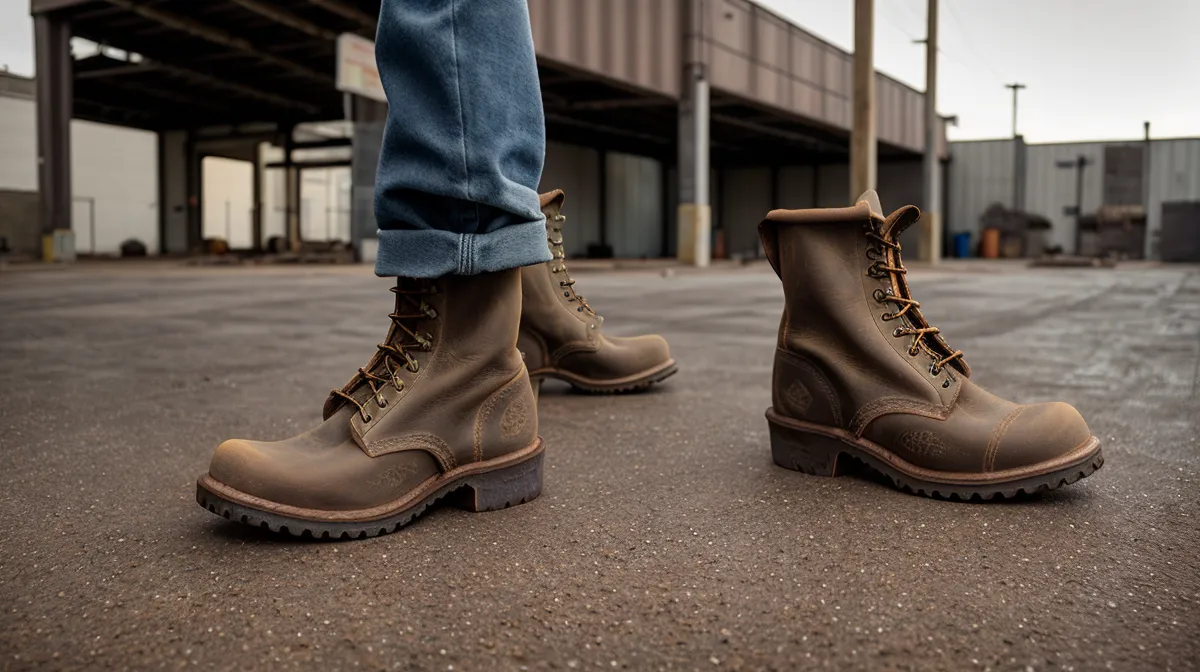
Elbow-deep in a clogged gutter with my boots braced on a wet ladder rung is not where most guys think to judge a pair of heritage boots, but it's exactly where the judging happens. The real question isn't whether a pair of leather boots looks sharp coming out of the box. It's whether that same pair can pull double duty as casual workwear on a Saturday full of chores and still walk into dinner that night without you swapping shoes in the truck. That gap between looking presentable and surviving actual use is where boot durability gets tested, and it's where most heritage-looking boots quietly fail.
Quick note before the comparison: some of the links below are affiliate links, and if you buy through one, the retailer sends a commission my way at no extra cost to you. That's not why I recommend anything here. I've put every brand mentioned through real use, because a bad boot costs me at hour seven of a shift, not because a company mailed me a check.
The Weekend Problem Heritage Boots Are Supposed to Solve
My paycheck depends on my feet lasting through a ten-hour shift at a distribution center outside Pittsburgh, which means steel toes, a safety-toe rating that's a whole certification conversation on its own, and enough rubber to survive a chemical spill — none of it looks good anywhere near a restaurant. The weekend runs on different rules. I still walk the dog, climb a ladder, and haul mulch, but I don't want to look like I'm about to drive a forklift when I'm meeting my brother-in-law for a beer. That gap is what heritage leather is supposed to fill, and for years I filled it wrong.
A neighbor of mine down the street coaches his son's Little League team over in Peters Township, and he's the one who asked why I still owned three pairs of throwaway boots instead of one pair that actually held up. Fair question. I'd been buying off-brand boots from the big-box clearance aisle for years and telling myself I was saving money, and I ditched a pair of Wolverine hybrids on purpose after the vamp cracked clean across before the first winter was over. When an old pair went flat in the arch, my fix was shoving in a set of drugstore gel insoles and calling it solved. It never was. The insole packed down inside a few weeks and I was right back where I started, because the real problem was a boot with nothing left to give underfoot, not a footbed that needed extra padding. What actually keeps arch support intact over the long haul is its own subject, and I've broken it down elsewhere for anyone chasing that specific answer.
That habit of actually maintaining a boot instead of replacing it was already part of my routine by then. The smell of mink oil hitting cold leather on a Sunday night has been close to a ritual for years now, and it's a lot less trouble than replacing a pair every winter.
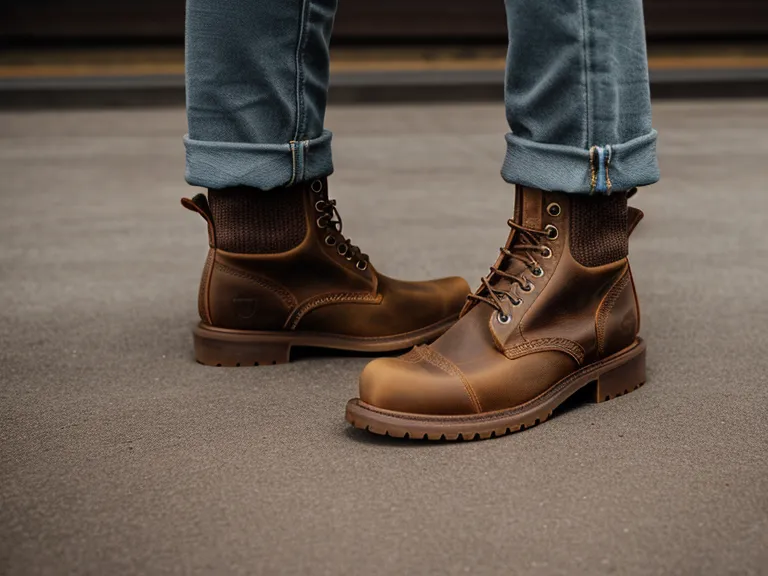
Heritage Leather or Working-Grade Boots: Which One Actually Belongs on Your Feet This Weekend?
Heritage construction comes down to the welt more than anything else. A Goodyear welt stitches the upper to a strip of leather that's then stitched to the sole — I'll leave the full mechanics of welt-construction to the piece that covers it in depth, but that's the reason a cobbler can rebuild a boot years down the line instead of you tossing it.
Two boots get thrown around when this comes up, and they solve different problems, so it helps to weigh them side by side instead of pretending one wins outright. The Thursday Boot Captain builds on that same 360-degree welt at a price well under what traditional welted boots run. Rocky Boots comes from the other direction: real heritage in forestry and military-grade work gear, wide sizing built for a foot like mine, and a welt tier of its own on the higher lines, but nothing about it is trying to look good at a graduation party. Wide-toe-box fit for guys who need real width up front is its own subject, and it's covered in full elsewhere — here it's enough to say Rocky earns its reputation on that front. Break-in period is the other trade-off, and it runs longer on Rocky's heavier lines than on most of the direct-to-consumer brands that have shown up in the last few years; I've gone deep on exactly how that plays out in a separate piece, so I won't repeat it here.
If you want the long version of how the Thursday held up on an actual warehouse floor, I put that through its paces separately in the Thursday Boot Company Review: Are They Tough Enough for Maintenance?, but for weekend duty, the short version is that it earns its keep.
Full-grain heritage leather does not break in like a foam-lined work boot. I found that out the hard way, wearing a stiff new pair on a double shift instead of easing into them, and I spent the next several days walking on blistered heels for it. Give the leather time to mold to your foot before you ask it to do ten miles on concrete in one go.
Smooth Leather Soles vs. Studded Rubber Outsoles on Wet Concrete
Here's the part the glossy gear write-ups skip. Most heritage boots ship with a smooth leather sole or a tread shallow enough to keep that sleek profile, and that's fine walking across dry carpet. It stops being fine the moment you're crossing a wet parking lot near the Monroeville Mall area after a rain, where polished pavement and a leather sole behave like a boot with nothing gripping back. I nearly went down once crossing that exact stretch, boots looking sharp and doing nothing for me the second the ground turned slick.
That's why I lean toward heritage models with a studded rubber outsole instead of a bare leather one. You keep the look, minus the trip to the ER on a rainy Tuesday. Hunter Boots built their whole reputation on exactly that problem, going back to 1856, long before anyone was calling rubber boots a lifestyle item — they made a boot that grips in the muck because the alternative was falling in it. Waterproof membrane versus treated leather is a related argument that deserves its own write-up rather than a paragraph tacked onto this one, and so is the wedge-sole-versus-lug-sole debate that comes up any time you're on your feet all day on concrete. Neither one has a clean answer that fits in a sentence, so I'm not pretending it does here.
What Holds Up Through a Wet Weekend and What Doesn't
A kitchen pipe let go under the sink one weekend, the kind of leak that puts a gallon of gray water on the floor before you can grab a bucket. I was already wearing the Thursdays, so I got under there, fixed it, wiped the boots down with a damp rag, and walked the dog through the Monroeville Mall area an hour later without changing a thing. Any of my old clearance-rack boots would have soaked straight through, and the salt lifted out of the winter roads would've bloomed out in white crusty lines across the leather the second it dried.
That salt is the real enemy of anything welted, and keeping the leather conditioned after a wet, salted week matters more than people give it credit for. I go through the actual salt-and-leather-conditioning routine in a separate piece, so I'll just say this here: wipe it down, condition it, don't skip a season.
If you want something with a little more Western edge that still cleans up, that's where Durango comes in — I'd point you to my Comfortable Western Style Work Boots for Maintenance Supervisors piece, since some of those models bridge ranch-hand and casual-Friday better than you'd expect.
The clearest proof came the last time I pulled a double shift and came home braced for my arches to feel the way they used to in the old flat pairs — packed down and dead underfoot by the end of it. That give was still there. The footbed hadn't collapsed, it had molded, and that's a different thing than any insole ever gave me.
Pick the Boot for the Weekend You're Actually Having
None of this needs to be complicated. If your Saturday is chores in the morning and dinner out that night, grab the Thursday Boot — the welt holds up, the leather cleans up, and it won't embarrass you at a table. If your Saturday looks closer to a job site, hauling lumber or running a mower over rough ground, get the Rocky Boots instead and save the heritage pair for a day that doesn't involve real labor. Upper-material durability is where the two diverge hardest under repeat wear, and that's a deeper comparison than fits in this piece, but the short version holds: full-grain heritage leather rewards maintenance, and work-grade uppers are made to take abuse without needing much of it.
Either way, slow down on the break-in, keep a rag and some conditioner within reach, and get the rubber-outsole version if you're anywhere near a wet sidewalk. That's the real comparison here: not which boot wins in general, but which one wins for the Saturday you've actually got.