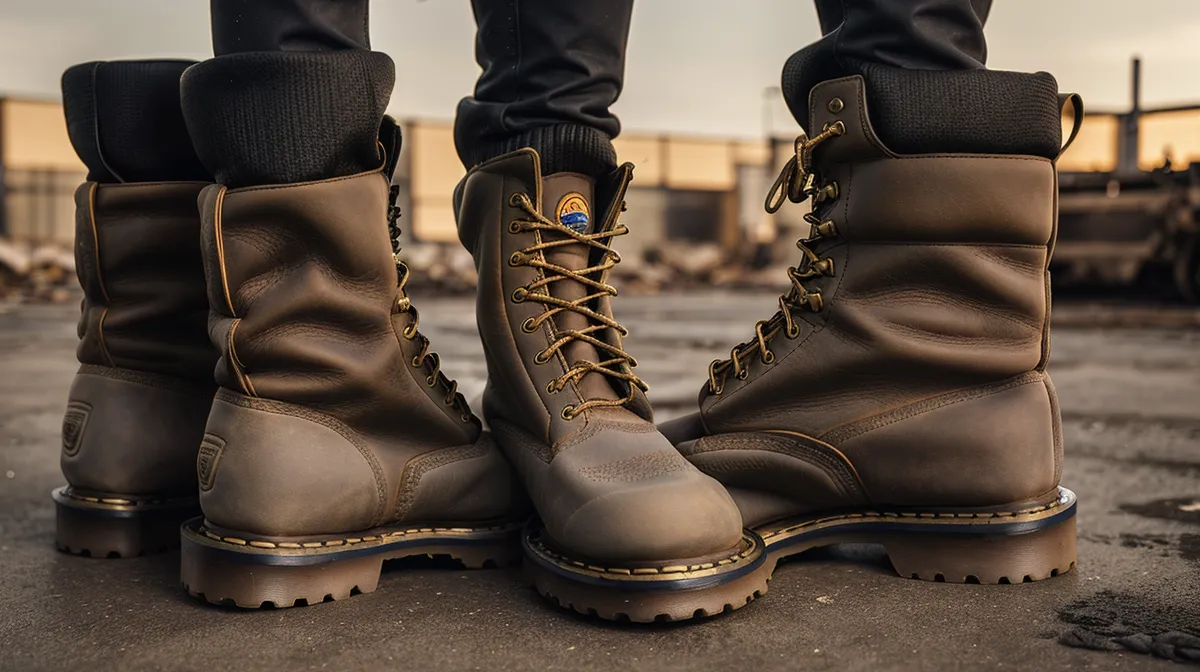
A pull-on boot gets a guy dressed and out the door in about the time it takes to grab a coffee. A lace-up boot takes three times that just to get the eyelets snug and the tongue seated right. Most of the work boot comparison talk out there stops right at that gap — speed against stability, pick a side — and that's the myth I want to put down, because in facility maintenance the boot that actually protects you has almost nothing to do with how fast you got it on.
Here's the actual question: what does the boot do once you stop standing still? A pull-on doesn't lock your heel down the way a laced boot does, and that difference means almost nothing on flat concrete and means everything on a ladder rung or a slick mezzanine catwalk. If your shift is mostly walking a flat floor with quick trips between a clean office and a wet yard, pull-on wins and the speed argument is the right one to make. If your shift includes climbing, kneeling on uneven ground, or shimmying around machinery, the ankle lockdown from laces stops being a preference and turns into the thing standing between you and a rolled ankle. That's the whole debate, once you strip out the marketing about which style "looks" like a real work boot and which one looks like somebody's idea of dressed-up occupational footwear.
None of what follows comes from a lab or a fitting credential. I'm not a podiatrist, and if you've got a diagnosed foot condition, you should be talking to one instead of reading a maintenance guy's blog. What I've got is years of rotating boots through a parts distribution center on the east side of Pittsburgh, watching which pairs survive a real winter and which ones fall apart before the salt trucks are done for the season.
What a Laced Boot Actually Locks Down
Lacing does one specific thing a pull-on can't: it lets you cinch material tight around the ankle and midfoot so your heel doesn't shift on uneven footing. Terri Pruszkowski, who runs second shift on our dock and covers more ground in a day than anyone else in the building, put it simpler than I ever have: a loose boot on a ladder is just a boot deciding for you when you're going to fall. There's a deeper conversation about heel and shank geometry that decides exactly how rigid that lockdown ends up being, and that's a rabbit hole for another day. The short version is laces let you dial in the fit every time, and a pull-on gives you whatever fit the last-maker decided on and nothing more.
The trade-off cuts the other way too. All that extra material and hardware on a lace-up adds weight, and how that weight trades off against tired legs by the end of a shift is its own can of worms I won't fully open here — just know a heavier boot with better lockdown isn't automatically the smarter choice if your shift is mostly walking.
The Durango Test: Comfortable Out of the Box Isn't the Same as Built for a Ladder
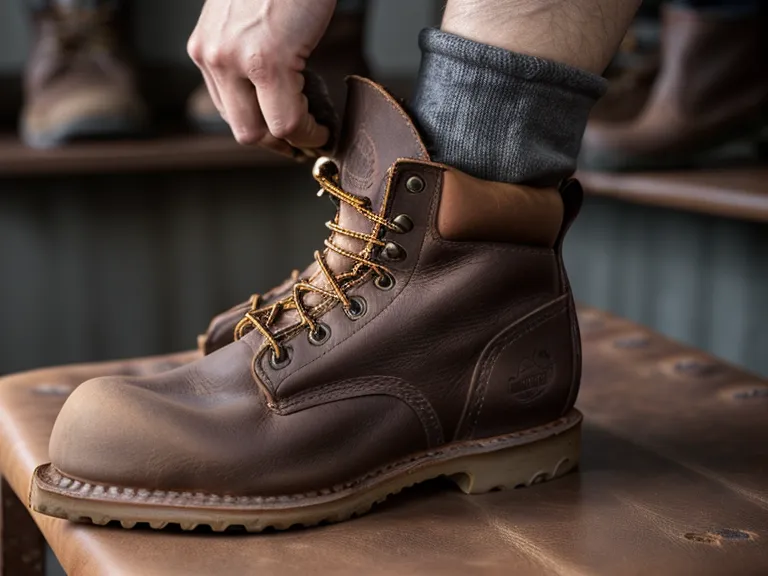
I've owned a couple of different Durango Boots lines over the years, and the gap between them is the best argument against buying on brand name alone. The first pair I grabbed was one of their lighter western-styled pull-ons, picked mostly because it was cheap and looked sharp enough to wear out afterward. It felt more like a house slipper than a work boot from day one, which is great for standing at a PM schedule binder in the office and less great once you're actually out in the stack.
That particular pair started cracking along the vamp before the year was out, right where the toe box flexes every time you kneel or climb. I soaked it in mink oil more than once, convinced that would soften the leather back and stop the split from spreading. It didn't. The leather was already breaking down underneath, and no amount of oil rubbed into the surface fixes a structural crack. I ditched that line for good after that and moved up to one of Durango's heavier lines, which held up considerably better against road salt and slush on weekend walks near the Monroeville Mall area with my mother's old Lab. Full-grain leather on that heavier line shrugged off the wet better than I expected — how you actually condition leather to survive a salt season is a longer topic than I'll get into here, but this one didn't need much babying. If you want the deeper dive on how their steel-toe options hold up under heavier equipment work, I already covered that in Best Durango Boots with Steel Toe for Heavy Equipment Maintenance Work, worth a read if you're leaning pull-on for anything past light duty.
Georgia Boots Take Over Once the Mezzanine Gets Involved
The other side of that same rotation is a pair of Georgia Boot lace-ups, and they earn their keep the moment a job stops being about walking and starts being about climbing. Six hours on a ladder rung during a conveyor overhaul on the mezzanine level is where the Durango's flexibility turns into a liability instead of a comfort — you want a boot that doesn't give at all when your whole weight is balanced on one rung. Georgia's heavier lines also back that up with real puncture protection under the sole — a dropped bolt or a stray screw is exactly what a puncture-resistant midsole plate is there to stop, more than luck ever is. They're also noticeably heavier on the foot than the Durangos, which is the trade-off I mentioned earlier showing up in real boots.
That deep lug tread underneath is part of why Georgia holds a rung and a greasy mezzanine floor better than a smoother sole does — the same trade-off I get into in my lug sole and a wedge sole piece, so I won't relitigate the whole argument here.
Running the Full Rotation Through a Pittsburgh Year
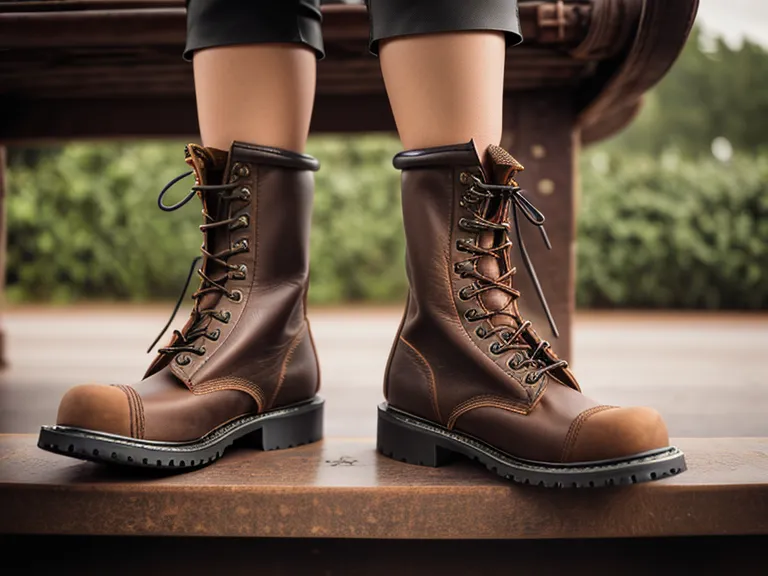
Summer flips the equation again. Without the extra leather and lacing across the bridge of the foot, pull-ons breathe better once the humidity sets in, and that's a real point in their favor for anybody who doesn't need the ankle lockdown that day. Even so, for a ten-hour shift where I might go from electrical panels to a plumbing leak to a pallet jack repair without warning, a solid lace-up stays my default, and Rocky Boots is the pair I keep reaching for first. Their welt construction on the higher tiers means a worn sole is a resole job instead of a reason to buy a whole new pair — deciding exactly when a boot's worn out enough to justify one or the other is its own longer conversation I'll save for another piece.
Rocky's break-in period also runs longer than some of the newer direct-to-consumer brands, which is a fair trade for a boot that lasts but not something I'll unpack fully here. Cold months bring a different wrinkle too — matching insulation rating to how much you're actually moving matters more than the thermometer does, and mismatching the two leaves you either freezing standing still or overheating doing physical work in a boot rated for standing guard.
If you want that same resole-ability with more of a dress-boot look for something like a post-shift dinner, a Goodyear welt shows up on Thursday Boot too, at a price that undercuts most traditional welted brands — just know their toe box runs tighter than most work-boot wearers expect, and finding a genuinely wide-toe-box option is its own separate hunt if you've got a foot built like mine. When the yard turns into a swamp and waterproofing is the only thing that matters, Hunter Boots, a brand with roots going back to 1856, keeps water out about as well as anything I've tried, though it won't do a thing for you if a motor housing or a pallet jack decides your foot is in the way. Hunter leans on a rubber shell rather than treated leather, and weighing a true waterproof membrane against conditioned leather is a longer trade-off than I can settle in one line, but it's why the two perform so differently in a downpour.
Check the Rating Before You Check the Style
Whatever style you land on, there's one thing that matters more than pull-on or lace-up, and it's printed right on the tongue or shaft: an ASTM F2413 rating. That's the safety toe rating that tells you the toe box has actually been tested to take an impact, not just marketed like it can. I've watched guys show up on the floor in boots that looked plenty tough and had none of that certification behind them, and looking rugged doesn't mean anything when a steel beam meets your metatarsals. Facility work also puts you near electrical panels often enough that checking for electrical hazard protection on the same label is worth doing, though that's a big enough topic for its own write-up.
I got into this exact fork in the road — heritage looks against real industrial gear — in more detail in Work Floor Reality, if you want the longer version of that argument. Short version here: a boot can be gorgeous and still be the wrong tool for a parts distribution floor.
So Which One Actually Goes on Your Feet
Here's the rule I'd actually give a guy on his first real pair. If more than half your shift is spent on flat floors, moving in and out of climate control at a decent pace with low climbing, buy the pull-on and don't feel guilty about the extra speed. If your shift regularly puts you on a ladder, a catwalk, or uneven ground where your ankle needs to be locked in rather than along for the ride, buy the lace-up and treat the ankle support as a safety requirement, not a comfort preference. Plenty of guys end up needing both — one for the office-and-yard days, one for the days you're actually in the stack wrestling with a piece of equipment twice your size.
The way I actually judge whether either pair is still doing its job has nothing to do with how the leather looks. Press a thumb into the footbed after two shifts stacked back to back — if there's still some give left in it, the boot's still working; once it presses flat and stays flat no matter how long you've been off your feet, that boot is done even if the upper still looks fine. Pull a compressed footbed out of a boot that's been run hard and there's a faint sweet chemical smell that wasn't there when it was new, which is just the foam breaking down from the inside — how long that support actually lasts is its own longer conversation than I can fit here. The upper tells its own story too. How well a leather or synthetic upper resists cracking and scuffing over real wear differs by brand in ways that have nothing to do with price, which is a comparison for another day.
A reader named Gus Hornak, a truck mechanic out in western Ohio who works pit-side, emailed me a while back asking why his outsoles kept crumbling at the edges long before the tread pattern ever wore down. Oil and brake dust do that to a sole from the outside in, and how different outsole compounds hold up under chemical exposure is a deeper subject than I can do justice to in a comparison piece. It's a good reminder that your specific job might be wearing your boots out from a direction you're not even watching. Whatever you land on between pull-on and lace-up, don't buy on looks alone. Check the rating, check the fit for your own foot, and check whether your actual shift needs speed or lockdown more. The five options below cover both ends of that argument, and I've put real time in every one of them.
| Product | Rating | |
|---|---|---|
| Rocky Boots Top Pick | 9.3 | Read More → |
| Georgia Boot | 8.9 | Read More → |
| Durango Boots | 8.5 | Read More → |
| Thursday Boot | 7.8 | Read More → |
| Hunter Boots | 7.2 | Read More → |
Durango Boots
Pros
- ● Incredible out-of-the-box comfort for concrete floors
- ● Fastest donning speed for frequent indoor/outdoor transitions
- ● Classic Western look that cleans up for a weekend dinner
Cons
- − Lacks the ankle lock-down needed for heavy ladder work
- − Durability varies significantly between their light and heavy lines