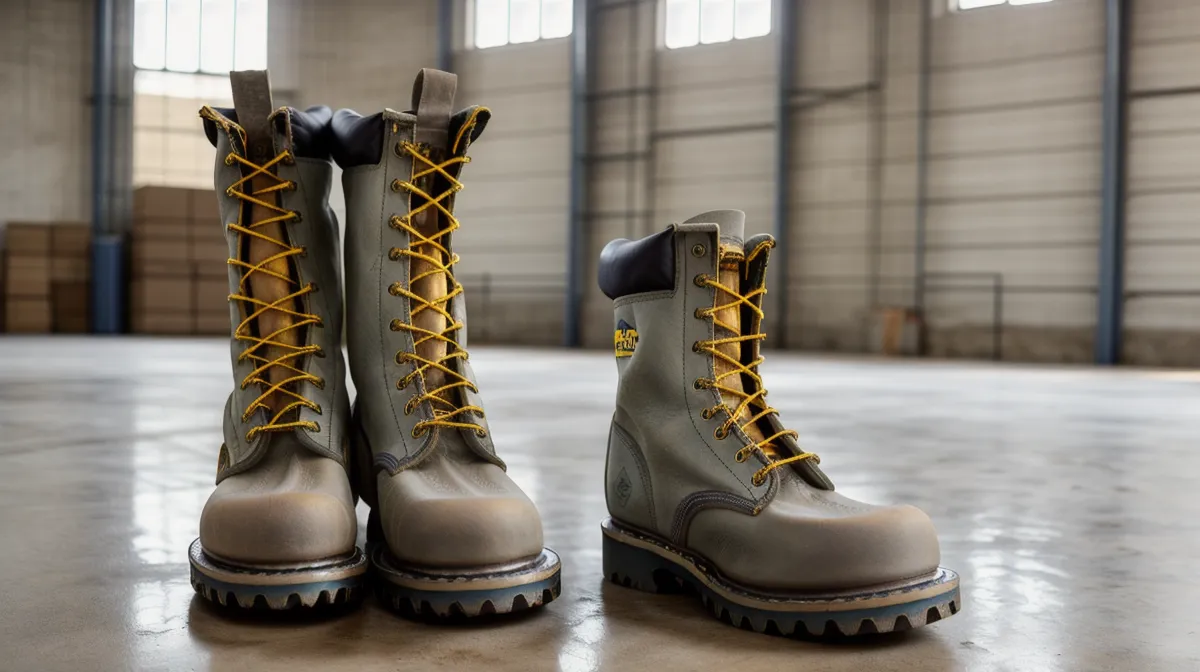
Concrete holds heat like a cast-iron skillet, and it keeps giving it back long after the rest of a building has cooled down. That's the part most guys chasing hot-weather work boots skip past — the assumption is more mesh panels, more holes for air to move through, problem solved. It's not wrong, exactly. It's just half the story. A boot can be mostly open weave and still cook your feet by the middle of a shift if the heat's coming up through the sole from the slab underneath you, not just sitting trapped around your ankle. Warehouse safety gear doesn't get a pass on that kind of physics because the tag says breathable construction.
Mesh Panels Aren't the Reason Your Feet Feel Cooler
Lou Ferrante, who does light commercial maintenance work these days, won't touch a mesh boot on principle. He swears by one heavy leather brand and won't seriously consider switching, mesh included, because in his mind sweat trapped inside leather beats grit working its way into an open weave. He's not entirely wrong about that second part. Fine concrete dust rides the air every time a forklift rolls past in a distribution center, and it settles into whatever weave is loose enough to let air through in the first place. That's the trade nobody puts on the box — airflow that lets oxygen in also lets dust in, and the more of that grit packs into the material, the less it wants to flex.
Weight plays into the same conversation, just from a different angle — a heavier boot wears out your legs over a full shift regardless of how hot or cold the floor is, which is worth remembering before you swap boots purely for summer. Insulation runs into a version of the same problem in the opposite season: too much lining fails the same way too little airflow does, because a soaked liner stops holding heat, it just takes a hot aisle instead of a cold one to get there.
Where the Real Heat Actually Comes From
That heat is coming up from the slab, not down from the rafters. A distribution center floor absorbs sun and machine heat all day and holds onto it well past closing, which is why standing still on a loading dock in the middle of summer can feel worse than working a line in direct sun. How the welt is stitched to the upper says more about whether a boot survives past a year than the weave does, but that's a different argument for a different day.
Concrete Dust and a Season of Breathable Wear
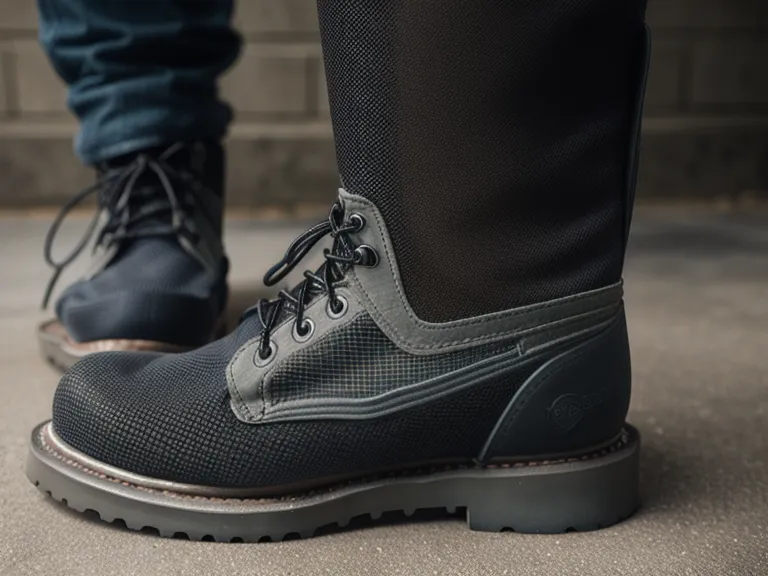
One mesh pair I wore through a stretch of humid shifts ended up stiff right where the boot bends with each step — not torn, just less willing to flex the way it had when it was new. Upper-material durability is its own long conversation depending on what the mesh is bonded to and how it's finished, but the short version for a warehouse floor is that dust doesn't do a breathable weave any favors over months of daily wear.
A compressed air hose every couple of shifts keeps the weave from packing solid, and it's worth the extra couple of minutes it takes.
Breathable Boots Still Need Their Safety Ratings
Agata Chmura, who runs receiving, asked me point-blank whether a mesh pair actually holds up before she'd spend real money finding out. She's on her feet nine hours minimum most shifts with no real chance to sit, so it wasn't a casual question. The answer is yes, you still need the rating — nothing about better airflow excuses a boot from meeting the same impact and compression standard as a heavy leather pair, and any boot that skips it to shave weight or add mesh isn't one I'd point a coworker toward.
Fit and Arch Support Hold Up Longer Than People Give Them Credit For
Arch support is the half of fit that gets ignored while everyone argues about mesh. Walking the dog on the towpath in Cranberry Township — three miles out and back — I didn't feel a thing in my ankles the next morning, and that's the arch doing its job, not the airflow. How long that support holds up before it packs down flat is a longer conversation than this one, and there's a solid rundown in the Best Boot Insoles for Standing on Concrete Floors All Day Long piece if you want to go deeper on it.
Sole and Heel Shape Matter More Than the Mesh Percentage
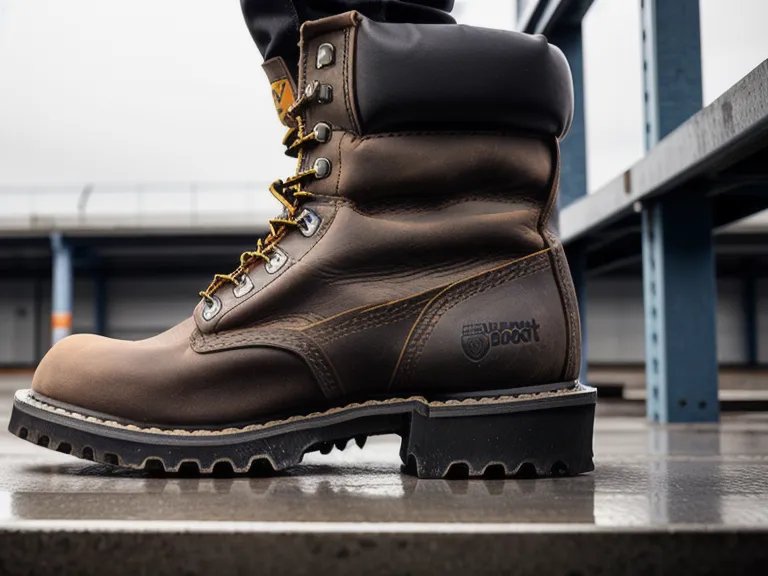
Sole and heel shape matter more than whatever percentage of the upper is mesh. Ladders are where the lighter builds fall apart — a defined heel that can actually catch a rung matters more than the airflow on the sides, and a flat, rocker-style sole built to look like a running shoe is a bad match for climbing to check overhead sensors. I found solid notes on how sole compounds handle slab heat differently in the Durango Rebel Work Boots Review for Maintenance Workers on Concrete, which covers that ground better than I can here. Wedge soles and lugged soles solve different problems entirely, and picking between them has almost nothing to do with how breathable the upper is.
The same kind of question comes back every winter, just flipped around — instead of dust clogging a mesh weave, it's road salt working at the leather, and keeping the material conditioned through that stretch is its own separate habit from anything covered here.
Fitting In and Breaking In
Fitting in and breaking in are two different problems that people lump together. I run wide through the forefoot, and a boot cut narrow to look sleek and athletic will pinch long before any mesh wears out, breathable or not — that part's just knowing your own foot. Break-in on a mesh boot is a separate animal from leather and doesn't behave the same way, worth reading up on its own; this How to Break in New Work Boots Without Getting Blisters piece covers that ground better than I can in a couple of lines.

Final Notes From the Locker Room
Waterproofing sprays are their own trap, and I found that out the hard way. I sprayed a waterproofing aerosol from the checkout aisle onto a mesh pair once, figuring I'd get hot-weather airflow and some rain protection out of the same boot. It held up for exactly one wet day and quit on the second. Real water resistance comes from how the membrane or the leather itself is built, not from anything sprayed on after the fact, and that's its own can of worms I won't get into here.
None of this means mesh is a bad call for a hot warehouse. It means the mesh percentage printed on the box isn't the whole answer. Check that the safety rating's still there, get a last that actually fits your foot, plan on blowing the dust out every few days, and don't trade away heel stability for something built to look like a running shoe. The walk out to the truck feels shorter when your feet aren't swamped, and so does the evening walk with my mother's old Lab, who doesn't care what the mesh percentage is as long as he gets to sniff every hydrant on the block.
I'm not a podiatrist or a boot fitter, just a guy who's gone through more pairs than he can count from a shift-floor angle. If your feet are genuinely giving you trouble, that's a conversation for a professional, not a blog post.