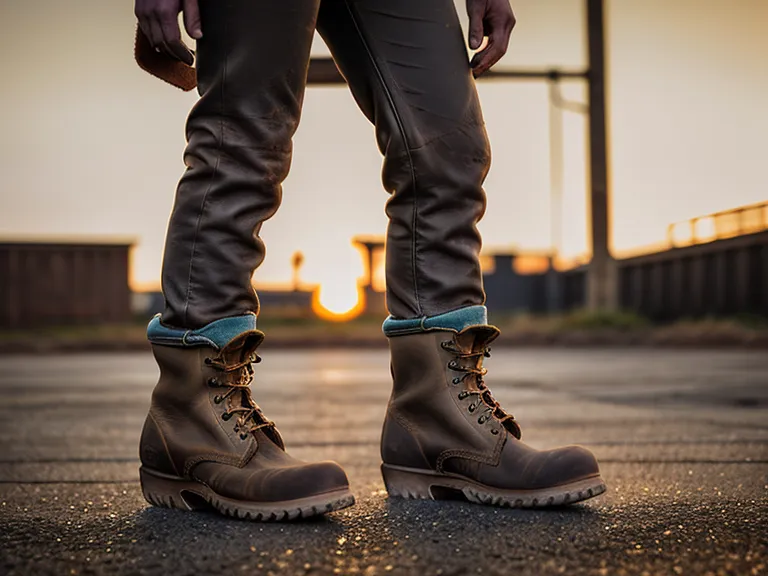
A steel toe that meets a safety-standard test and a steel toe that survives a distribution center floor are not automatically the same boot. Dr. Martens' industrial line clears the same certification as the heavy-duty brands I actually trust on shift, but that certification says nothing about whether the leather cracks before a second winter is out, or whether the sole holds a grip once the floor gets slick. That gap is what this steel-toe review is really about, and it's the difference that matters most when you're judging work boot durability instead of brand reputation in industrial footwear.
Quick money note before the technical stuff: some of the boot brand links below are affiliate links, and if you buy through one, I earn a small commission at no extra cost to you. That doesn't buy a spot on this page — every brand mentioned here has actually been on my feet or a coworker's feet for a real shift, not just a showroom walk.
My angle on this is simple. I'm a maintenance supervisor outside Pittsburgh, and my feet are the one piece of equipment I can't put in for a work order. I'm not grading Dr. Martens against a lifestyle crowd who wears them to browse records — I'm grading them against grease, concrete, and whatever a warehouse floor throws at a boot over a full shift.
The Break-In Period Feels Nothing Like the Marketing Copy
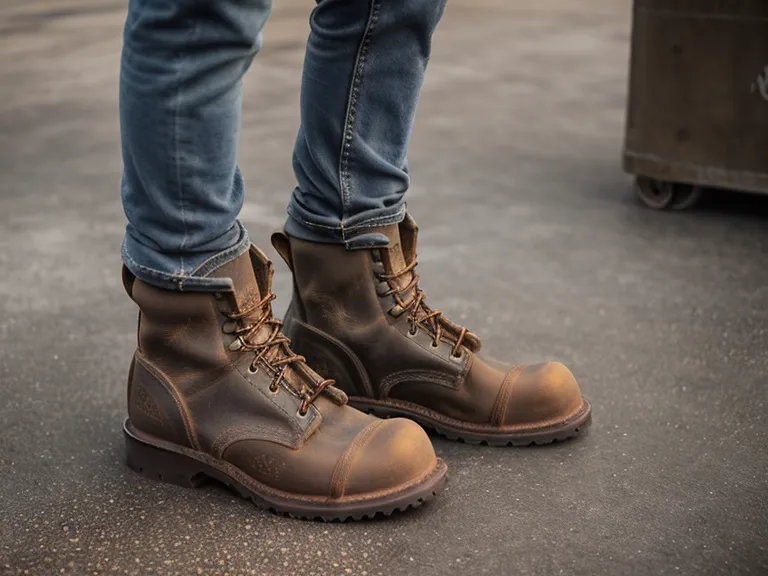
Compared to a pair of Durango Boots, which feel close to broken-in within the first couple of shifts, Dr. Martens' thick leather starts out stiff enough to feel carved rather than cut. The ankle has almost no give at first, and that stiffness is exactly what people underestimate about the brand's steel-toe line — the leather is doing its job protecting the foot, it just isn't doing you any favors on comfort yet. How fast a boot breaks in has very little to do with how long it ultimately lasts on a hard floor, and that's a separate question worth chasing on its own.
Curt, a coworker of mine who does facilities maintenance on my floor, researches every boot purchase for weeks and then doubts himself the second the box shows up — he did the same thing with this pair. That instinct is the right one with Dr. Martens specifically, because sizing runs unpredictable across their lines, and a boot that feels snug in the store can turn into a vice grip within the first few shifts of a work week. Anyone dealing with a wider foot is better off starting with a guide built for that exact problem, like choosing steel toe boots built for a wide foot, because a standard-width Doc punishes that mistake fast.
For years my answer to bad boots was just grabbing whatever steel-toe pair was sitting in the bin at the nearest big-box store every few months and treating it as disposable — cheap, replaceable, not worth thinking hard about. That habit hid how bad my actual fit was for longer than it should have. It wasn't until I dropped to a knee under a fluorescent tube in my garage that's buzzed and flickered longer than I care to admit, reaching for a bin off the low shelf, that I noticed the toe box wasn't biting into my foot anymore. That was the first time a pair actually fit instead of just getting broken in enough to tolerate.
Ankle and Shaft Support Where It Actually Matters
Once the leather finally softens, the next weak point shows up around the ankle. Dr. Martens' standard steel-toe cut sits lower than a dedicated industrial boot, and it doesn't hug the heel the way a boot built for ladders and uneven pallets does. They're still fine for a weekend loop past the shops at Settlers Ridge with my mother's Lab, but that's a different job than catching your balance on a wet aisle with a loaded hand truck. A brand like Georgia Boot builds in a taller shaft and a stiffer internal shank specifically for that kind of lateral stability, and the difference shows up fast once you're doing more than walking a flat floor.
Rocky's industrial lines lean the same direction. A taller shaft and a noticeably stiffer heel counter are built for climbing and pivoting, not for a night out, and Rocky Boots has built its reputation on exactly that kind of structure. Dr. Martens' shorter, softer cut reads more like a style choice than a safety one once you put it next to that kind of construction.
Does a Safety Rating Guarantee Shift-Floor Durability?
Every boot in this review — Dr. Martens, Rocky, Georgia, Durango — carries the same protective-toe certification, and that shared baseline is exactly why it's not a useful way to tell them apart. What actually separates a boot that lasts from a boot that doesn't shows up in the leather, the stitching, and the sole compound, not in the toe cap rating itself.
Sole, Traction, and Arch Support Late in a Long Shift
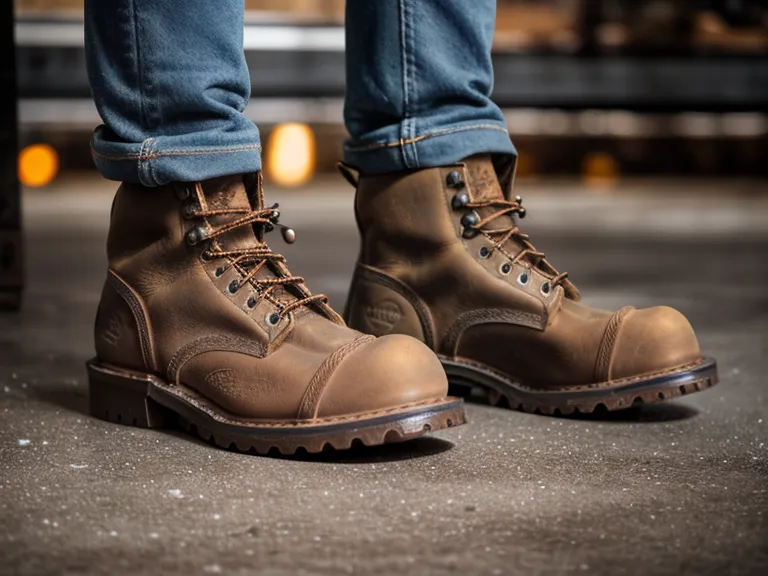
The AirWair sole is genuinely bouncy underfoot for the first stretch of a shift, and that's not marketing spin — it feels good standing still. On concrete for hours at a stretch, though, soft starts to translate into no support, and that arch fatigue is where Dr. Martens loses people who spend all day on their feet instead of just walking through a store. Arch support over the long haul is its own subject with its own guide, and the short version here is that a sole tuned for cushioning and a sole tuned for structure are chasing two different goals. Georgia's wedge-sole options chase similar standing comfort from a completely different sole shape than a traditional lugged tread, which is its own comparison worth having separately.
DeShawn, a forklift operator on my floor who asks me about boots more than anyone else on shift, burns through heels faster than anyone I've tracked. He's rougher on that part of a boot than most guys are, and it's made him a good early-warning system for which soles hold their shape and which ones pack down flat within a season. His pairs tell me more about long-term sole compression than mine do, since I'm nowhere near as hard on a heel.
Guys on my floor try bringing a pair of Thursday Boot boots onto the loading dock sometimes because they like the heritage look, and it never goes well. That construction is built for an office or a bar, not a pallet jack. Dr. Martens sit in an odd middle ground between the two: tougher than a dress boot, but still missing the internal shank support you'd find in something like Georgia Boot, and that gap in mid-foot rigidity is what wears on the knees over a long shift of pivoting and hauling.
Chemical Exposure and Upper Material Durability
Grease, floor stripper, and the occasional coolant spill are a normal part of my week, and that's a different kind of stress than rain or mud. Dr. Martens' leather holds up reasonably well against fluid exposure — it beads rather than soaking straight through — but the sole compound is tuned for sidewalks and stockroom floors, not a slick chemical spill, and that mismatch is where the boot starts to feel genuinely risky instead of just uncomfortable.
Purpose-built oil-resistant treads, the kind Rocky Boots puts on its industrial lines, use a rubber compound and tread pattern designed specifically to bite into a slick, chemical-coated floor. Dr. Martens' AirWair sole wasn't built with that problem in mind, and on anything slicker than a wet sidewalk, it starts to feel more like an ice skate than a work boot. How well that upper resists cracking under repeated chemical exposure over a full year is a longer conversation for another piece, but the short answer here is that the leather outlasts the sole. Winter road salt is a separate problem on top of that for any leather boot, and keeping the upper conditioned through a full salt season is its own maintenance habit, not something one review can cover properly.
On the weekends I'll swap to a pair of Hunter Boots for wet grass instead of the Docs, since a treated-leather work boot and a true waterproof rubber boot are solving two different problems. Hunter's been making rubber boots since 1856, and that focus shows in how the boots handle standing water in a way no leather boot, work-rated or not, is built to match.
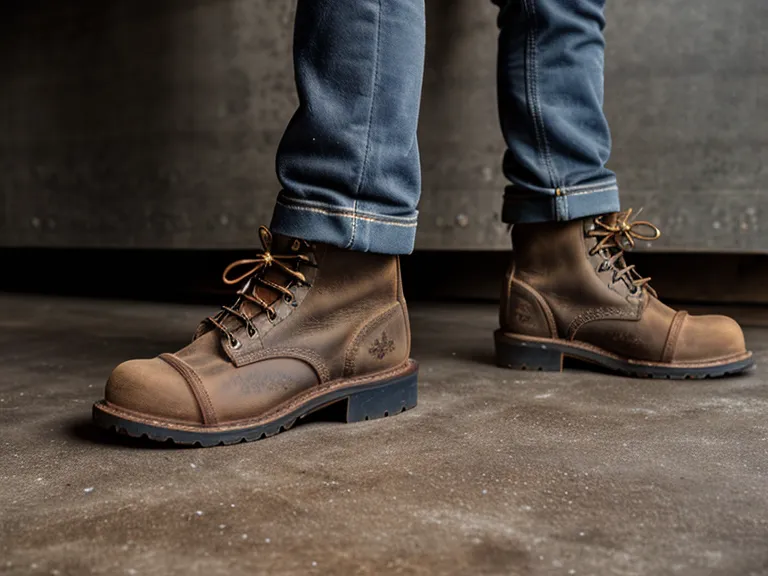
The boots are stitched together with a genuine welt rather than glued, which matters for whether a pair can be resoled instead of replaced outright. That's its own question, covered in more depth in the piece on when it's time to replace a work boot after months of heavy daily wear. What I did notice on my own test pair is the leather around the toe box starting to crack slightly after enough exposure to grease and chemical cleaners, even with regular conditioning, and that's usually the sign a boot has hit its ceiling regardless of how the welt is holding up.
Comparing Dr. Martens to the Warehouse Heavyweights
Spending the equivalent of a couple of fast-food runs or a half tank of gas on an upgrade is a real decision, not a casual one, so here's how Dr. Martens actually stacks up against the boots I trust when a shift runs long.
| Boot Brand | Durability (1-10) | Break-in Period | Best For |
|---|---|---|---|
| Dr. Martens Steel Toe | 6 | Brutal (4+ weeks) | Style & Light Duty |
| Rocky Boots | 9 | Moderate (1 week) | Heavy Industrial |
| Georgia Boot | 9 | Moderate (1 week) | Oil & Chemicals |
| Durango Boots | 7 | Easy (2 days) | Ranch & Warehouse |
None of this means Dr. Martens fall apart fast. They hold together fine, structurally. But holding together and being built for the job are two different bars, and the comparison above is where that gap actually shows. If foot fatigue by the end of a shift is the bigger issue for you no matter which boot you're in, it's worth looking into the best boot insoles for standing on concrete floors all day long before writing off a pair that's only letting you down in one spot.
Should You Buy Dr. Martens for Heavy Industrial Work?
Heritage looks are nice. A distribution center floor doesn't care about heritage looks. Dr. Martens' steel-toe line is durable in the narrow sense that it won't come apart on you, but it isn't work-durable in the sense that matters on my floor. It's missing the oil resistance and the deep-lugged traction of a tool actually built for the job. A supervisor who spends more time behind a desk and only walks the floor occasionally could probably get away with a pair. Anyone turning wrenches or moving pallets all day needs something built around that work, not just adapted to it.
My own next pair is going back to Rocky Boots. The width options in my size and the shank support are worth more to me than a heritage logo at this point in my rotation. Anyone who wants something that splits the difference between a work boot and a western look without giving up too much durability should look at Durango Boots, a reasonable middle ground even if they trail behind on heavy chemical exposure.
Don't buy Dr. Martens for a heavy industrial site because they look good doing it. Buy the tool that actually fits the job, and let your feet make the call instead of your closet. Anyone still weighing options should check the guide on how to choose Rocky Boots with composite toe protection, which covers a lighter alternative that doesn't give up the safety rating.