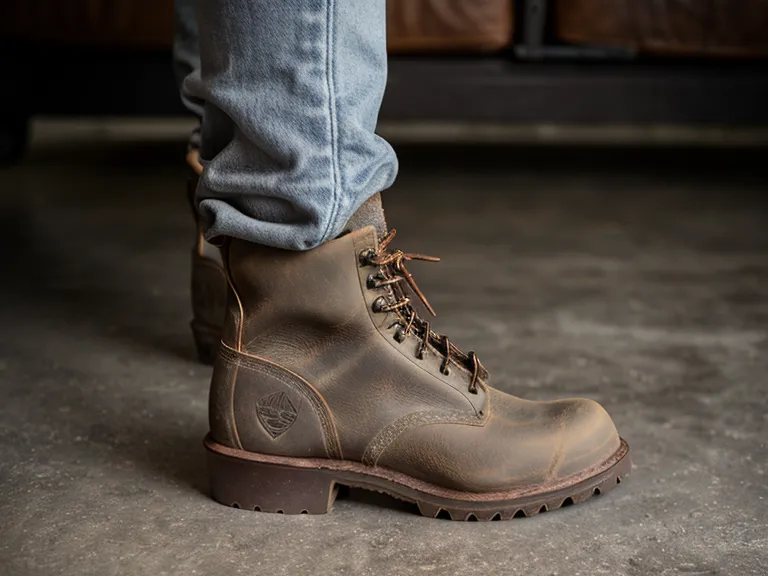
One-eighth of an inch is the entire cushion between a wide width work boot that gets a man through a ten-hour shift and one that has him limping to the truck. That's the standard jump between a D and an EE on a sizing chart, about the thickness of two stacked quarters, and it decides whether work boot fit even matters past the first hour. Foot health on a concrete floor comes down to margins that small, and most guys buying their first pair of wide boots have no idea that gap exists until their feet tell them.
Two Ways Wide Feet End Up in the Wrong Boot
Guys with wide feet end up here two ways, most of the time: sizing up in length because the store doesn't stock a true wide, or paying attention to the actual width measurement and buying to that instead. I did the first one for longer than I want to admit, buying a size 12 regular because nobody around here stocked an 11 wide, and telling myself the extra room up front was doing me a favor.
The trouble is in the geometry, not the room. A boot bought a size up moves the flex point — the spot where the sole is supposed to hinge — forward of where the foot actually bends. Every step fights that mismatch, and the stress lands in the arch instead of absorbing where it should. Soles built to flex somewhere they were never designed for tend to crack right at the mid-foot eventually, not because the boot was cheap, but because it was used wrong from the day it left the box. None of this replaces an actual fitting or a podiatrist if something structural is going on with your feet; it's just what watching boots fail on a concrete floor, shift after shift, has taught me.
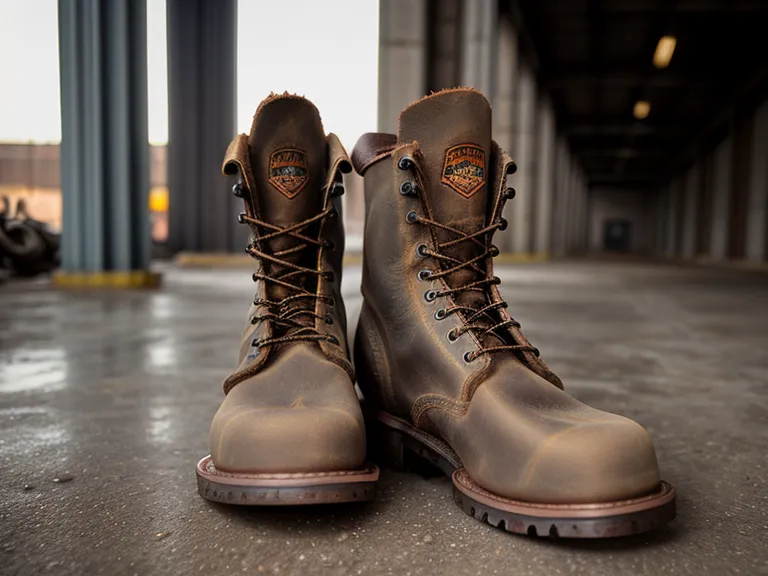
How Much Does an Eighth of an Inch Actually Matter to Work Boot Fit?
A Brannock Device settled the argument for me, the same sliding metal contraption that's been sizing feet since 1927 and that I trust more than my own gut at this point. Feet spread with age and with years of carrying heavy parts around a warehouse floor, and plenty of guys are still shopping off whatever size they wore in high school.
That eighth-inch gap between letters, roughly two stacked quarters, is the entire distance between a D and an EE, and it's the whole reason a boot that looks close enough on the shelf ends up killing an arch by the middle of a shift. An EE is the standard wide in the US system, EEEE is the extra-wide most guys with real width need before they even bother looking at anything else.
The Other Approach: Built for a Warehouse Maintenance Shift
A safety toe is a fixed, cold shape, ASTM-rated or not, and it will never loosen up to meet a wide foot halfway. If a steel or composite cap rubs on day one, it rubs every day after, because that cap doesn't break in the way leather does.
Getting the last right is at the top of the list I put together in what actually matters after two decades in the warehouse, and none of it changes just because the label on the box says wide. A true wide last carries more volume through the instep, not just a fatter footbed, and that's the part cheap "wide" boots skip, because it costs more to tool a whole new last than it does to cut a bigger piece of leather.
Brahma taught me that lesson the hard way, years back. The box said EE, but once the leather broke in, the last underneath hadn't changed at all — same narrow shape with an extra half inch of material stitched onto each side. My arch paid for that mistake long after I stopped wearing them.
Wet Weather Settles the Argument
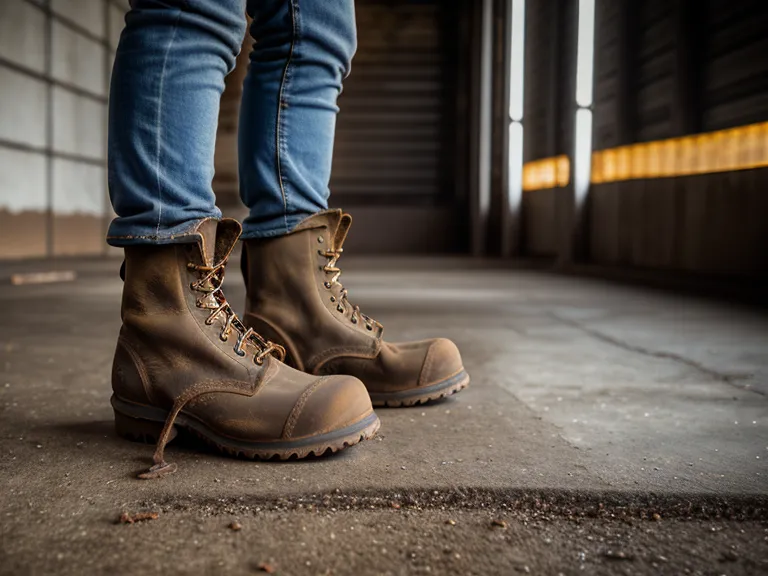
Salt does not care how good your boots looked in the store. Once loading-dock slush starts working into a seam, any spot where the leather was already under strain — usually right where the vamp meets the sole — is where it splits first. A boot sized up for width instead of built wide is under that strain everywhere, not just at the seams, because the whole upper is stretched to cover space it was never shaped for.
A Goodyear welt holds up better than a glued sole once wet leather starts fighting a wide foot from the inside, and that's the entire reason the stitched construction costs more. The conditioner stays on the shelf by the utility sink in the garage, and working it into a welt seam leaves a sharp, ammonia edge in the air that lingers a while even with the big door up. One of the two tube lights over that shelf has been stuttering for over a year now, and it's stayed that way — never worth the trouble of fixing.
That checkout-aisle waterproofing spray looked like a fix, one February when the road salt started early. Two wet days later, the coating was gone and the leather at the vamp already had that dull, thirsty look that means a split isn't far behind.
Break-In Should Feel Like Nothing, Not Something to Survive
Break-in and pain are not the same thing, and a boot that needs real pain to become tolerable is a boot that goes back on the shelf. A wide-width boot should feel snug out of the box, not restrictive, and toes should be able to move without hitting leather on either side.
Agata Chmura runs receiving and has no patience for anything that sounds like it came out of a catalog. She asked me once why a boot marked wide still let her heel slide around at the back, and the answer is the same every time: room up front doesn't mean much if the heel cup is cut too generous along with it. You want space where your toes are and a heel that stays locked down, and most durable Rocky boots for heavy duty distribution center work is where I get into which lines actually manage both at once.
So Which One Do You Actually Buy?
Buy the true wide last every time a brand makes one in your size, even when it costs more or takes an extra week on order. Sizing up in length only makes sense as a stopgap, covering a single shift or two while the right size is in transit, and it should never turn into a permanent habit — the flex point never lines back up with your foot no matter how long you wear the wrong length in.
The difference shows up on an ordinary Monday, four aisles into a perimeter check, when I realize neither heel has rubbed once the whole way through.
Lou Ferrante, a buddy of mine who does maintenance work these days after years as a plumber, still won't get measured. His feet have given him trouble for as long as I've known him, and he just shrugs it off and keeps buying whatever's close enough.
My mother's dog still gets his lap of the North Shore Trail down along the river, and these days neither one of us is thinking about my feet by the time we're back at the truck.
That's really the whole test. A boot that disappears while you're wearing it is a boot that fits. Anything else is just a boot you're negotiating with all day.