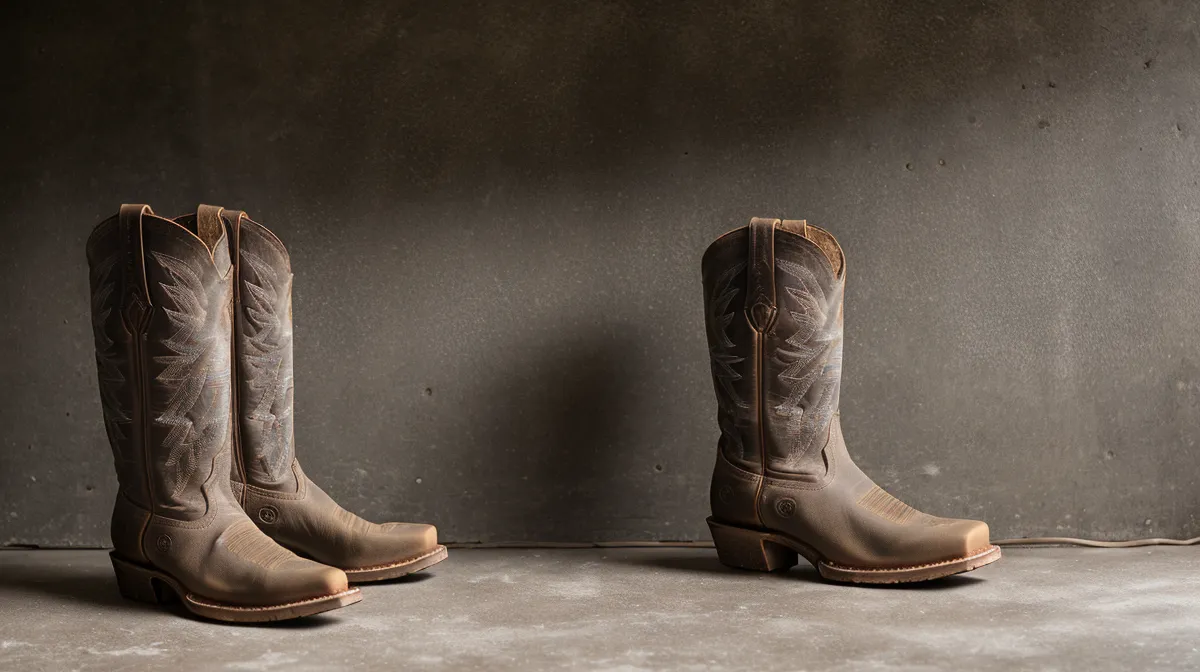
A steel toe that's finally broken in doesn't announce itself; you just notice one day that kneeling doesn't hurt the top of your foot anymore. I got there the hard way, on a morning when a hydraulic line let go on a forklift that had no business still being in service, and the sole on my old warehouse specials picked that exact moment to split at the arch while I was kneeling in the mess. Maintenance work teaches you fast that your feet decide how the rest of the shift goes, not the other way around, and that was the shift where I stopped grabbing whatever steel-toe boots were cheapest and gave a pair of Durango Boots a real shot at earning a spot in my maintenance work rotation.
Click one of the links in this piece and buy a pair, and I earn a commission at no extra cost to you — that's how this site stays running and how I keep affording new leather to test. I'm not a podiatrist and I don't have a boot-fitting certification hanging on a wall; I'm a maintenance supervisor at a parts distribution center outside Pittsburgh, and my only real qualification is a closet full of boots that either survived or didn't, which is about as honest as a work boot review gets. If your arches are actually giving out, see a podiatrist — I just know what falls apart when you're kicking a jammed pallet jack for a living.
Why I Finally Tried Durango Steel Toe Boots for Maintenance Work
For most of my twenties I grabbed whatever had a steel toe and cost less than a couple of fast-food runs, and I paid for it in ibuprofen once heavy equipment maintenance turned into my full-time gig — climbing onto engine decks, crawling under chassis, absorbing the vibration off a concrete floor for a full shift. Somewhere in there I started paying attention to which boots met the ASTM F2413 rating and actually held their shape past the first few months instead of just checking a box on a spec sheet. I'd always liked the look of Western style boots but figured they were for guys who own horses, not guys who own pallet jacks, so a pull-on with an 11-inch shaft wasn't exactly on my radar until I picked a pair up off the shelf at a boot store out by Settlers Ridge, in Robinson Township, mostly on a whim after a long day.
My foot runs an 11 wide, and finding a pull-on boot that doesn't squeeze like a vice at the toe box is usually a losing battle. Terri, who runs second shift on the dock, has wide feet herself and strong opinions about toe box shape; she took one look at these on my foot and said they were the first pull-ons she'd seen that didn't pinch across the ball of the foot. These Durangos felt surprisingly supple right out of the box, which usually means a boot's going to fall apart in three months, so I wasn't expecting much.
Kneeling, Crawling, and What the Steel Toe Costs You
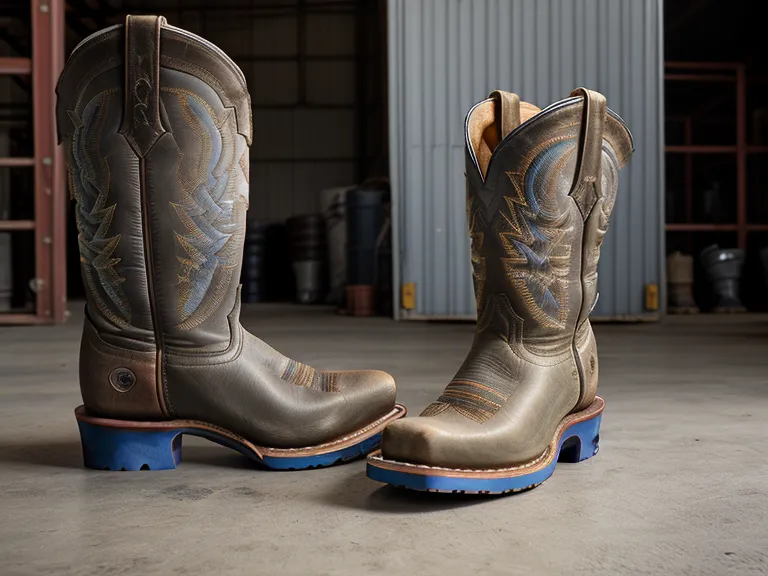
The rocker heel took some getting used to; the first few days it felt like something was nudging me forward with every step, which is a strange sensation if you've spent your life in flat-soled work boots. That's shank and heel geometry doing its job, and I'll leave the deep explanation of how that geometry actually works to people who engineer soles for a living; what matters to me is whether my legs feel it by the back half of a shift, and on these, they mostly don't.
By week twelve I'd stopped thinking about the boots entirely, which is usually the best compliment I can give a pair. I remember dropping to one knee in the parts cage to grab a filter off the bottom shelf and realizing mid-crouch that the toe box wasn't biting into the top of my foot the way a stiff steel cap usually does. The break-in period on these ran shorter than I expected out of a pull-on boot, though I wouldn't call it instant. The factory insole held its arch support longer than I expected too, which surprised me, since that's usually the first thing to pack down flat on a cheap boot.
Steel toe protection is a trade worth making when a manifold or a transmission case drops where your foot used to be, but it doesn't bend, and that matters if your job is more kneeling than walking. Reaching into the guts of a forklift to swap a hose means the front of that steel cap is digging into the top of your foot for however long the job takes, and Durango handles that better than most pull-ons I've tried, but a steel toe is still a steel toe. Guys who spend most of a shift on their knees might do better in a composite toe; for a supervisor role split between walking the floor and wrenching on something broken, I'll take the steel. If you want the deeper breakdown of how these hold up on hard ground, I wrote up the Durango Rebel Work Boots Review for Maintenance Workers on Concrete separately.
Do Durango Boots Hold Up Through a Wet Distribution Dock Spring?
Spring turns our loading docks into a swamp — rain blowing in off the bay doors, road salt residue still sitting in the seams from winter, and leather taking the brunt of both. A coworker's pair of Thursday Boot boots, bought because they looked sharp, basically came apart after a week of that slush; nice boots for a weekend, not built for a dock. The Durangos have a decent welt that kept water out for the most part, though there's no waterproof membrane tucked inside doing the work — it's treated leather, plain and simple, which means the conditioning schedule matters here more than it would on a membrane-lined boot.
There was a cheap pair years back with a vamp that started cracking at the flex point, and I dumped mink oil into it hoping to keep the split from spreading toward the toe box. Didn't work — the leather kept opening up, and that pair went in the trash not long after. I don't skip conditioning anymore. A coat of oil worked into the leather once a month keeps the uppers from cracking where they flex, and salt residue from a bad winter will eat through that protection faster than you'd think, so I don't wait for spring to start again. If you don't already know how to condition leather work boots for maximum water resistance, you're leaving money on the table every time you skip it. The conditioner has a sharp, almost ammonia bite while it's drying into the welt seam, sharp enough that I notice it every single time. The welt itself is a sewn construction rather than a fully resolable Goodyear welt, so I wouldn't count on sending these out for a resole down the line.
Surviving a Warehouse Heat Wave in Pull-On Boots
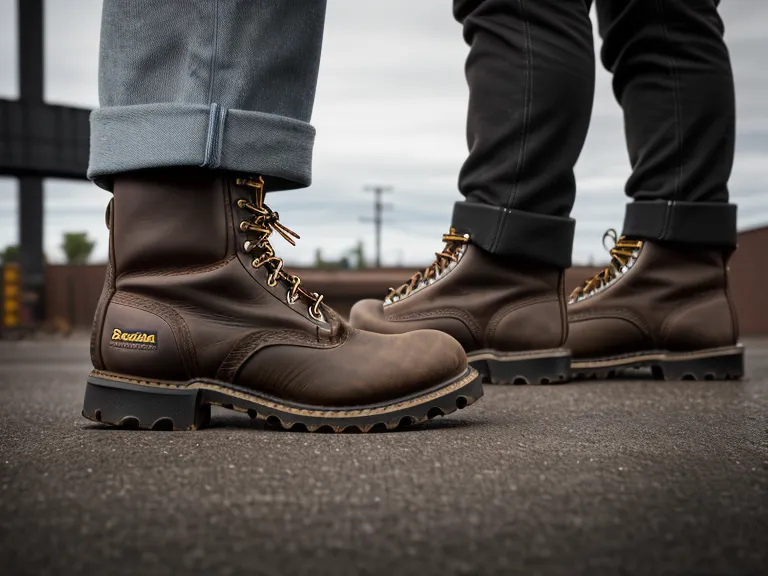
A stretch of warehouse heat in the thick of summer is its own kind of misery — humidity sitting heavy, feet swelling by noon, and a pull-on boot turning into a trap if it doesn't give somewhere. That's where the 'X-Pand' gore panel Durango builds into the shaft earns its keep; even swollen after a double shift, I could still work these off without needing a coworker to help pull. These aren't an insulated build, and for a job that has me moving most of the shift instead of standing still in a walk-in cooler, that's the right call over something heavier and lined. I've put in time in Georgia Boot models too, and they're tanks, but they're heavy tanks — that extra weight on your foot adds up to a real difference in how tired your legs feel by the end of a long day, and the Durangos are noticeably lighter without feeling flimsy. They don't feel quite as indestructible as the Georgias, but I'd rather have the energy left to walk to my truck. Anyone chasing more airflow than a Western shaft allows should look at breathable work boots for hot warehouses instead — these aren't built for that fight, they're built for a different one.
How Durango Stacks Up Against Rocky, Georgia, Thursday, and Hunter
Rocky Boots are still probably the gold standard for pure durability if you're grinding through a ten-hour shift in the trenches every day — I've put in real time with them, and the full breakdown is here: Six Months on the Warehouse Floor: My Honest Take on Rocky Boots. A reader named Gus Hornak, a semi-truck mechanic who works pit-side out in western Ohio, emailed asking how the tread holds up on wet epoxy shop floors, and that's a fair question here — these run a standard lug tread rather than a wedge sole, so if your floor is epoxy and wet more often than it's dry, I'd want something rated specifically for that before I'd trust a Western boot on it. The upper leather on the Durangos has held its shape better than a lot of what I've cycled through, which has more to do with the hide Durango's using than anything special I'm doing to maintain it.
I've watched guys try wearing Hunter Boots on the dock when it's raining, and I always tell them the same thing: don't. Great for walking a dog around the block, useless the first time you catch a pallet corner with zero toe protection standing between you and a bad afternoon. Stick with something carrying an actual safety rating — your feet pay your bills, and it's a bad place to cut a corner just to save a few bucks at a big-box store.
My Final Call After a Year in the Rotation
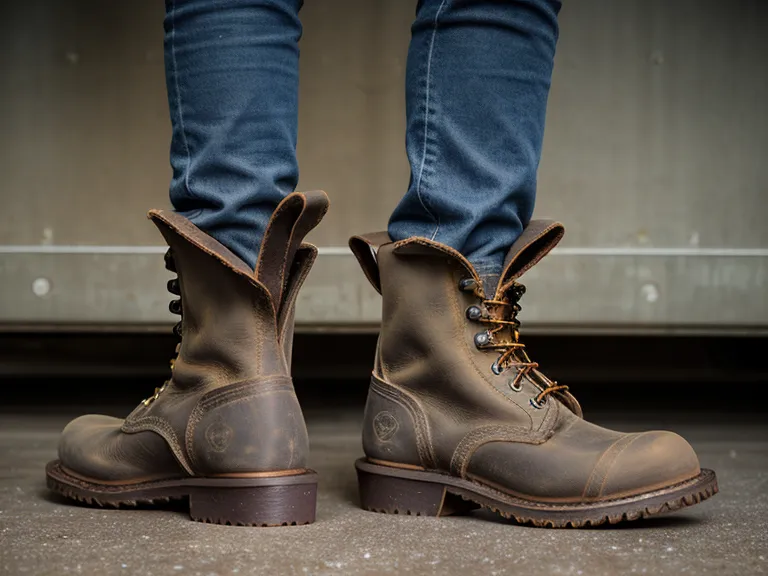
A year of rotation, from that icy hydraulic leak through the worst of the summer heat, and I'm sold on the Durango steel toe for this specific kind of work. They cost more than the junk brands (roughly an extra half tank of gas more than the cheap stuff), but they've actually held their shape: the uppers haven't split, the heel hasn't worn down to the nub, and my back doesn't complain the way it used to by the end of a shift. That said, if your feet are already giving you real trouble, no boot fixes that on its own — see a professional before you trust leather and rubber to solve a medical problem.
If your shifts look anything like mine (concrete, grease, the occasional climb into a rig that's decided to break down at the worst time), these have earned their spot in my locker, and that's saying something considering how many pairs I've thrown in the bin over the years. Grab a pair through the link below and stop punishing your feet for no reason.
| Product | Rating | |
|---|---|---|
| Rocky Boots Top Pick | 9.2 | Read More → |
| Durango Boots | 8.9 | Read More → |
| Georgia Boot | 8.7 | Read More → |
| Thursday Boot | 7.8 | Read More → |
| Hunter Boots | 7.5 | Read More → |
Durango Boots
Pros
- ● X-Pand system makes them the easiest pull-ons to get off after a long shift
- ● Significantly lighter than traditional industrial logger boots
- ● Rocker heel helps reduce leg fatigue on miles of concrete
- ● Meets ASTM F2413 safety standards for peace of mind
Cons
- − Steel toe can be stiff and pinch during heavy kneeling tasks
- − Leather requires regular conditioning to survive wet seasons