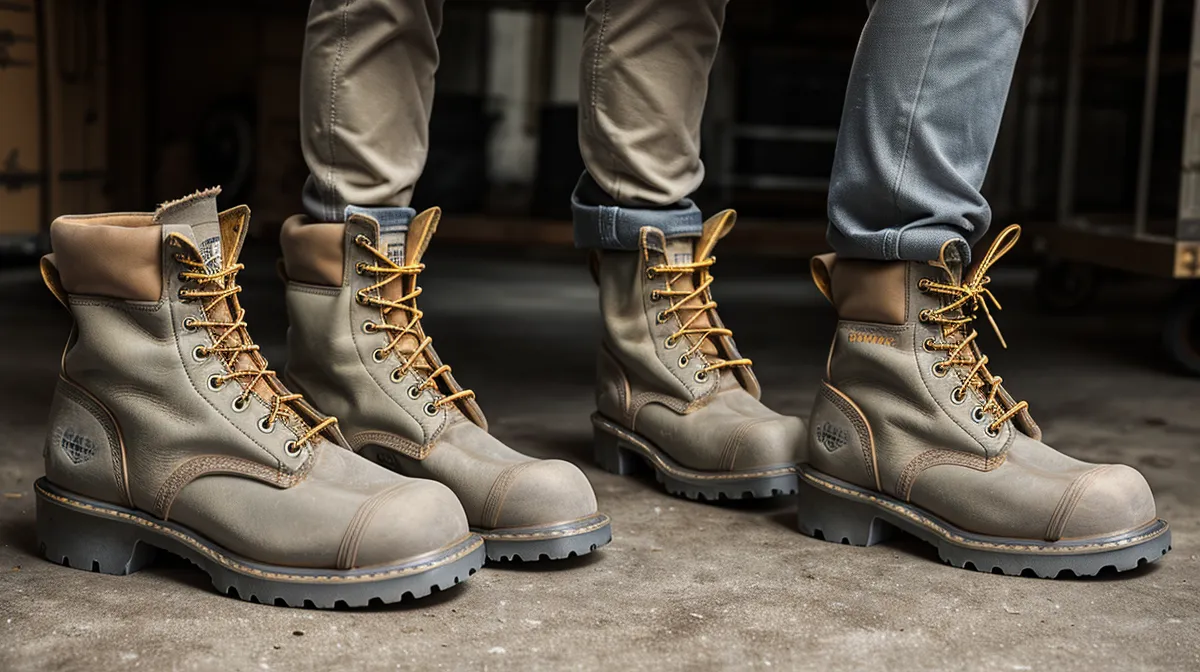
A boot stamped 'wide' and a boot actually built wide are two different animals, and the gap between them lives inside the steel toe cap, not the leather around it. I run maintenance gear through its paces at a parts distribution center outside Pittsburgh, and between my own steel toe reviews off my own feet and the questions guys on my floor bring me, I've got a pretty clear read on where wide-width footwear goes wrong. The upper stretches easy enough — that's cheap for a brand to do. The cap underneath is the part that stays exactly the size it was designed for, and that's the piece actually squeezing your foot by hour four. Work safety comes down to that fit more than anybody wants to admit, because a boot fighting your foot all shift is a boot pulling your attention off the floor around it.
These are close to the exact questions DeShawn Quarles throws at me between shifts. He runs a forklift on my floor, and depending on the day he cares as much about how a boot looks stepping off the truck as whether it holds up. He started the job in sneakers before compliance caught it, and I pointed him toward his first real pair that same afternoon. He still brings me some version of these same four or five questions every time a coworker complains about a tight toe, so here they are, answered straight instead of piecemeal on a loading dock.
What 'Wide' Really Means for Steel Toe Boots
When a tag says 'wide' or 'EE,' that's almost always describing how much leather sits over the top of your foot, not the shape of the safety cap underneath. If your foot runs wide at the ball, you'll still feel that cap's edge biting in by the middle of a shift, because the widened leather never touched the actual obstacle. Pull off a wool sock at the end of a bad day and you'll see a red half-moon pressed into the side of your foot where the cap's edge sat all day — that's not comfort wearing off, that's compression. Part of why brands leave the cap alone comes down to the standard it has to pass. Steel and composite caps both get tested under ASTM International's F2413 rule, and once a shape's been tested and stamped, nobody wants to touch it — so the cheap fix is piling more leather onto a mold that was never wide to begin with.
Why Sizing Up Just Moves the Problem
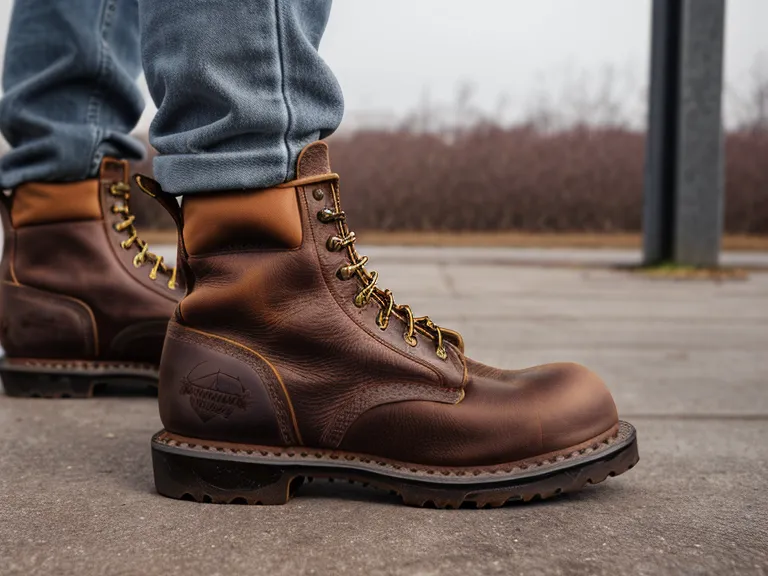
Sizing up is the advice you'll hear from just about anybody on a shop floor, and it's the wrong move for a wide foot. Go up a full size to chase width and the last of the boot no longer lines up with your actual foot — your heel starts riding loose in the back, and that friction eats through a sock and raises a blister fast. Worse, a boot that's too long catches on things it shouldn't. I've hooked the toe of an oversized pair on a pallet rack more times than I'd like to admit, and in a maintenance job that's how you end up face-first into a shelf. Width has to come from the last the boot is built on, not from extra length past your toes. And once a boot's put in real time on concrete, the welt is usually the first place that tells you whether the fit was right to begin with — I get into reading a worn welt in my notes on when to replace your work boots after months of heavy daily wear.
Does a Wider Chassis Fix a Narrow Toe Box?
Not on its own. When a brand widens the whole chassis — sole and heel included — your forefoot finally gets room, but now your heel is swimming in a boot built for a bigger foot overall. That trade doesn't help you; it just moves the problem from your toes to your ankle, and it costs you the stability you need climbing a ladder or pivoting on a wet floor. A wide boot built right holds the heel snug and opens up room only where your foot is actually wide, which is further forward than most chassis-widening jobs bother to look.
The Anatomical Toe Box, Explained
An anatomical toe box is shaped like an actual foot — wider across the toes, narrower back at the heel — instead of a uniform oval stretched evenly in every direction. That shape lets your toes splay out sideways the way they naturally do under load, instead of getting pinned together by a round cap designed for a narrower foot and then just inflated. You feel the difference the second you lace a pair up: one feels like a cast around your foot, the other feels like a tool that happens to be shaped like one. Some of the heritage-style brands are the worst offenders here — they spend so much effort on the look of the boot that the toe shape ends up an afterthought, which is part of what I got into in my Thursday Boot Company review, where the boot looked right in every catalog photo and still fought my foot on the floor.
Can Steel Toes Be Broken In?
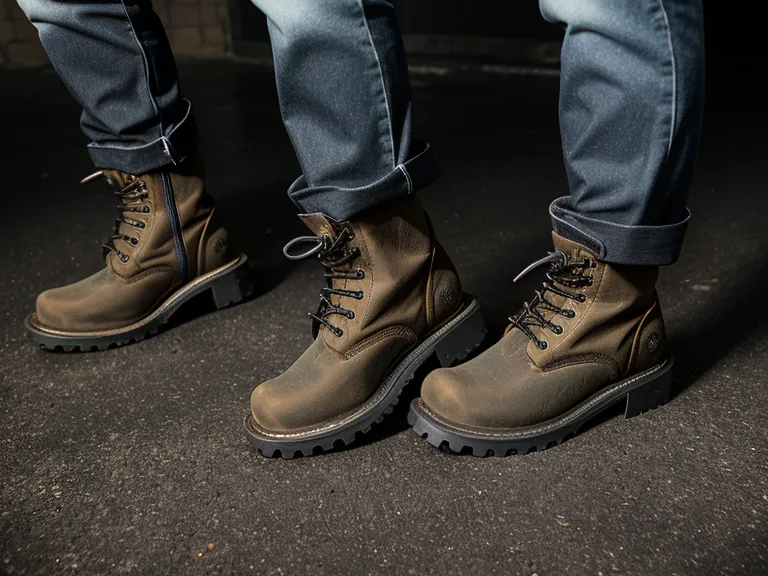
No, and this trips people up because leather does break in. The upper over the bridge of your foot will relax some with wear, but the steel or composite cap inside stays exactly the shape it was stamped in. If it's pinching your pinky toe on day one, it'll still be pinching it a year in — steel doesn't care how patient you are. I've seen guys try to force the issue with a shoe stretcher or worse, and all that does is warp the cap out of the shape it was tested in, meaning it no longer meets the rating it shipped with. How long a boot's upper actually takes to settle in on its own is its own question, one I get into in my notes from six months on the warehouse floor.
Weighing Composite Against Steel for Wide Feet
If your job allows composite, it's worth a real look for a wide foot, and not because it's a downgrade. Composite and steel caps aren't tested any differently — both have to pass the same I/75 impact test at 75 foot-pounds and the same C/75 compression test under a 2,500-pound load. Protection-wise, you're not giving up anything. What composite doesn't do is carry temperature straight through the cap into your toes, and it won't set off a metal detector at a site that scans for one. Curt Walczak, who handles facilities maintenance on my floor and will talk your ear off about insulation ratings before you can stop him, made the switch a few winters back for exactly that reason — cold traveling through a steel cap bothered him more than any argument about weight ever would. For a wide foot specifically, composite calipers tend to run a touch more forgiving in their interior shape too, on top of shaving weight off a boot that's already using more material than a standard-width pair. That weight difference carries over into weekend wear as well; the pair I walk my mother's old Lab in on Saturdays is lighter for the same reason.
How Do You Know When the Fit Is Right?
Right fit shows up in what your foot does over the length of a shift, not how the boot feels standing in a store for thirty seconds. I know a boot's actually working when I come off a double shift and the footbed still has some give left in it instead of going flat as a cutting board — that give means your foot's still riding the way it's supposed to instead of just absorbing shock through bone. When I'm testing a new pair at home, I do the standing part on the one patch of garage floor with any cushion to it, the mat where I lace everything up before a pair goes back into rotation on the shelf against the far wall. The rest of that floor is bare concrete, and the fluorescent tube overhead has flickered slow and steady for longer than I care to admit, so I check leather color at the utility sink instead, where the light holds still. None of that matters if you skip the actual measurement, though. Get your foot on a Brannock device and pay attention to the width reading, not just the length. If you measure a 3E, look for a brand that treats that number as real instead of an afterthought.
Reading the Wear Patterns That Tell the Truth
Somewhere past the half-year mark of daily wear, the truth comes out regardless of what the label promised. On a cheap 'wide' boot, the leather starts bulging out over the edge of the sole because the foot inside is wider than the platform it's sitting on, and that bulge is exactly where the upper starts separating from the sole first. Arch support holding its shape over months of wear is its own long conversation I've had elsewhere, and so is how different upper materials age at different rates under the same conditions — both matter, but neither is a wide-fit problem specifically. One fix that never worked for me: after a wet shift, I used to stuff crumpled newspaper down into a boot and leave it overnight, figuring it would pull the moisture out of the lining. It didn't do much beyond crumpling the toe box slightly out of shape by morning, and a boot already tight for a wide foot doesn't need extra distortion working against it. Whether you end up on a wedge sole or a lug sole is a separate call that has more to do with the floor you're standing on than the width of your foot, so that's not one I'll get into here.
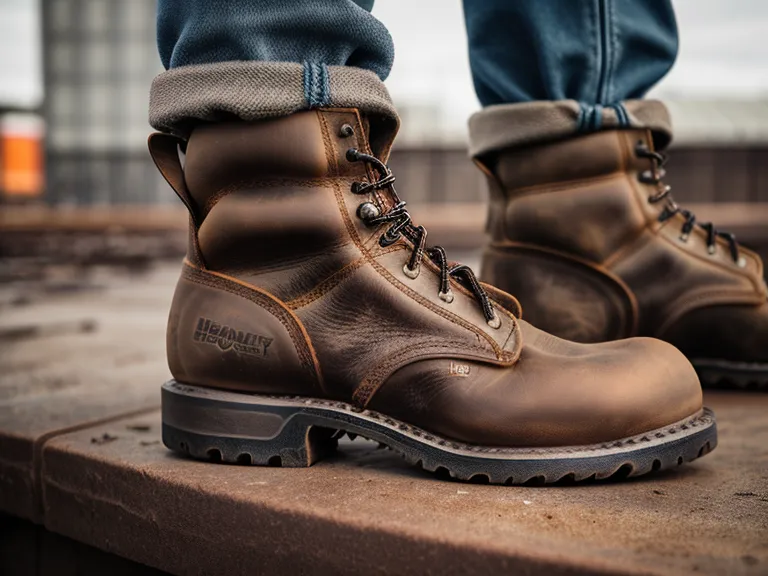
Bottom line on all of this: don't take 'wide' at face value until you've checked whether the cap actually moved with the leather. A wide-width label that stops at the upper is decoration, not fit, and on a steel toe boot decoration is exactly the sort of thing that costs you toes and time on your feet. If you're already dealing with real foot pain beyond a bad fit, that's a conversation for a podiatrist, not a maintenance guy with an opinion.