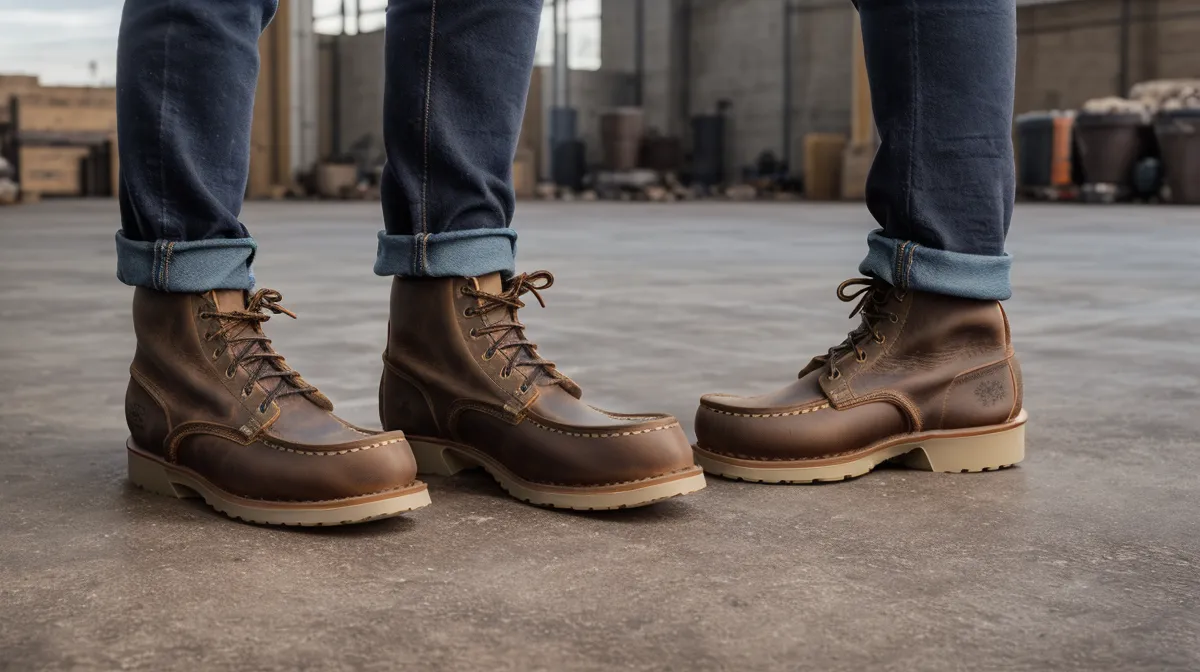
Late one evening this past mid-November, I was sitting on my back porch after a ten-hour shift, peeling off my old round-toes like they were made of lead. My arches were screaming from the concrete floor, and my toes felt like they’d been through a trash compactor. For twenty years, I’ve been buying whatever the warehouse store had in a size 11 Wide, but that night, I’d had enough. When you spend 8 to 10 hours a day managing a parts distribution center, your paycheck depends on your feet not killing you by hour seven.
I’m not a podiatrist, and I’ve never been to a boot-fitting school. I’m just a guy who has cycled through more leather than a sofa factory. I’ve tried the Rocky Boots my old man wore and the Durango Boots that look great but sometimes lack the grit for a heavy maintenance bay. This past year, I decided to swap my usual round-toe rotation for a pair of Georgia Boot moc toes to see if the hype about the U-shaped toe box was real. Just so we’re clear, if you click one of these links and buy a pair, I earn a commission at no extra cost to you. It’s how I keep this site running and keep my mother’s old Lab in dog treats. I’ve personally worn every brand I’m talking about here, so this isn't marketing fluff.
The Geometry of the Toe Box: Moc vs. Round
Most guys don't think about the shape of their boot until they’ve been standing on a loading dock for six hours. A traditional round toe is the classic look—it’s what you see on most Rocky Boots and heritage brands. It’s durable, but it tapers. For someone with a 11 Wide foot, that taper can feel like a vice by mid-afternoon.
The Moc toe (short for moccasin) uses a U-shaped seam on the top of the boot. This construction creates a more rectangular toe box. Instead of the leather sloping down immediately, it stays vertical for a bit longer. This provides significantly more vertical room for your toes to splay out. When you’re dealing with Shift-End Survival, that extra volume is the difference between walking to your truck and limping to it.
Putting the Georgia Boot to the Concrete Test
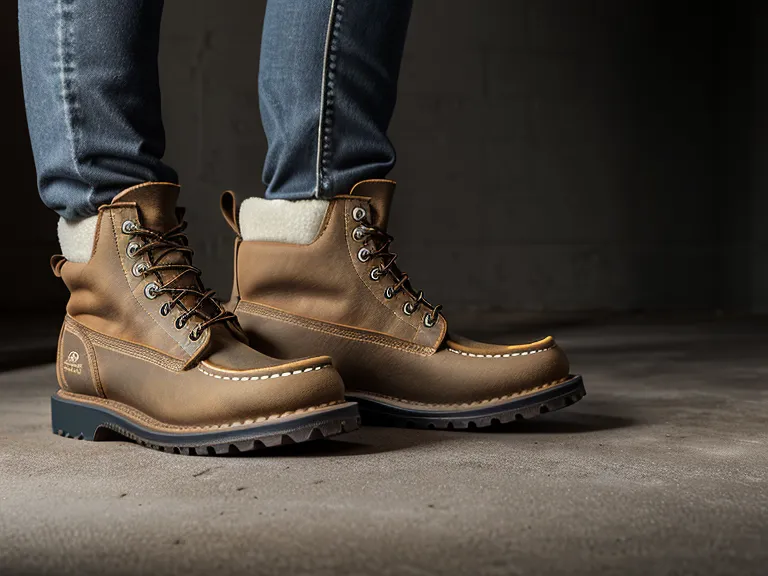
I picked up a pair of 6-inch Georgia Boot moc toes right before the holiday shipping rush. These aren't the kind of boots you wear to a fancy dinner; they look like they belong in a maintenance bay. They meet the ASTM F2413 safety standards, which is a must in my facility. By the time late February rolled around, I’d put them through the worst of the Pittsburgh slush and the grittiest warehouse floors.
The first thing I noticed was the weight distribution. Most moc toe boots, including these Georgias, come with a wedge sole. Unlike the defined heel you find on Durango Boots, the wedge sole is flat from toe to heel. This distributes your body weight across the entire foot. If you’re curious about the technical side of that, you can check out my notes on Lug Sole vs Wedge Sole Boots. On concrete, that flat profile is a lifesaver. It stops that localized pressure on your heel that makes your lower back feel like it’s being poked with a hot iron.
The Tradeoff: Volume vs. Structural Durability
Here’s the thing that the marketing decks won't tell you: there’s a measurable tradeoff here. While the moc toe gives my wide forefoot more room to breathe, it’s not as tough against lateral impacts. One afternoon, I caught the side of a moving pallet jack. Because a round-toe boot has a continuous, sloping piece of leather, it tends to deflect those side hits better. The moc toe has that exposed seam. After about four months of use, I noticed some scuffing right along the stitching.
If your job involves kicking heavy machinery into place or working in tight spots where you’re constantly banging the sides of your feet, the traditional round toe on a pair of Rocky Boots might actually hold up longer. But for pure warehouse floor comfort where you’re mostly walking and standing, the vertical volume of the moc toe wins every time. It’s a choice between protecting the boot and protecting your feet. I’ll take the foot comfort for the price of a couple of fast-food runs any day.
Breaking Them In Through a Wet Winter
The break-in period for the Georgia moc toes was surprisingly short. I’ve had Goodyear welt boots before that felt like wearing two wooden boxes for the first month. These were ready for a full shift after a weekend of walking the dog. The leather is thick, but it’s treated well enough that it didn't bite into my ankles. By late February, the salt from the loading docks had started to build up, but a quick wipe-down and some oil kept them from cracking.
I’ve previously tried some Thursday Boot models for the weekend, and while they look a lot sharper for a Saturday night out, they just don’t have the guts for a 10-hour shift on the floor. I learned the hard way that Work Floor Reality is different from the heritage look. The Georgia boots are utilitarian, but they don't flatten out like cheap foam-soled boots do. They’re built for guys who aren't afraid of a little grease.
Summer Heat and the Final Verdict
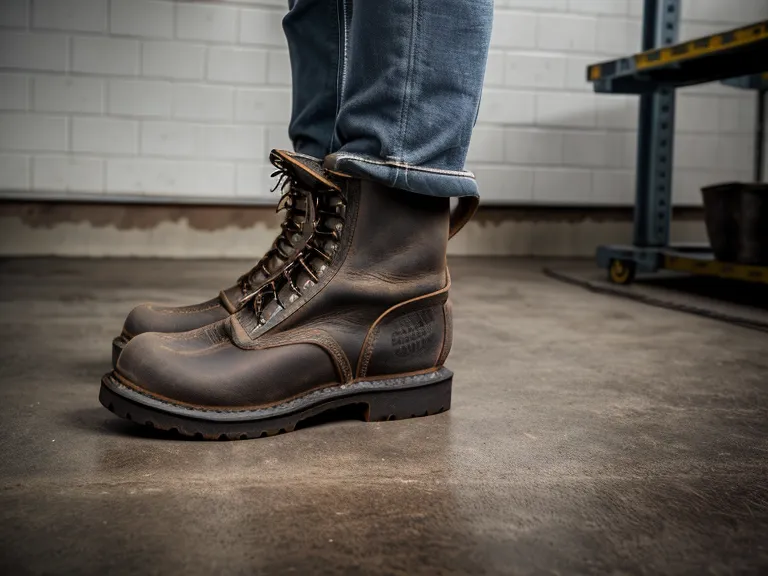
One humid afternoon in August, the warehouse felt like a sauna. Usually, this is when my feet swell up and the boots start to feel like they’re shrinking. That’s where the moc toe really shines. Because that toe box isn't tapering in on you, your feet have somewhere to go when they swell. I didn't feel that familiar pinch on my pinky toe that usually signals it’s time to clock out.
On Sundays, I still wear my Hunter Boots to walk my mother’s old Lab through the muddy trails behind her house. They’re great for the rain, but they’ve got zero support for a real day’s work. Coming back to the Georgia moc toes on Monday morning feels like stepping into a piece of equipment rather than just a pair of shoes.
If you’re on the fence, look at your current boots. If the leather is wearing out on the sides of your pinky toes, you need the volume of a moc toe. If you’re constantly kicking steel and need a boot that can take a literal beating from the side, stick with a round-toe Rocky or Durango. For me, the Georgia moc toe is the current king of the warehouse floor. It’s worth the price of a half-tank of gas to not feel like a wreck when I get home. Just remember, I’m not a doctor—if your feet are truly in bad shape, see a podiatrist before you go blaming your boots.
Warehouse Boot Comparison
I’ve worn a lot of different brands over the years. Here is how the current rotation stacks up for warehouse work based on my time in the maintenance bay.
| Product | Rating | |
|---|---|---|
| Georgia Boot Top Pick | 8.9 | Read More → |
| Rocky Boots | 8.7 | Read More → |
| Durango Boots | 8.3 | Read More → |
| Thursday Boot | 7.8 | Read More → |
| Hunter Boots | 7.5 | Read More → |
Georgia Boot
Pros
- ● Massive vertical toe room for wide feet
- ● Wedge sole is a dream for concrete floors
- ● Tough full-grain leather that handles salt and oil
- ● Short break-in period for a heavy-duty boot
Cons
- − Utilitarian looks won't win any fashion awards
- − Heavier than casual heritage boots
- − Moc toe seam is a weak point for side impacts